Prikazani su postovi s oznakom Ostara. Prikaži sve postove

20.3.16

Heljdini cvjetići

Cvijeće je glavni simbol proljeća i kao takvo se zaslužuje slaviti u ovo vrijeme. Stoga sam mu odlučila odati počast i u kuhinji gdje sam u formi cvijeta napravila kekse od heljdinog brašna s bademima i sušenom brusnicom.


Potrebno:

  • 100 g suhih brusnica
  • 1 naranča (iscijeđena)
  • ca. 550 g heljdinog brašna
  • 1 čajna žlica sode bikarbone
  • 1/2 vrećice praška za pecivo
  • 80 g smeđeg šećera
  • cimet (po želji)
  • prstohvat soli
  • 100 g badema u listićima
  • 150 ml suncokretovog ulja
  • ca. 250 ml vrhnja
  • dodatno heljdinog brašna za valjanje tijesta
  • marmelade (po želji)
Napomene: od navedene količine sam dobila oko 80-90 keksiju. Marmeladu sam koristila za spajanje keksiju čime se naravno umanjila njihova količina (barem brojčano). Ovo možete, ali ne morate napraviti, samo su nekima keksi draži s "punjenjem" od marmelade. Ako ih odlučite spajati marmeladom, preporučam marmeladu/džem od šumskog voća jer izvrsno ide uz sušene brusnice.

Priprema:

  1. Namočite brusnice u soku od naranče i ostavite da omekšaju oko 5 minuta.
  2. Prosijte heljdino brašno. Ono što ne uspije proći kroz mrežicu bacite. Dodajte sodu bikarbonu i prašak za pecivo.
  3. Dodajte u brašno šećer, cimet i sol.
  4. Usitnite bademove listiće. Predlažem da ih (dok su u kesici) istučete maljem za meso. Potom ih dodajte u suhu smjesu.
  5. U brašno dodajte ulje i vrhnje i umijesite tijesto.
  6. Kad je tijesto postalo kompaktno, dodajte brusnice i sok od naranče te nastavite mijesiti da se sve poveže.
  7. Ostavite tijesto u hladnjaku 15-30 minuta kako bi ga bilo lakše kasnije razvaljati i formirati kekse.
  8. Stavite grijati pećnicu na 175°C.
  9. Pobrašnite podlogu te valjakom razvaljajte tijesto na debljinu ca. 3 mm i režite kalupima za kekse. Ja sam koristila kalupe u obliku cvijeća, iako zaista možete bilo koje kalupe uzeti.
  10. Prekrijte lim za pečenje papirom za pečenje.
  11. Pecite kekse na 175°C oko 8-10 minuta.
  12. Po želji, kad su se keksi ohladili, ih spajajte maremladom (jedan keks namažite, drugi kekse zalijepite na njega - marmelada ovdje služi kao "ljepilo").
  13. Uživajte!


Buckwheat Flowers

Flowers are the main symbol of spring and, as such, deserve to be celebrated at this time. So I decided to pay them an homage in the kitchen by baking flower-shaped cookies made of buckwheat flour with almond flakes and dried cranberries.


You Will Need:

  • 100 g dried cranberries
  • 1 orange (squeezed)
  • ca. 550 g buckwheat flour
  • 1 tsp baking soda
  • 1/2 packet (1 tsp) baking powder
  • 80 g brown sugar
  • cinnamon (to taste)
  • a pinch of salt
  • 100 g almond flakes
  • 150 ml vegetable oil
  • ca. 250 ml cooking cream
  • additional buckwheat flour for rolling out the dough
  • marmalade (optional)
Notes: The above amount yielded about 80-90 cookies. I used the marmalade to "glue" the cookies together (the marmalade serves as an adhesive of sorts), which of course reduced the number of cookies (at least numerically). You can, but don't necessarily have to do this. Some people just find these cookies tastier when they're "filled" with marmalade. If you do decide to do this, I would recommend you use a forest-fruit marmalade/jam because it really nicely complements the dried cranberries.

How To Prepare:

  1. Soak the cranberries in orange juice. Let them sit for about 5 minutes.
  2. Sift the buckwheat flour. Throw away what is not able to pass through the sieve. Add the baking powder and baking soda to the flour.
  3. Add sugar, cinnamon and salt to the flour mixture and mix well.
  4. Chop up the almond flakes. I recommend that you actually lightly beat them with a beat cleaver while they are in a plastic bag. Add them to the dry mixture.
  5. Add oil and cooking cream to the mixture and knead.
  6. When the dough has become compact, add the cranberries and orange juice and continue kneading until everything blends together.
  7. Leave the dough to sit in the refrigerator for 15-30 minutes. This will make it easier to roll out and to form the cookies.
  8. Heat up the oven to 175°C.
  9. Dust your working area with flour. Roll out the dough to about 3 mm thickness and cut with cookie cutters. I used flower-shaped ones, although any shape will do.
  10. Cover the baking tray with baking paper.
  11. Bake cookies for 8-10 minutes at 175°C.
  12. If you prefer, once the cookies have cooled down, "glue" them with marmalade/jam (spread marmalade on one cookie and press another cookie onto that one - the marmalade serves as an adhesive here).
  13. Enjoy!


18.3.16

Honey Cake

The beginning of spring is perfect for light cakes such as this one, which are full of flavor, but at the same time easy on the stomach. Orange juice and orange zest remind us that spring brings refreshment into our lives, while the main ingredient of this cake - honey - reminds us that this is the time of year when all living beings start stirring once more, and among them bees that start producing honey as the flowers start blooming.


You Will Need:

For the usual dose:For the double dose:
2 1/2 cups flour5 cups flour
3 tsp baking powder6 tsp baking powder
1/2 tsp baking soda1 tsp baking soda
1/2 tsp salt1 tsp salt
1/2 cup brown sugar1 cup brown sugar
2 tsp cinnamon4 tsp cinnamon
1/2 cup melted honey1 cup melted honey
1/3 cup sunflower oil2/3 cup sunflower oil
4 eggs6 eggs
1 tsp orange zest2 tsp orange zest
1 cup orange juice2 cups orange juice

Notes: you can mix plain flour with hard flour if you like and you can also use more sugar if you prefer your cakes to be sweeter (I always put a lot less sugar than is usually state in a recipe and this cake was no exception).

How To Prepare:

  1. Heat your oven to 175°C.
  2. Oil and four your baking pan(s). It's really all the same what kind of pan you decide to use, just keep in mind that the cake(s) will rise quite a bit. If you decide to go with the usual dose, the one regular, circular cake mold about 22 cm in diameter will do.But if you are making a double dose, you can expect a lot more. You can even use unusual cake molds! For example, I used one mold in the shape of a four-leaf clover and one that is usually used for baking Yule log cakes.
  3. Mix all dry ingredients using a wooden spoon.
  4. Gradually add the wet ingredients and mix using an electric mixer.
  5. Pour the dense mixture into the mold(s) and bake for ca. 30 minutes at 175°C.

If you like, you can take the cake out 5 minutes earlier, glaze it with honey and put it back in the oven so the honey creates a nice crust. Otherwise, you can just lightly sprinkle it with powdered sugar once its cooled down, or put a chocolate glaze over it. Whichever you prefer! Although, you can always leave it as a nice, plain biscuit cake. In this case (if you decide not to go with any kind of glaze), I recommend you mix together a bit of milk and rum and daub the cake with this mixture so it stays moist even longer.

Bon appétit and a blessed Ostara to you all! :D
Yours,
Witch's Cat

Kolač od meda

Za početak proljeća savršeno odgovaraju lagani kolači poput ovog koji su prepuni okusa, ali istovremeno lagani po teksturi. Narančin sok i kora nas podsjećaju da s proljećem dolazi i osvježenje, a osnovni sastojak kolača - med - nas podsjeća da je ovo razdoblje kada se sva živa bića bude iz zimskog sna, a s njima i pčele koje sa cvatom cvijeća počinju proizvoditi med.


Potrebno je:

Za običnu dozu: Za duplu dozu:
2 1/2 čaše brašna 5 čaša brašna
1 paket praška za pecivo 2 paketa paška za pecivo
1/2 čajne žličice sode bikarbone 1 čajna žličica sode bikarbone
1/2 čajne žličice soli 1 čajna žličica soli
1/2 čaše smeđeg šećera 1 čaša smeđeg šećera
2 čajne žličice cimeta 4 čajne šličice cimeta
1/2 čaše meda (otopljenog) 1 čaša meda (otopljenog)
1/3 čaše ulja 2/3 čaše ulja
4 jaja 6 jaja
1 čajna žličica ribane narančine kore 2 čajne žličice ribane narančine kore
1 čaša narančinog soka 2 čaše narančinog soka

Napomene: možete pomiješati malo glatkog i oštrog brašna, a šećer možete i povećati ako volite da vam kolači budu slađi (ja uvijek smanjim količinu šećera u receptu pa sam to napravila i ovaj put).

Priprema:

  1. Zagrijte pećnicu na 175°C.
  2. Nauljite i pobrašnite kalupe za pečenje. Zaista je svejedno u kakvom ćete kalupu peći kolač, samo budite svjesni da će se jako puno dignuti u pečenju. Ako radite uobičajenu dozu, onda bi vam mogao biti dovoljan obični okrugli kalup za torte promjera cca. 22 cm. Ako pak radite duplu dozu, možete očekivati i više. Možete koristiti i neobične kalupte! Ja sam, primjerice, koristila jedan kalup u obliku četverolisne djeteline, a drugi je bio forma za srneći  hrbat.
  3. Izmiješajte sve suhe sastojke kuhačom.
  4. Dodajite pomalo sve mokre sastojke i miješajte električnom miješalicom.
  5. Ulijte gustu smjesu u kalup(e) i pecite na 175°C oko 30 minuta.

Kolač po želji možete preliti "glazurom" od meda 5 minuta prije kraja pečenja i vratiti ga u pećnicu kako bi dobio finu koru. U protivnome možete kolač posuti šećerom u prahu, čokoladnom glazurom, ili ga pak ostaviti kao obični biskvit. Kako god preferirate! No, ako se odlučite ne koristiti ikakvu glazuru, svakako predlažem da, kad se kolač ohladi, izmiješate malo mlijeka i ruma te poškropite/premažete kolač ovom smjesom kako bi što duže zadržao vlagu i sočnost.

Prijatno i blagoslovljena vam Ostara! :D
Vaša Witch's Cat

25.3.15

Slatka pletenica

Ova osvježavajuća, slatka i ukusna pletenica dosta podsjeća na sirnicu i prikladna je za svaki blagdan, a pogotovo Ostaru i Uskrs.


Potrebno je:

  • 500 g namjenskog brašna za dizana tijesta
  • 1 instant kvasac
  • 2 jaja
  • malo soli
  • 50 ml ulja
  • 50 g smeđeg šećera
  • 1 vrećica vanilinog šećera
  • 50 g grožđica
  • 200 ml mlijeka
  • naribane korice limuna
  • naribane korice naranče
  • 1 bjelanjak

Priprema:

  1. Pomiješajte brašno s kvascem, dodajte smeđi šećer i vanilin šećer, ulje, jaja, malo soli, kore naranče i limuna te grožđice.
  2. U suhu smjesu dodajte toplo mlijeko i umijesite tijesto.
  3. Pokrijte tijesto i ostavite da se diže na toplom mjestu cca. 1 sat.
  4. Dignuto tijesto premijesite i podijelite na 3 dijela.
  5. Dijelove oblikujte u "kobasice", zarežite po dužini na tri dijela (skoro od vrha pa sve do dna) i ispletite pletenicu.
  6. Premažite bjelanjcem, pospite šećerom.
  7. Obložite lim za pečenje papirom za pečenje.
  8. Pecite 20 minuta na 175°C.

Sweet Braid

This refreshing, sweet and tasty braid resembles the traditional pinca (Croatian Easter bread) and is great for truly every holiday, but especially Ostara and Easter.


You Will Need:

  • 500 g whole wheat pastry flour
  • 1 packet instant yeast
  • 2 eggs
  • pinch of salt
  • 50 ml oil
  • 50 g brown sugar
  • 1 packet vanilla sugar
  • 50 g raisins
  • 200 ml milk
  • grated lemon zest
  • grated orange zest
  • 1 egg white

How To Prepare:

  1. Mix flour with yeast, add brown sugar and vanilla sugar, oil, eggs, salt, lemon and orange zest and raisins.
  2. Add warm milk into the dry mixture and form the dough.
  3. Cover the dough and leave it to rise in a warm place for about 1 hour.
  4. Knead over the raised dough and separate it into 3 equal parts.
  5. Form the parts into ropes, cut them lengthwise into three parts (almost from the top all the way to the bottom) and braid the dough.
  6. Cover with the egg white and sugar.
  7. Cover your baking tray with baking paper.
  8. Bake for 20 minutes at 175°C.

24.3.15

Puslice s kremom od naranče

Ovi osvježavajući kolačići su savršeni za uvertiru u proljeće!


Potrebno je:

Za tijesto:

  • 375 ml vode
  • 75 g margarina
  • 270 g brašna
  • 5 jaja
  • 1 žličica praška za pecivo
  • 1 žličica cimena (malo više ako vam odgovara)

Za kremu:

  • 1 puding od vanilije
  • 3 žlice šećera
  • 250 ml svježe ocijeđenog soka od naranče (cca. 3 naranče)
  • 1 šlag-pjena
  • 150 ml mlijeka

Za glazuru:

  • 20 dag čokolade za kuhanje
  • malo mlijeka
  • malo maslaca (cca. 50 g)
Od ove količine materijala ćete dobiti oko 45 puslica.

Priprema:

Tijesta:

  1. Prokuhajte vodu i dodajte unutra margarin da se rastopi. Maknite s vatre.
  2. Dodajte brašno i vratite na vatru. Miješajte dok se ne formira tijesto.
  3. Prebacite tijesto u posudu. Dodajte jaja i izmiješajte električnim mikserom.
  4. Dodajte prašak za pecivo i cimet u ohlađeno tijesto.
  5. Obložite lim za pečenje papirom za pečenje.
  6. Žličicom (čajnom) grabite tijesto i stavljajte na papir za pečenje (biti će nešto rjeđe, ali bez brige! Samo ga nemojte ostaviti da stoji dugo vani prije pečenja jer će se "razliti" pa će se puslice manje dignuti u pečenju).
  7. Pecite 20-25 minuta na 175°C.
Napomena: krema mora biti spremna kada izvadite puslice iz pećnice. Ako ih se ne napuni dok su još dosta tople, splasnu.

Kreme:

  1. Pomiješajte puding i šećer i dodajte sok od naranče. Miješajte i kratko kuhajte dok se ne zgusne (nekoliko minuta).
  2. Istucite šlag pjenu i mlijeko električnim mikserom i dodajte u ohlađeni puding s narančom.
  3. Napunite štrcaljku dobivenom smjesom i punite puslice.

Glazure:

  1. Na pari otopite čokoladu.
  2. Dodajte maslac.
  3. Dodajite mlijeko dok glazura ne postane dovoljno rijetka da se može lagano preliti preko puslica (ili po vašem ukusu).
  4. Žlicom prelijte puslice glazurom.
  5. Ostavite puslice da se ohlade kako bi se glazura stvrdnula.

Orange Cream Cakes

These refreshing little cakes are perfect for an overture for spring!


You Will Need:

For the dough:

  • 375 ml water
  • 75 g margarine
  • 270 g flour
  • 5 eggs
  • 1 tsp baking powder
  • 1 tsp cinnamon (a little more if you really like it)

For the cream:


For the glaze:

  • 20 dag chocolate (for cooking)
  • some milk
  • some butter (about 50 g)

This will yield about 45 cakes.

How To Prepare:

The dough:

  1. Boil water and add margarine until it is completely melted. Put aside.
  2. Add flour and put the mixture back on the stove. Mix until the dough forms.
  3. Put the dough in a bowl. Add eggs and mix using an electric mixer.
  4. Add baking powder and cinnamon into the dough when it has cooled down.
  5. Cover your baking tray with baking paper.
  6. Using a teaspoon, take some dough and slide it onto the baking tray (it will be a bit thin but that's normal! Just don't leave it out too long before you put it in the oven because it may "spread out" a bit and then the cakes won't raise as much as they normall would).
  7. Bake for 20-25 minutes at 175°C.
Note: the cream has to be ready when you get the cakes out of the oven. If you don't fill them while they're still warm, they sort of shrink a bit.

The cream:

  1. Mix pudding and sugar and add orange juice. Mix and cook over a small flame until you get a nice thick mixture (this will take only a couple of minutes).
  2. Prepare the whipped cream (usually you would use the powdered mix and mix it with milk using an electric mixer). Add it to the cooled-down orange pudding.
  3. Fill your filling/icing syringe with the cream and fill your cakes.

The glaze:

  1. Melt the chocolate over steam.
  2. Add butter.
  3. Add milk until you get a glaze that is liquid enough so you can easily pour it over the cakes (or to the thickness that you most prefer).
  4. Use a spoon to pour the glaze over the cakes.
  5. Leave the cakes to cool down so the glaze can harden.

20.3.15

Blagoslovljena Ostara 2015.

Ove godine je Ostara za mene mnogo drukčija nego za druge i gledam je iz apsolutne drukčije perspektive nego što je bio slučaj prijašnjih godina. Danas, na dan proljetnog ekvinocija vrlo rano ujutro (ni manje ni više nego na noć tamnog Mjeseca), preminuo mi je djed. To je cijela obitelj očekivala već dva tjedna koje je on proveo vozeći se između bolnice i staračkog doma. S obzirom na njegovo fizičko i duševno stanje, svi smo se složili da se spasio što je preminuo i da je sada konačno miran. Ne planiram vas u ovom postu zamarati tužnim detaljima ove priče već iznijeti svoje shvaćanje Ostare potaknuto upravo ovim okolnostima.

Proljetni ekvinocij označava važan okretaj Kola godine i predstavlja poljoprivrednu Novu godinu. Ovo je prvi dan proljeća, dan kada sve već cvate, sjemenke već klijaju, kada su dan i noć jednake duljine, a time sile kaosa i kozmosa u ravnoteži. Meni ove godine ipak do izražaja najviše dolazi reinkarncijski aspekt ovog sabata. Hoću reći da proljeće predstavlja vrijeme buđenja zemlje, ponovnog rasta biljaka koje su drijemale sve donedavno i novi, važni korak u nadolazeću godinu. Ljudi znaju zaboraviti da kada nešto novo počne, često uz to bude nečemu drugom kraj. Da bi drvo raslo, njegovo lišće mora pasti da istrune i nahrani zemlju. Da novi hrast može izrasti iz zemlje, jedan žir se mora "žrtvovati" i pasti na zemlju koja će ga primiti u svoju utrobu.

S obzirom na sve što sam doživjela nedavno, naprosto ne mogu sagledati Ostaru kao blagdan strasti, plodnosti, seksualnosti i općeg veselja. Umjesto toga ga trenutno vidim kao predstavnika neminovnih životnih promjena koje su ujedno prirodne. Kolo godine je refleksija kola rađanja, smrti i ponovnog rađanja. U takvom kolu Ostara (rekla bih uz Yule i Imbolc) predstavlja jedan aspekt prije spomenutog ponovnog rađanja. Stoga trenutno razmišljam o ovom ciklusu koji pokreće biološki sat prirode. 

Svakako je lakše prihvatiti smrt ako ju se shvaća kao sastavni dio života ili čak nastavak života nakon čega slijedi kratki period odmora i onda ponovno rađanje. I tako iznova i iznova. Možda je reinkarnacija samo jedno od mnogih viđenja svijeta i ljudske egzistencije koje nam pomaže da ostanemo staloženi i pozitivni u najtežim životnim situacijama. Da ona i jest samo to i ništa više, opet sam sretna što mogu sagledati svijet i prirodu na takav način. Ona me podsjeća da su i oni najteži trenuci u našim životima tu da nas nauče nečemu ili da nas osnaže.

Pouka koju sam izvukla iz ovog iskustva (koje mi je, moram priznati, sasvim novo) jest da je sve ciklično i da je jedina konstanta u životu zapravo promjena. Ništa ne možemo vječno konzervirati jer je promjena prirodna.

Ove godine ću Ostaru obilježiti sa svojom najbližom rodbinom i voljenim ljudima iako u ponešto sjetnije raspoloženju nego što bih voljela. Zato želim da za vas Ostara bude puna veselja, blagoslova i strasti!

Do sljedećeg posta,
vaša Witch's Cat

Blessed Ostara 2015

This year, Ostara is very different for me than for other people and I see it from an absolutely different perspective than was the case in previous years. Today, on the day of the spring equinox, early in the morning (no less than on the night of the New Moon), my grandfather died. The whole family had been expecting this for the past two weeks which he spent moving between the hospital and an old people's home. Considering his physical and mental health, we all agreed that death came as a blessing for him because he is finally at peace now. I don't plan to exhaust you with the sad details of this story but rather to explain my understanding of Ostara which was prompted by these circumstances.

The spring equinox marks an important turn in the Wheel of the Year and represents the agricultural New Year. This is the first day of spring, the day when everything is in bloom, when seeds are sprouting, when day and night are equal in length and the forces of chaos and cosmos are in balance. Yet this year, the reincarnation aspect of this festival stands out for me. That is to say, spring represents a time when the earth wakes up, plants come out of their slumber and a new, important step is taken into the year to come. People tend to forget that when something new begins, something else often comes to an end. In order for a tree to grow, its leaves have to fall and rot to nourish the earth. In order for a new oak tree to grow from the earth, one acorn has to sacrifice itself and fall to the earth which will welcome it into its womb.

Considering everything I have experienced recently, I simply cannot see Ostara as a festival of passion, fertility, sexuality and general merriment. Instead, I currently see it as the representative of unavoidable life changes which are natural nevertheless. The Wheel of the Year is a reflection of the birth-death-rebirth cycle. In this wheel, Ostara (I would say along with Yule and Imbolc) represents one aspect of the aforementioned rebirth. And so I am currently thinking about this cycle which sets nature's biological clock into motion.

It is surely easier to accept death if you understand it as an integral part of life or perhaps as an extension of life after which comes a short period of rest and then rebirth. And this goes on and on and on. Maybe reincarnation is just one of many perspectives on the world and human existence which helps us to stay composed and positive even in the most difficult of situations. Even if it is only this and nothing more, I am still happy to be able to understand the world and nature in such a way. This reminds me that even the hardest times in our lives are there to teach us something or to make us stronger.

The lesson that I got from this experience (which, I have to admit, is something completely new to me) is that everything is cyclical and that the only constant in life is change. We cannot preserve anything forever because change is natural.

This year, I will mark Ostara with my closest family and loved ones albeit in a somewhat sadder mood than I would prefer. This is why I wish that happiness, blessings and passion fill your Ostara celebration!

Until next time. Yours,
Witch's Cat

20.4.14

Zašto i pagani mogu slaviti Uskrs

Paolo Veronese - Uskrsnuće Kristovo (cca. 1570.g.)
Nisam namjeravala pisati post za Uskrs, ali sam dobila i suviše poticaja od dragih mi ljudi koji su zaista tolerantni i otvorenog uma. Prvi poticaj mi je bila poruka od prijatelja koji mi je jutros čestitao Uskrs na najsimpatičniji mogući način! Drugi poticaj mi je bila košara prepunjena bojanim jajima i drugim Uskršnjim ukrasima među kojima se našla figura zeca, ali i nekolicina figura leptira. Kada sam pitala majku (koja je i aranžirala košaru) zašto je stavila te leptire pošto nemaju direktne veze s Uskrsom, ona je rekla da naprosto imaju jer su simbol proljeća! Ova me izjava oduševila jer je dokaz da i kršćani percipiraju Uskrs na jedan dublji način; jedan koji ide dalje od religijske doktrine. 

Već sam u prijašnjem postu o Ostari govorila o sličnosti ovog paganskog slavlja proljetnog ekvinocija s Uskrsom, ali bih u ovom postu podrobnije objasnila o čemu se radi. U istraživanju ovoga mi je najviše poslužila knjiga The Golden Bough od Jamesa Frazera (prijevod na srpskom postoji i nosi naziv Zlatna grana). On je u svojim istraživanjima zaključio da je velik broj kršćanskih blagdana oblikovan po uzoru na paganske. Ovo je bilo u interesu Crkve koja je pokušala pridobiti što više vjernika i maknuti ih što dalje od paganizma. Kako i sam Frazer kaže:
"When we remember that the festival of St. George in April has replaced the ancient pagan festival of the Parilia; that the festival of St. John the Baptist in June has succeeded to a heathen midsummer festival of water: that the festival of the Assumption of the Virgin in August has ousted the festival of Diana; that the feast of All Souls in November is a continuation of an old heathen feast of the dead; and that the Nativity of Christ himself was assigned to the winter solstice in December because that day was deemed the Nativity of the Sun; we can hardly be thought rash or unreasonable in conjecturing that the other cardinal festival of the Christian church - the solemnisation of Easter - may have been in like manner and from like motives of edification, adapted to a similar celebration of the Phrygian god Attis at the vernal equinox." (str. 283-284 u engleskom originalu)
Po srpskom prijevodu: "Kad se ima u vidu da je Đurđevdan  aprilu zamenio staru neznabožačku svetkovinu Parilije; da je svetkovina sv. Jovana Krstitelja u junu nasledila neznabožačku srednjoletnju svetkovinu vode; da je Velika Gopođa u avgustu potisnula Dijaninu svetkovinu; da je praznik Svih Svetih u novembru produženje jedne stare neznabožačke svetkovine u spomen mrtvih i da se samo rođenje Hrista proslavlja o kratkodnevici u decembru jer je taj dan smatran danom rođenja Sunca, onda nam se ne može prebaciti da je neoprezno i neopravdano što pretpostavljamo da je i drugi glavni praznik hrišćanske crkve - proslavljanje Uskrsa - možda na sličan način i iz sličnih motiva snaženja religije prilagođen sličnoj proslavi frigijskog boga Atisa o prolećnoj ravnodnevnici." (str. 358-359 u srpskom prijevodu)
Motivi Crkve su ovdje nebitni. Možda je Crkva zaista smatrala da su paganska vjerovanja heretična i da će nevine duše pokvariti i odvesti u pakao, a možda je samo bilo pitanje popularnosti, politike ili nečeg treće. Važan je sinkronicitet koji se zbio i zbog kojeg osobno smatram da se paganizam i kršćanstvo ne bi trebali razilaziti već se naučiti međusobno tolerirati (ako ne i voljeti). Ne isplati se svađati oko toga čije je vjerovanje/običaj došao prije jer su na kraju krajeva svi motivi koje se slavi u svijetu odavno usađeni u ljudsku psihu. Od davnina ljudi slave manje-više iste stvari samo što ih drukčije nazivaju. Ovoga je također bio svjestan Frazer koji je komentirao o ovim sukobima u prošlosti:
"...Christians and pagans alike were struck by the remarkable coincidence between the death and resurrection of their respective deities, and that the coincidence formed a theme of bitter controversy between the adherents of the rival religions, the pagans contending that the resurrection of Christ was a spurious imitation of the resurrection of Attis, and the Christians asserting with equal warmth that the resurrection of Attis was a diabolical counterfeit of the resurrection of Christ. In these unseemly bickerings the heathen took what to a superficial observer might seem strong ground by arguing that their god was the older and therefore presumably the original, not the counterfeit, since as a general rule an original is older than its copy. This feeble argument the Christians easily rebutted. They admitted, indeed, that in point of time Christ was the junior deity, but they triumphantly demonstrated his real seniority by falling back on the subtlety of Satan, who on so important an occasion had surpassed himself by inverting the usual order of nature." (str. 284 u engleskom pdfu)
Odnosno: "...vidi se da su hrišćani i pagani bili pod velikom utiskom značajne podudarnosti između smrti i vaskrsenja njihovih odnosnih božanstava, i da je ta podudarnost bila tema ogorčenih rasprava između pristalica suparničkih religija; mnogobošci su dokazivali da je Hristovo vaskrsenje bilo falsifikovanje i imitacija Atisovog vaskrsenja, dok su hrišćani sa istom vatrenošću tvrdili da je Atisovo vaskrsenje đavolsko izopačenje Hristovog. U ovim neuljudnim čarkama mnogobošci su zauzeli gledište, koje je površnom posmatraču moglo izgledati neoborivo, da je njihov bog stariji i prema tome original, a ne izopačena imitacija, jer je prema opštem pravilu original stariji od svoje kopije. Hrišćani su lako pobili ovaj slabi argumenat. Oni su priznali da je sa gledišta vremena Hristos mlađe božanstvo, ali su trijumfalno dokazali njegovo stvarno staršinstvo napadanjem lukavosti Satane koji je u toj važnoj prilici prevazišao samog sebe izvrnuvši uobičajeni red prirode." (str. 360-361 u srpskom prijevodu)
Ovakve rasprave traju stoljećima i bilo bi nerealno očekivati da sada prestanu. Pitanja poput ovih su vječna. Stoga moja namjera nije odgovoriti na pitanje koji je blagdan došao prvi, već ukazati na sličnosti između slavlja Uskrsa i paganskih običaja koje neki prakticiraju i dan danas i koji su se prakticirali još u doba antike. Ove sličnosti bi trebale moći povezati ljude, a ne ih razdvajati. Upravo zbog ovih sličnosti i pagani mogu doživjeti i proslaviti Uskrs, ili barem neke njegove aspekte.

Etimologija uskrsa

Krenimo prvo od samog naziva "Uskrs" (i sličnog termina u sprskom jeziku - Vaskrs). Ovi nazivi su iznimka u gomili naziva za ovaj blagdan, ali su i najizravniji. Svakome je očito da se referiraju na sam pojam uskrsnuća Isusa Krista kojeg ovaj blagdan i obilježava i slavi. 

Većini svijeta je poznata engleska riječ "Easter". Korijeni ovog naziva nemaju veze s Biblijom i često služe kao argument paganima za to da "slavlje ekvinocija prethodi Uskrsu" (stavljam u navodnike jer ovo nije tema ovog posta, ali zaista jest vrijedno spomena). Naime, korijeni ovog naziva su u staroengleskoj riječi Easterdæg (u prijevodu: uskršnji dan). Ovaj je dan bio posvećen božici Eastre/Eostre (anglosaksonskoj božici plodnosti, proljeća a originalno vjerojatno svitanja) koju se slavilo na proljetnu ravnodnevnicu. Neki smatraju da riječi "Easter" i "east" (engleski za istok) imaju isti korijen, što bi bilo i logično jer na istoku sunce izlazi, Eostre je između ostalog i božica svitanja, a i simbolika uskrsnuća se odlično uklapa u cijelu ovu priču. U ovom kontekstu se često spominju i teutonsku božicu Ostaru koja je također bila božica plodnosti. Njemački naziva za ovaj blagdan, Ostern, je jako sličan engleskom i ukazuje na to da ova dva germanska jezika crpili inspiraciju iz svoje anglosaksonske prošlosti i mitologije.

Nekima će možda biti poznat i naziv Vazam koji se odnosi na Veliki petak, Veliku subotu i sam Uskrs. Povezanost s riječju "veliki" se može vidjeti u grčkom izrazu za Uskrs - μεγάλη ἡμέρα (megálē hēmera) što znači "velika noć". Ovaj dan/noć je velik upravo jer je to dan uskrsnuća. Više jezika je prigrlilo ovu etimologiju, na primjer češki (Velikonoce), poljski (Wielkanoc), slovački (Vel`ka noc) i slovenski (Velika noč). U nekim se jezicima pak radi o velikom danu, a ne o noći, kao u makedonskom (Велигден), bugarskom (Великден) i ukrajinskom (Великдень).

Ipak, najrašireniji naziv za ovaj blagdan potječe od hebrejske riječi pesah ("prolazak") koja opet potječe od izraza pasah ("on je prešao", eng. he passed over). Spomenuti prolazak se odnosi na starozavjetni židovskog naroda kroz pustinju, što i obilježava židovski blagdan Pasha. Slični nazivi za Uskrs se mogu naći u jezicima cijelog svijeta: u francuskom jeziku Pâques, u talijanskom Pasqua, u španjolskom Pascua, u portugalskom Pessach, u nizozemskom Pasen, u danskom Påske, u ruskom Paskha i u mađarskom Pészah. Smatra se da se u srednjem vijeku Uskrs u engleskom nazivao Pasche (a u 16. i 17. stoljeću su se uskršnja jaja nazivala pace eggs, ili pasch eggs u engleskoj i škotskoj). Izraz pasah i njegov prijevod ("on je prešao", "prijeći preko") je izvor engleske riječi Passover (u doslovnom prijevodu: prijeći preko, dolazi od hebrejskog ha-pesah koje ima isto značenje) koja se odnosi Božje prelaženje preko kuća Izraelaca u Egiptu kada je ubio svu egipatsku prvorođenu djecu (među najpoznatijim je biblijskim pričama).

Svakako, Pasha i Uskrs su neminovno povezani jer se Isusa poistovjećuje s pashalnim janjetom. Naime, u knjizi Izlaska, Izraelci su trebali namazati svoja vrata krvlju pashalnog (žrtvenog) janjeta kako bi Bog znao da treba prijeći preko njihovih kuća i ne ubiti nikoga u njoj. Isus je u ovom smislu isto žrtveno janje jer je umor na križu za spasenje čovječanstva. A da ne govorimo još o drugim poveznicama između Isusa i janjadi koje su vam sigurno poznate.

Motiv uskrsnuća u drugim tradicijama

Uskrsnuće je očito ovdje središnja tema. No, kršćanstvo nije jedina religija u kojoj je ovaj motiv zabilježen. Mnoge druge mitologije, vjere, duhovni pravci itd. su slavili ovaj fenomen i uzimali ga kao važan proljetni simbol. 

Nadovezujući se na prijašnji spomen povezanosti Uskrsa i proljeća, vrijedi napomenuti da je paganski "Uskrs" (tj. proljetna ravnodnevnica) u suštini slavlje povratka Sunca nakon dugih i mučnih zimskih mjeseci. Odnosno, Sunce se tada preporađa, baš kao što se i Isus ponovno rađa na Uskrs. Ne smijemo ovdje zaboraviti ni na povezanosti engleskih riječi "Easter" i "east" (istok - smjer izlaska Sunca). 

Očito je da je proljeće bilo od velike važnosti svim kulturama i vjerama jer su i pagani i kršćani slavili povratak Sunca (pa kako ga god nazivali), a time i topline, duljih dana i pogodnijih uvjeta za život.

Mnoga su božanstva u mitologiji bila uskrsnuta na ovaj ili onaj način (iako neću ulaziti u prevelike detalje): mezopotamska božica Ištar (ili sumerska Innana), egipatski bog Horus, indo-iranski bog Mitra, grčki Dioniz i drugi. Frazer smatra da su najvažniji utjecaj na tradiciju Uskrsa imala dva mita: uskrsnuće grčkog boga Adonisa, i uskrsnuće frigijskog boga Atisa. 

Uskrsnuće Adonisa

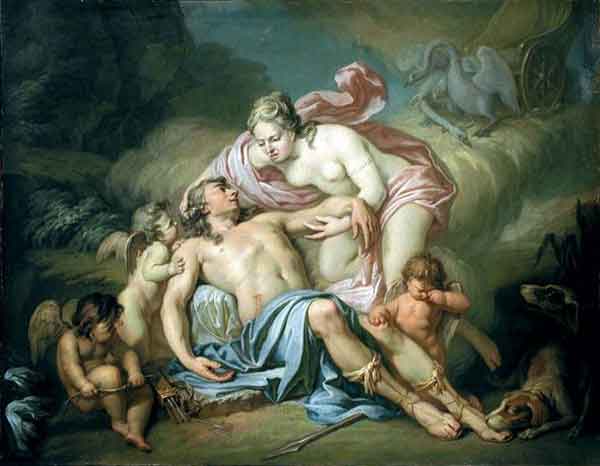
Adonis je zapravo rođen iz biljke (jer je Afrodita njegovu majku pretvorila u miru). Spasila ga je/pronašla sama Afrodita (grčka božica ljubavi) koja ga je ostavila božici Perzefoni (grčkoj božici podzemnog svijeta) na čuvanje. Perzefona ga je odgojila, ali se s vremenom i zaljubila u njega jer je bio prelijep. Afrodita se vratila zahtijevajući Adonisa za sebe (izgleda da se ona također u njega zaljubila), ali ga Perzefona nije htjela pustiti. Adonisa je uskoro ubio vepar (postoji mnogo teorija o tome koje je božanstvo poslalo ovu zvijer, ali je to sada nevažno), a u svoje ga je ruke na samrti uzela Afrodita. Ona je poprskala njegovu krv nektarom iz čega je izrastao cvijet anemone. Ovo je prvi motiv uskrsnuća u ovoj priči. No, obje božice su nakon smrti polagale pravo na njegovo tijelo, ali je Zeus odlučio da će ga morati dijeliti. Stoga je Adonisu suđeno da pola godine provodi s Perzefonom u podzemnom svijetu, a drugu polovicu s Afroditom u gornjem svijetu (odnosno, trećinu godinu s Perzefonom, a dvije trećine s Afroditom jer mu je dato na biranje gdje će provesti jednu trećinu godine, a on bi uvijek izabirao Afroditu). Njegov izlazak svake godine iz podzemnog svijeta je također očiti simbol uskrsnuća.

Pošto je Adonis bog žita, a prvenstveno plodnosti, ujedno je i nekakav vjesnik proljeća. Njegovo uskrsnuće je ujedno i najava ljepših, toplijih mjeseci kada plodni aspekt prirode prevladava. Frazer povlači paralelu s ovim mitom i slavljem Adonisovog uskrsnuća u Siriji (koje se slavilo otprilike u isto vrijeme kao i Uskrs). 

Utjecaj Adonisovog kulta je po Frazeru najviše vidljiv u Grčkoj, na Siciliji i na jugu Italije (odnosno na područjima koja su govorili grčkom jezikom doba prodora ovih utjecaja). U ovom se kontekstu spominju "Adonisovi vrtovi" koji su bili najpopularniji na Siciliji. To su bile košare, ili lončanice napunjene zemljom u koje se sadilo pšenicu, ječam, salatu, ili neko cvijeće. Biljka bi rasla osam dana i nakon toga bila bačena u more, ili u potok skupa sa prikazima boga Adonisa. Za samu biljku se vjerovalo da je neantropomofrni prikaz boga Adonisa, ili pak manifestacija njegovih moći, dok su prikazi koji su bili bačeni uz biljku bili antropomorfni. Ovaj običaj je ostao i u Hrvatskoj gdje se za Božić sadi pšenica. I u kršćansku je ona simbol plodnosti pa se vjeruje da će godina biti plodna i urod dobar ako pšenica dobro uspije (no ona se obično sadi za blagdan sv. Lucije koji se obilježava 13. prosinca). 

Prije spomenuti Adonisovi vrtovi su se znali postavljati i na Adonisov grob, a ovaj običaj je vidljiv i dan danas za Veliki petak kada se darovi (često u obliku pšenice, ponekad sirnice, ili drugih darova) postavljaju na Kristov grob u katoličkim ili grčkim pravoslavnim crkvama. Ovaj je običaj po Frazeru također najjače vidljiv na Siciliji, ali i na drugim mjestima (u Hrvatskoj se ovakvi darovi donose za Veliki petak, ali češće za Veliku subotu).

Neki su zamijetili i sličnosti između ikonografije Adonisove smrti (gdje je prikazan najčešće s Afroditom koja ga drži u naručju) te slavnih Pietà u kojima se prikazuje mrtvi Isus u Marijinim rukama.

Michelangelo - Pietà, bazilika sv. Petra,
Vatikan (1499.g.)
Giovanni Bellini - Pietà (1505.g.)


Anton Losenko - Smrt Adonisa (1764.g.)
Thomas Willeboirts - Smrt Adonisa 
(iza 1642.g.)


Adonisa se često povezuje, ili čak poistovjećuje s frigijskim bogom Atisom koji je, kako sam već istaknula, također zadržao važno mjesto u ikonografiji uskrsnuća.

Uskrsnuće Atisa

Priču o Atisovu uskrsnuću sam već ispričala u jednom prijašnjem postu, no ponovno ću je ispričati ovdje. Ona ide ovako:
Zeus se zaljubio u Kibelu, ali ga je ona odbila. Zeus, naravno, nije znao što znači "ne", pa je prosuo svoje sjeme na nju dok je spavala. Ona je uskoro rodila Agdistisa - hermafroditskog demona kojeg su se svi bogovi bojali. Tako su u jednom naletu straha njemu odrezali penis (motiv žrtvovanja) iz kojeg se rodilo drvo badema. Tada u priču ulazi još jedna mitološka figura - Nana, koja je pojela badem s tog stabla i zatrudnila. Rodila je sina devet mjeseci kasnije, koji je kasnije dospio u ruke brižnih pastira u blizini (majka ga se htjela riješiti pošto on nije zapravo imao oca, što je zapravo bio sramotno). Dječak je toliko bio prekrasan da se u njega zaljubila sama Kibela (njegova baka, inače). Taj se dječak zvao Atis. On je bio zaljubljen u drugu ženu, no Kibela nije marila za to. Ona ga je htjela pošto-poto te je postala ljubomorna van svih granica normale. On je naravno htio zaštiti svoju dragu i počeo loviti Kibelu po planinama, ali je uskoro poludio. Tako je, jednog dana, stojeći pored bora, Atis odlučio počiniti samoubojstvo. Iz njegove su krvi izrasle prve ljubičice. Stablo je uzelo njegovu dušu, a Kibela je, uz Zeusovu pomoć, uskrsnula Atisovo tijelo.

Frazer objašnjava da se Atisovo uskrsnuće slavilo u Rimu 24. i 25. ožujka, odnosno oko datuma proljetnog ekvinocija. Još jedna sličnost između Atisovog i Kristovog uskrsnuća jest činjenica da su oboje ležali tri dana u grobnici prije nego što su uskrsnuli. Ovaj mit je, za razliku od Adonisovog, vršio utjecaj u zemljama koje su govorile na latinskom (Rim i većina zapadnog svijeta). 


Očito je da je motiv uskrsnuća i njegova simbolika bila poznata gotovo svim civilizacijama. Čak su i mitovi međusobno jako slični kada se ide u detalje (i Adonis i Atis su ubijeni od strane vepra, i Isus i Atis su bili tri dana u grobnici prije uskrsnuća itd.), samo se razlikuju imena protagonista. No, napisano je i previše knjiga na temu Isusovog uskrsnuća kao simbola rađanja Sunca. Stoga vama prepuštam daljnje istraživanje o ovoj temi (makar još dosta podataka možete pročitati i u Frazerovoj knjizi), a ja prelazim na sljedeću temu.

Određivanje datuma Uskrsa

Mnogi nazivaju sam način na koji se datum Uskrsa određuje "paganskim" jer se bazira na fazama Mjeseca. Naime, Uskrs nema fiksni datum; sam Uskrs spada na prvu nedjelju nakon prvog punog Mjeseca iza proljetnog ekvinocija (za kojeg je Crkva odredila fiksni datum - 21. ožujka). Ove godine je prvi puni Mjesec iza proljetnog ekvinocija bio tek 15. travnja pa Uskrs nije mogao biti prije 20. travnja (jer je to prva nedjelja nakon 15. travnja ove godine). No vrijedi napomenuti da se ovo odnosi na katolički način računanja Uskrsa. 


Postoji još mnogo paralela koje bi se mogle povući, ali smatram da je ključno u slavlju Uskrsa slavlje novog početka. To što katolici slave ovaj početak u obliku Kristovog uskrsnuća, a pagani nekoliko dana ranije u obliku proljetnog ekvinocija i rasta Sunca zaista nema veze. Postoji previše sličnosti u samoj ovoj simbolici novih početaka da bi se dvije ovako bliske tradicije sukobile. 

Iz ovog razloga čestitam Uskrs svojim bližnjima iako ja nisam kršćanka, a i moji najbliži meni čestitaju Uskrs makar znaju da ne vjerujem u njega na isti način kao i oni. Na kraju krajeva, zašto ne prihvatiti nečiji blagoslov ili lijepe želje? Po mome mišljenju nije važno koja je religijska pozadina tih želja/blagoslova dok je god namjera pozitivna. Sada mi je pala na pamet izjava jedne prijateljice koje je također paganka i koja mi je jednom rekla da neće odbiti svećenika koji joj želi blagosloviti kuću jer je blagoslov blagoslov bez obzira iz koje religije dolazi. 

Želim vam svima sretan Uskrs (i vama koji slavite, i vama koji ne slavite) i lijepo druženje s obitelji. Sjetite se biti tolerantni prema drugima čija se uvjerenja razlikuju od vaših i fokusirajte se na sličnosti umjesto na razlike.

Do sljedećeg puta,
vaša Witch's Cat

Why Pagans Can Also Celebrate Easter

Paolo Veronese - The Resurrection of Christ (cca. 1570)
I had no intention of writing an Easter post, but I got more than enough encouragement from the people I love who have really proven themselves to be tolerant and open-minded. The first stimulus I got was from a dear friend of mine who texted me to wish me a happy Easter in the sweetest way possible! The second was a basket full of colored eggs and other Easter decorations including an Easter bunny figurine and some butterfly figurines. When I asked my mother (who arranged the basket) why she put butterflies in it since they do not have any direct connection to Easter, she simply said that they do because they symbolize the spring! This sentence delighted me because it proved that Catholics perceive Easter in a deeper way; one that goes beyond religious doctrine.

In my previous post on Ostara, I talked about the similarities between the Pagan celebration of the vernal equinox and Easter, but I would like to go into a bit more detail in this post. In researching this, the biggest help was James Frazer's book The Golden Bough. In his own research, he came to the conclusion that many Catholic holidays were inspired by Pagan ones. This was in the Church's best interest as they wanted to get as many followers as they could on their side and get them as far away as possible from Paganism. As Frazer says:
"When we remember that the festival of St. George in April has replaced the ancient pagan festival of the Parilia; that the festival of St. John the Baptist in June has succeeded to a heathen midsummer festival of water: that the festival of the Assumption of the Virgin in August has ousted the festival of Diana; that the feast of All Souls in November is a continuation of an old heathen feast of the dead; and that the Nativity of Christ himself was assigned to the winter solstice in December because that day was deemed the Nativity of the Sun; we can hardly be thought rash or unreasonable in conjecturing that the other cardinal festival of the Christian church - the solemnisation of Easter - may have been in like manner and from like motives of edification, adapted to a similar celebration of the Phrygian god Attis at the vernal equinox." (pp. 283-284 in the pdf)
The motives of the Church are not important here. Maybe it really did believe that Pagan beliefs were heretical and that many innocent souls would end up in Hell if they were Pagan, or maybe it was just an issue of popularity, politics or something else. What is important is the synchronicity that occurred and because of which I believe Paganism and Christianity should not drift apart but rather learn to tolerate one another (if not love each other). Whose belief/tradition came first isn't worth fighting over because, in the long run, all motifs that are celebrated in the world have long ago been embedded into the human psyche. People have been celebrating more or less the same things since the dawn of man, except they have changed the names every now and then. Frazer was apparently also aware of this and commented on past conflicts caused by this in his book:
"...Christians and pagans alike were struck by the remarkable coincidence between the death and resurrection of their respective deities, and that the coincidence formed a theme of bitter controversy between the adherents of the rival religions, the pagans contending that the resurrection of Christ was a spurious imitation of the resurrection of Attis, and the Christians asserting with equal warmth that the resurrection of Attis was a diabolical counterfeit of the resurrection of Christ. In these unseemly bickerings the heathen took what to a superficial observer might seem strong ground by arguing that their god was the older and therefore presumably the original, not the counterfeit, since as a general rule an original is older than its copy. This feeble argument the Christians easily rebutted. They admitted, indeed, that in point of time Christ was the junior deity, but they triumphantly demonstrated his real seniority by falling back on the subtlety of Satan, who on so important an occasion had surpassed himself by inverting the usual order of nature." (p. 284 in the pdf)
These discussions have been going on for centuries and it would be unrealistic for us to expect them to end now. Questions like this are eternal. This is why my intention is not to answer the question of whose holiday came first but rather to point out the similarities between the celebration of Easter and certain Pagan practices which some people still practice today and which have existed since antiquity. These similarities should be able to connect people and not to separate them. It is precisely because of these similarities that Pagans also can experience and celebrate Easter, or at least some of its aspects.

The Etymology of Easter

The word "Easter" is familiar to almost everyone in the world. The origins of this name don't have any connection to the Bible and are thus often used as "proof" by Pagans that the "celebration of the equinox predates the celebration of Easter" (notice the quotation mark because this is almost a quote, and it is also not the main topic of this post so I won't be getting into this issue, although it was worth mentioning). The roots of the word can be found in the Old English phrase Easterdæg (Easter day). This day was dedicated to the goddess Eastre/Eostre (the Anglo-Saxon goddess of fertility, the spring and originally of dawn) which was celebrated on the vernal equinox. Some believe that the words "Easter" and "east" have the same background, which would be logical as east is where the Sun rises (and Eostre is, among other things, the goddess of dawn/daybreak). Also, the symbolism of Easter fits very nicely into this story too. In this context, the Teutonic goddess Ostara, another fertility goddess, is also often mentioned. The German name for this holiday, Ostern, is very similar to the English "Easter" and can be seen as proof that these two Germanic languages were both inspired by their Anglo-Saxon history and mythology.

In Croatia (where I come from), we call Easter "Uskrs". A similar term exists in Serbia - Vaskrs. Both names are really an exception to the rule but they are also the most direct of all the names. The noun "Uskrs" comes from the verb "uskrsnuti" which means "to be resurrected". Obviously, it is a direct reference to the resurrection of Jesus Christ which is celebrated on this day.

Another interesting term worth mentioning here is Vazam. This term doesn't only refer to Easter but to three days: Good Friday, Holy Saturday and Easter Sunday. In several countries, these days are called "great" or "big" days (in Croatian for example, we call Good Friday "Veliki petak" i.e. "Large Friday" and we call Holy Saturday "Velika subota" i.e. "Large Saturday"). The idea of these days being so "large" and important can also be seen in the Greek name for Easter - μεγάλη ἡμέρα (megálē hēmera) which translated into "large night". Of course, these days are so important and large because this is the day when Jesus Christ was resurrected. Several languages have accepted this etymology, including Czech (Velikonoce), Polish (Wielkanoc), Slovak (Vel`ka noc) and Slovenian (Velika noč) which all refer to this holidays as an important night. In other languages, Easter is called the big day, such as in Macedonian (Велигден), Bulgarian (Великден) and Ukrainian (Великдень).

Nevertheless, the most widespread name for this holiday stems from the Hebrew word pesah ("passing over") which in turn comes from the word pasah ("he passed over"). The aforementioned passage over something refers to the Old Testament passage of the Jewish peoples through the desert, which is commemorated on the Jewish holiday of Pasha. Similar names for Easter can be heard all around the world: Pâques in French, Pasqua in Italian, Pascua in Spanish, Pessach in Portuguese, u Pasen in Dutch, Påske in Danish, Paskha in Russian and Pészah in Hungarian. It is believed that a Middle English name for Easter was Pasche. In addition to this, in the 16th and 17th century, Easter eggs were called pace eggs, or pasch eggs in England and Scotland. The term pasah and its translation (he passed over", "to pass over") is also the origin of the Passover, as it is called in English. The name for the Passover supposedly comes from the Hebrew phrase ha-pesah which has the same meaning - the passing over of something/somebody. In this case, it refers to God's passage over the houses of the Israelites in Egypt when he killed all the first-born Egyptian children. I'm sure you know this story as it is one of the most famous Biblical stories. 

Certainly, Pasha and Easter are inevitably connected because Jesus is equated with the paschal lamb. In Exodus, the Israelites had to draw symbols over the doors of their houses with the blood of the paschal (sacrificial) lamb so that God would know that he had to simply pass over these houses and harm nobody in them. Jesus himself is, in a sense, the paschal lamb because his death on the cross is seen as a sacrifice for the sake of humanity's salvation. And not to mention all the other connections between Jesus and lambs which you are surely familiar with.

The Resurrection Motif in Other Traditions

Resurrection is obviously the central theme here. But Christianity isn't the only religion in which this motif is present. Many other mythologies, religions, spiritual paths etc. celebrated with phenomenon (if it can be called that) and understood it to be an important symbol of the spring.

Returning to the previously mentioned connection of Easter and spring, it's worth mentioning that the Pagan "Easter" (i.e. the spring equinox) is in its essence a celebration of the return of the Sun after the long and tiresome winter months. Or rather, the Sun is reborn, just as Jesus is reborn on Easter. We must also keep in mind the linguistic connection between the words "Easter" and "east" (east being the place where the Sun rises).

It is obvious that spring was of great importance to all cultures and religions because both Pagans and Christians alike celebrated the return of the Sun (whatever they called it) and thus of warmth, longer days and favorable living conditions.

Many deities throughout mythology were resurrected in some way (although I will not go into too many details): the Mesopotamian goddess Ishtar (or the Sumerian Innana), the Egyptian god Horus, the Indo-Iranian god Mithras, the Greek god Dionysus and others. Frazer believes that two myths had the greatest influence on Catholic practices; the resurrection of the Greek god Adonis and the resurrection of the Phrygian god Attis. 

The Resurrection of Adonis

Adonis was actually born out of a plant (as Aphrodite, the Greek goddess of love, turned his mother into a myrrh plant). She saved/found the young Adonis and left him with the goddess Persephone (the Greek goddess of the underworld) so she could raise him. This is what Persephone did, but as he grew older and more handsome, she fell in love with him. Aphrodite came back wanting Adonis for herself (it seems that she also fell in love with him), but Persephone didn't want to let him go. Adonis was soon after killed by a wild boar and there are many theories as to which god sent this beast on him, but this is not important right now. What is important that Aphrodite held him in her arms as he died. She sprinkled his blood with nectar and from it sprung anemone flowers. This is the first motif of resurrection in this story. But both goddesses felt they had the right to his body after he died, but Zeus decided that they would have to share him. It was thus decided that Adonis would spend half the year with Persephone in the underworld and the other half with Aphrodite in the upper world (or rather one third with Persephone and the other two thirds with Aphrodite since he was allowed to choose where he would be for one third of the year and he always chose Aphrodite). His return to the upper world from the underworld each year is another symbol of resurrection. 

Since Adonis is the god of corn and primarily of fertility, he is also seen as the herald of spring. His resurrection is simultaneously an announcement of the upcoming spring and the nicer, warmer months when the fertile aspects of spring are most visible. Frazer connects this myth with the celebration of Adonis' resurrection in Syria which occurred at about the same time as Easter.

The influence of the cult of Adonis is most visible, according to Frazer, in Greece, Sicily and in the south of Italy (basically the Greek-speaking parts of the ancient world). He mentions the "gardens of Adonis" in this context which were most popular on Sicily. They were baskets or flower puts filled with earth in which wheat, barley, lettuce or flowers were planted. The plant was allowed to grow for eight days and then thrown in the sea or a stream along with depictions of Adonis. The plant itself was seen as an unanthropomorphic representation of Adonis or as manifestations of his power, while the other depictions were anthropomorphic. Speaking from personal experience, a remnant of this tradition is still present in Croatia (my home country) where wheat is sown for Christmas. It is also a symbol of fertility in Christianity and it is believed that the following year will be bountiful if the wheat grows well (although it isn't sown near Easter bur in stead on the holiday of St. Lucy which is on December 13). 

The aforementioned gardens of Adonis used to be placed on Adonis' grave, and this practice is still visible today in some countries when gifts (often wheat, Easter cake or other gifts) are left on Christ's grave on Good Friday in both Catholic and Greek Orthodox churches. Frazer believes this tradition to be the strongest on Sicily but is also visible in other countries (Croatia included, although the gifts are more commonly placed on Christ's grave on Holy Saturday).

Some have also noted the iconographic similarities between the depictions of Adonis' death where he is usually shown in Aphrodite's arms and the famous Pietà motif in which Mary holds Christ in her arms.

Michelangelo - Pietà, St. Peter's Basilica,
Vatican (1499)
Giovanni Bellini - Pietà (1505)


Anton Losenko - The Death of Adonis (1764)
Thomas Willeboirts - The Death of Adonis
(after 1642)


Adonis is often compared to, or even confused with the Phrygian god Attis who also holds an important place in the iconography of resurrections.

The Resurrection of Attis

I have already told the story of Attis' death in a previous post, but I will retell it here. So this is how it goes:
Zeus fell in love with Cybele but she rejected him. He, of course, didn't know the meaning of the word "no" so he decided to simply spill his seed on her while she was sleeping and in doing so have his way with her. Cybele got pregnant and soon gave birth to Agdistis - a hermaphroditic demon who all the other gods feared. In one of their rushes of fear, they cut his penis off (here's the sacrifice motif) from which an almond tree sprouted. A new figure enters the story now - Nana, who ate an almond from this tree and thus got pregnant. She gave birth to a wonderful baby boy who ended up in the hands of a caring shepherd couple who lived nearby (or rather Nana wanted to get rid of him since he didn't have a father, which was thought to be shameful). Now this boy grew up to be so handsome that Cybele herself fell in love with him (his grandmother, in case you don't feel bothered to do the math). This boy was called Attis and he was in love with another woman, but Cybele didn't really care much for that. She wanted him all to herself and became much too jealous. He, of course, wanted to protect his beloved and started hunting Cybele down all over the mountains but in the process went mad. So one day, while standing next to a pine tree, he decided to commit suicide. From his blood, the first violets sprung, but the pine tree took his soul and Cybele his body, which she resurrected with Zeus' help.

Frazer explains that Attis' resurrection was celebrated in Rome on the 24th and 25th of March i.e. around the date of the vernal equinox. Another similarity between Attis' and Christ's resurrection is that both lay in their tombs for three days before being reborn. This myth, in contrast to that of Adonis, influenced the Latin-speaking countries of the ancient world (so basically Rome and most of the West).


It is obvious that the motif of resurrection and its symbolism were familiar to almost all cultures. Even the myths are very similar to one another when you look at the details (for instance, both Adonis and Attis were killed by a wild boar, both Attis and Christ lay for three days in their tombs before being resurrected and so on). The only difference is the name of the protagonist. But then again, too many books have been written on the topic of Jesus' resurrection as the symbol of the returning Sun. This is why I will leave further research on the topic to you, although you will find much more information in Frazer's book. And now we move on to the next topic.

Defining the Date for Easter

Many people refer to the very way in which the date of Easter is defined as being "Pagan" because it is based on the phases of the Moon. As you may know, Easter has no fixed date; it actually falls on the first Sunday after the first full Moon following the spring equinox (which the Church has a fixed date for - March 21). This year, the first full Moon after the spring equinox was on April 15 which means that Easter couldn't be before April 20 (which was the first Sunday after the 15th this year). It's worth mentioning though that this only the Catholic way of defining the date for Easter.


There are many more comparisons that could be made, but I believe that the main aspect of Easter is the celebration of new beginnings. The fact that Christians celebrate this in the form of Christ's resurrection and Pagans celebrate it a few days earlier in the form of the spring equinox and the rebirth of the Sun is of no great importance. There are too many similarities in the symbolism of new beginnings for these two familiar traditions to be fighting. 

This is why I wish all my loved ones a happy Easter even though I am not Christian, and my loved ones also wish the same to me even though they know I don't believe in it in the same way that they do. But seriously though, why not accept another person's blessing or nice wishes? In my opinion, the religious background of these wishes/blessings does not matter as long as the intention is good. I just thought of a dear Pagan friend of mine who once told me that she will never refuse a house blessing from a Catholic priest because any blessing is a welcome blessing no matter what religion it comes from.

So I wish you all a happy Easter (both to those of you that celebrate it, and to those of you that don't) as well as a pleasant time with your families. Remember to be tolerant towards others whose beliefs differ from your own and to focus on the similarities rather than the differences. 

Until next time. Yours,
Witch's Cat

24.3.14

Ostara Flax Cookies


Once more, I would like to wish you all a happy Ostara! I returned just yesterday from another celebration with a very appropriate recipe which was approved by all those who attended the ritual. You can see the cookies in the above photo; they were practically the centerpiece of our modest altar in the middle of the woods. :) They are just large enough to eat in one or two bites and what makes them so appropriate for this season are the seeds with which they are covered (they also give them a very special taste).

This recipe is actually a modification of the Biscotti di Regina (Queen's cookies) recipe so if you want to try both recipes and compare them, go ahead!

You Will Need:

  • 2 cups plain flour (have a bit more at hand since you may need up to 3 cups because of the flour you will have to add later on)
  • 1/2 (half) a cup sugar
  • 1/2 a bag of baking powder (about 1 teaspoon)
  • a pinch of salt
  • 125g margarine (you can use butter as a substitute)
  • 2 eggs
  • 1/2 a cup of milk
  • flax seeds (the amount depends on your preferences)
Note: I added some hard flour to the recipe and it served equally well as the plain flour so feel free to experiment a bit and combine different types of flours.

How To Prepare:

  1. Mix 2 cups of flour, the sugar, baking powder and salt in a bowl
  2. Add softened margarine, the eggs and milk and knead the mix (with your hands of course) until it is compact
  3. Add flour if necessary until the mix is almost completely non-sticking (it should be only slightly sticky so the flax seeds don't drop off)
  4. Pinch off small amounts of dough and roll them into small balls (about 2cm in diameter) and roll them in the flax seeds
  5. Cover the baking pan with baking paper and spread the cookies onto it taking care to leave a few centimeters between each cookie
  6. Bake the cookies for 12-15 minutes at 190-200°C
  7. The cookies shouldn't get brown on the top; you will know they are ready when they start sort of "cracking" on the top part and they will be only slightly golden-brown at the bottom.
If you follow this recipe, you should have about 60-70 cookies. Enjoy! :D

Ostara keksi s lanom


Još jednom vam svima želim sretnu Ostaru! Vratila sam se sa slavlja s još jednim prigodnim receptom koji je dobio odobrenje od svih koji su sudjelovali na ritualu. Kekse o kojima pričam možete vidjeti na slici poviše na našem skromnom oltaru u sred šume. :) Dovoljno su veliki da ih se pojede u jedan-dva griza, a prigodni su upravo zbog sjemenki koje im daju poseban okus. 

Ovaj je recept zapravo modificirani recept Biscotti di Regina (tj. Kraljičini keksi) pa ako želite pokušati napraviti oboje i usporediti, samo naprijed!

Potrebno je:

  • 2 čaše glatkog brašna (imajte spremno i više jer se količina popne do 3 čaše zbog pobrašnjivanja kasnije)
  • 1/2 (pola) čaše šećera
  • 1/2 vrećice praška za pecivo
  • prstohvat soli
  • 125 g margarina (za zamjenu možete koristiti maslac)
  • 2 jaja
  • 1/2 čaše mlijeka
  • sjemenke lana (količina ovisi o vašoj preferenciji)
Napomena: ja sam dodala i malo oštrog brašna tijekom pobrašnjivanja i nije nimalo pokvarilo recept pa i vi slobodno možete izmiješati glatko i oštro brašno.

Priprema:

  1. U zdjeli izmiješajte 2 čaše brašna, šećer, prašak za pecivo i sol
  2. Dodajte omekšali margarin, jaja i mlijeko te rukama stvorite kompaktnu smjesu
  3. Dodajite brašna po potrebi dok se smjesa gotovo ne prestane lijepiti (treba biti barem malo ljepljiva kako bi se sjemenke zalijepile)
  4. Čupajte komadiće tijesta i oblikujte ih u kuglice (moje su kuglice bile promjera cca. 2cm) te ih uvaljajte u sjemenke lana
  5. Prekrijte tepsiju papirom za pečenje i posložite kekse tako da su udaljeni par centimetara jedni od drugih
  6. Pecite kekse 12-15 minuta na 190-200°C
  7. Keksi se neće previše zarumeniti već će početi pomalo "pucati" na gornjem dijelu. Po tome ćete znati da su gotovi (a od dolje će biti samo blago rumeni)
Ako budete pratili sve ove upute, dobit ćete oko 60-70 keksića. Prijatno! :D