11.5.13

Ostara (March 21)

This year, the Spring equinox, called Ostara in Wicca, falls on March 20, though its date varies from the 20th to the 23rd. Despite the fact that this day signifies the equality of day and night (the Sun and Moon), this is a time that emphasizes the Sun's rising strength which brings those longer Spring days that we all love.

 Some of you will know this period as Easter time when Jesus, the Son of God, the Sun of the world was reborn. In order for me to explain how Jesus and the Spring equinox are connected, I need to mention the meaning of the word Easter. It got its name in honor of the goddess Eostre whose name is probably another variable of the names Ishtar, Astarte and Aset (whose Egyptian counterpart is Isis). Eostre was the Anglo-Saxon goddess of fertility, and Ostara the Teutonic goddess of the Sun. You're probably clear on why such a strong emphasis was put on the Sun and fertility but let me explain anyway. In Spring, the Suns regains strength, flowers bloom and the animals begin to mate. I believe no further explanation is necessary. :)

Ostara is also associated with other things other than the aforementioned goddesses, for example with the concept of sacrificial mating through the myth about Cybele (the Phrygian Mother Goddess whose temple I am proud to have in my home town ^^) and her lover Attis. Despite what the concept alludes to, it doesn't imply a sacrifice during mating. But for me to explain this, I have to tell you a little story.

Namely, Zeus had the hots for Cybele but she rejected him. He, of course, didn't know the meaning of the word "no" so he decided to simply spill his seed on her while she was sleeping and in doing so have his way with her. Notice how the motif of mating is separate and don't be surprised when you come across this type of indirect type of intercourse because it is quite common in mythology. But back to the story. Cybele got pregnant and soon gave birth to Agdistis - a hermaphroditic demon who all the other gods feared. In one of their rushes of fear, they cut his penis off (here's the sacrifice motif) from which an almond tree sprouted. By the way, you will also often come across this sort of situation in which a sacrifice/death results in the birth of something else. Anyway, a new figure enters the story - Nana, who ate an almond from this tree and thus got pregnant. She gave birth to a wonderful baby boy who ended up in the hands of a caring shepherd couple who lived nearby (or rather Nana wanted to get rid of him since he didn't have a father, which was thought to be shameful). Now this boy grew up to be so handsome that Cybele herself fell in love with him (his grandmother, in case you don't feel bothered to do the math). This boy was called Attis and he was in love with another woman, but Cybele didn't really care much for that. She wanted him all to herself and became much too jealous. He of course wanted to protect his beloved and started hunting Cybele down all over the mountains but in the process went mad. So one day, while standing next to a pine, he decided to commit suicide. From his blood, the first violets sprung, but the pine took his soul and Cybele his body, which she resurrected with Zeus' help. Many rituals used to be done in honor of his resurrection, but that's too long a story for this post.  The main thing is that you now understand what "sacrificial mating" means. To revise, this is a theme in which the motifs of sacrifice and mating appear separately! 

You may be asking yourselves: "But what about the Easter bunny who brings eggs? How come he isn't mentioned?" or possible: "Why does the Easter bunny story even exist?". Well, I was just getting to that. The symbolism of the eggs is quite clear. This is a well-known iconological theme connected to rebirth and birth in general. This is the connection between eggs and Easter (just as Christ resurrects from his tomb into a new life, so do chicks from their eggs). Of course, chicks need warmth in order to grow so they can be strong enough to break the eggshell (this is why chickens always keep their eggs warm by sitting on them). The original egg myth included a snake egg, but as the Orphic cult grew stronger the snake slowly began to lose its symbolism and was replaced by the chicken since the symbol of this cult was a rooster (the bird of resurrection and waking). The first time the tradition of coloring the eggs appeared was in the time of the Druids who originally painted their eggs gold/yellow in honor of the Sun.

As for our Easter bunny, he deserves some special attention. He was closely related to the goddess Eostre (remember that she is the Goddess of fertility..and now remember the phrase "thumpermaiting", or the more vulgar phrase "to f**** like rabbits". Everything clear now?). Undoubtedly, the hare/rabbit is a sacred animal in many cultures of the world and this has left its trace in superstitious beliefs which state that a hare's foot brings good luck. I also have to mention the term Moon-Hare who even the famous Boudica (about whom there is a great documentary on Viasat History, by the way) had on her coat of arms. As an additional interesting fact I would like to share with you that the Celtic people believed that this Moon-Hare was responsible for the "dots" we see on the moon.

In order for me to bring this Sabbat a bit closer to you and so this post isn't just a collection of my ramblings, I would like to quote Douglas Hill who says:
"Drinking, dancing, feasting, noise-making and love-making have been the usual ways in which men have celebrated occasions of communal happiness...but ever since prehistoric times man has reserved special celebratory energies for the turning of the seasons and has reacted with perhaps the strongest surge of emotion to spring, the time when the earth is freed from the shackles of winter."
This passage caught my eye because it really does depict the spirit of this time of the year. Truly, this is a time which has to be celebrated. You have probably felt the depressing moods of February on your own skin, as well as the sudden improvement in mood that comes with the month of March. And not to mention the sudden changes in weather. This is the time of the year when all of this calms down a bit. Spring is coming, happiness is with us and we can finally bathe in the Sun, ride our bikes, go for long walks and put our Winter coats back in the closet.

Of course, this doesn't go for every country. In the Northern countries as well as Great Britain, Ostara wasn't always celebrated. Actually, in England, it was only celebrated by the pre-Celtic builders of the megaliths we now know, while the fertility and strength of the Sun was celebrated a bit later in the North (around Beltane, May 1), which is logical since their climate is completely different. We can see that people who lived before us adapted to their climate, so I think that we should do so too. What I mean is that I see no point in celebrating the Sun's growing strength if we see rain and snow around us, feel the cold wind on our faces and still have to wear our Winter coats and sweaters. Where I live, on the coast of the Mediterranean Sea, plants start to grow about this time while in the North, this will be just the right time fro sowing. So learn to be flexible :)

The symbolism fire has when it comes to Ostara is quite obvious, so it is recommended that you have at least some small sort of symbol of fire in your circle during your ritual (e.g. small wax candles if you can't light a small fire in your cauldron or outside). A common symbol you may see on altars is the fire wheel (this isn't a wheel made out of fire but a wheel-shaped object decorated with ornaments that symbolize a burning fire). A symbol very similar to this one (because it also has three parts) is the clover with its most common three-leafed construction. Ireland celebrated St. Patrick's Day by wearing a clover with pride since it has become their national emblem. Their is a story that tells us how St. Patrick used the three-leafed clover to explain how the Holy Trinity works, but for Pagans, these three leaves would represent the Triple Goddess. Of course, you are free to decide what this symbol will mean to you :) The four-leafed clover is thought to bring good luck because of its connection to the Sun wheel (which also has four parts) which was thought to have the power to banish evil spirits. I also have to mention that this Sun wheel became the archetypal symbol for balance and completeness. The number four is the number of balance, the symbol of the Earth (stability) and it will appear in many more ways, always in connection to integrity (in the Celtic cross, the magickal circle with its quarters, the Egyptian hieroglyph of niewt meaning "town", in the traditional Easter baked goods called Hot-cross buns etc.).
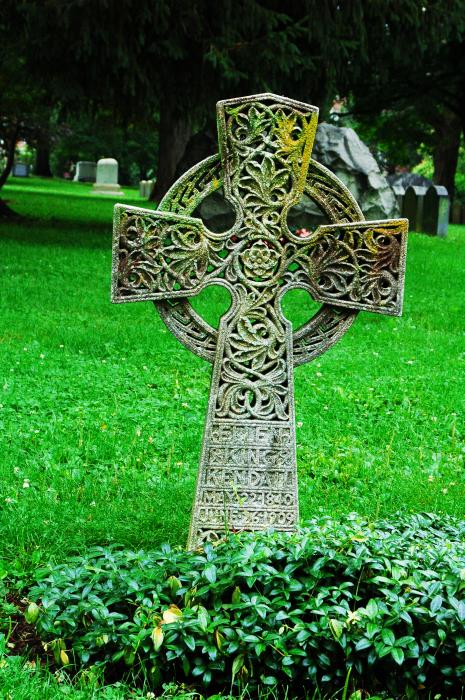
The Celtic cross (which
looks a lot like the sun
wheel)
You can decorate the room you're in with lots of flowers (if possible, yellow flowers such as primrose, daffodils, gorses etc.), and you will also find that many Witches use this occasion to bless their plant seeds for better growth. It is appropriate to have a small bowl of earth on the altar as well.

In regard to clothing and jewelry, everything should symbolize the Sun and springtime. According to this, appropriate metals to wear include gold, bronze, brass and various gilts. Whichever way you decide to go, the yellow color should dominate. :)

Don't forget that you're not only celebrating the Sun's strength but also fertility. This is why a phallic wand (such as the priapic wand) is often used in Wiccan rituals instead of the normal wand. It is important to celebrate, sing, dance and be merry! :D Enjoy the food you have (and I hope you will have plenty of it).

Sabbat: Ostara
Pronunciation: /os'tarah/
Date: May 21 usually (varies from the 20th-23rd)
Other names: The Spring equinox, Eostre, Easter, the Tree
festival
Phase of the God: Is growing up (the Green God)
(the Oak King)
Phase of the
Goddess:
The Maiden (time of initiation)
Symbolism: The beginning of Spring, celebrating light,
fertility and warmth which the Sun brings
Traditions:
Lighting a fire, jumping over embers, coloring
eggs, consecrating seeds, making bouquets of
Spring flowers
Symbols and
colors:
Golden/yellow, pastel colors (primarily purple,
but also pink, blue and green), a potted plant,
fire, a cauldron (with a candle in it), colored
eggs, the hare, necklaces of wildflowers, seeds
Traditional food: Hard-boiled eggs, hot-cross buns, fruit cakes
(with lemon or carrots most often), salads,
food with honey etc.
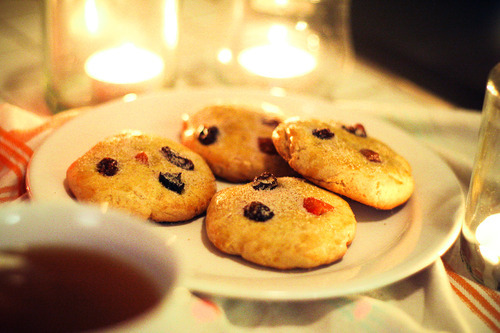
Ostara flax cookies
Traditional
incens:
Violet, jasmine, rose, sage, strawberry

Hot-cross buns
With this post, I wish you all a blessed Ostara :) with a bit of luck (and free time), I'll try out these famous Hot-cross buns (which are a traditional meal for Good Friday i.e. the Friday before Easter) and share the recipe with you :)

And for those of you that don't celebrate Ostara, happy Easter! 

Until next time. Yours,
Witch's Cat

10.5.13

Imbolc (February 2)

Imbolc (read /immol'g/ or simply /'imbolk/) is also known as Imbolg in Celtic. It is described as the festival of light because it announces the coming of Spring. This date might be familiar to you because it is also the day of Candlemas in Christianity. The Celtic name itself means "inside the stomach" which is a reference to pregnancy and the beginning of fertility i.e. the first movements of Spring inside Mother Earth's womb. Like all other Celtic festivals, this is a fire festival but it doesn't accent the warmth of the fire but rather its light. This will be logical to most people because (at least where I come from) February is the coldest month of the year (this may differ from country to country) although Winter is already present throughout the whole of January.

The Goddess that is celebrated on this day is Brigid (Brid), the Celtic Goddess of the triple moon, light and fertility. Her symbol is the large moon that lights the dark paths ahead of us in nature. She falls under the category of those Pagan gods who were Christianized without much attempt to really hide it. In Ireland, February 1 is known as St. Brigid's Day. The saint herself lived from 453-523 AD, but despite the fact that we're talking about a Christian saint, she is celebrated in the same places and same ways as her Pagan counterpart. The myth says that St. Brigid was brought up by a magician and had the ability to multiply food and drink and thus feed the people. But there was also a fun side to the story - she could turn water into beer :D Her symbol is the famous Brigid's cross which is made in Ireland even today. Usually, it is made out of reeds or straw and this tradition probably comes from the pre-Christian tradition connected to the preparation of seeds for sowing in the Spring. Brigid's name is pronounced /braid/ in England (like a wedding bride), but in Ireland it is usually pronounced /bri:d/ (breed).

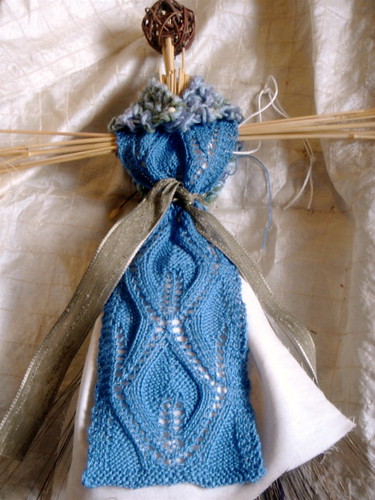
An old Scottish tradition includes the women of a household making an oat-grass dolly (or simply tying the oat-grass together) and dressing it in girls' clothes on the eve of Imbolc. The doll is then put into a Brigid's bed (actually a simple woven basket) along with a bat (that symbolizes the phallus). After all the preparations are done, the women invoke the Goddess by chanting three times: "Brid is come! Brid is welcome!". The doll is then left until morning next to burning candles (but far enough so it doesn't catch fire) and if there is an impression of the club in the ashes of the hearth in the morning, the year is thought to be fruitful. This is a clear metaphor for sex which you can connect to Spring by yourselves :)

On the Isle of Man, there was another tradition. On the last day of January, one person from the household would collect a bunch of reeds or rushes and knock on the door of their family (each family does this separately, just to be clear). The lady of the house (usually the mother) would send someone to answer the door who would, upon seeing this person, wish a warm welcome to Brigid (the person collecting the rushes obviously represents the Goddess herself in this tradition), after which "Brigid" would answer: "God bless the people of this house.". The rushes would then be sprinkled with some kind of holy water. Now why did they need these rushes? Well to make Brigid's crosses, of course! After a satisfying amount of crosses was made, the left-over rushes were buried and the feast could begin. On November 1, the crosses from last year had to be burnt and the new ones would be hung around the house to replace them.

There are two types of Brigid's crosses. The first is actually the Celtic cross (a cross of equal arms inside a circle) and the second a simple cross of equal arms. You can have a look at this link if you want to learn how to make one yourself. :) You can also have a look at my work and instruction in the post entitled "Brighid's Cross" and have a few laughs. :)

In Ireland, there are many holy wells, and most of them are dedicated to Brigid. Even today, people sometimes ask for her help when it is needed and tie ribbons made of various materials on nearby trees/bushes to represent these wishes.

Wells can be associated with water and cleanliness which leads us to the role of February in ancient Rome  Namely, this month was intended for cleansing (Februarius mensis - the time of ritual cleaning). At the very beginning of the month, we have the celebration of Lupercalia (read /luperka:lia/). The main tradition of this festival is a bit funny to me but here it goes anyway. The Luperci, who were Pan's priests, would run practically naked through the streets on this day wearing nothing but a goatskin girdle and carrying goatskin thongs. They would (lightly) strike every passer-by and especially married women. If you were struck, this was actually a great thing because it was believed to bring fertility. This tradition made it until the Christian era and even the famous Mark Anthony played the role of the Lupercus. In time, even women got into the habit of walking around naked because this meant bigger chances of being struck and therefore, more fertility. It wasn't until the Pope Gelasius I (492-496 AD) that this tradition was banned, but even he was forced to publicly apologize because the people simply didn't accept this interdiction. This festival of Lupercalia was finally banned in the 6th century.

Another interesting tradition on Imbolc is the lighting of Yule plants (holly, mistletoe, ivy, rosemary, laurel etc.) because if any of these plants were left in the house, it was thought that evil spirits would haunt it. The message that this tradition sends is that one cycle is over and that another one is beginning and that we have to be able to let some things go. You're probably familiar with Spring cleaning. Though there is no official date for this cleaning, most people do it and aren't all that happy about it when the time comes. But this cleaning is again symbolic since you often get rid of a lot of things as well as vacuum and do other chores around the house.

Also, in England, France, Germany and Spain, some people believe that if Imbolc is cursed with bad weather, then the Winter is actually over, but if it is sunny on this day, then the harshest is yet to come. Perhaps the message of this is that we can't hurry the transition of the seasons? :)

Motifs of fertility and impregnation (metaphorical, of course) are incorporated into rituals in Wicca. This is usually done by the High Priestess calling the God into the High Priest instead of the other way around (which is the usual way as seen in the Drawing down the Moon ritual). Dancing is also often found in rituals because of its ability to raise energy. The sixteenth-century dance called La Volta is usually connected to Imbolc. I managed to find what it actually looks like on youtube for you :) Though it is thought that it comes from an earlier "witches' dance" in which a man and woman would dance holding each other's hands while standing back to back. 

Even in Christianity, the crown of light is a popular symbol for Candlemas and it is usually worn by little girls who symbolize the just-beginning, young year. In Wicca, you will usually see a grown woman wearing this crown and she will embody the Mother Earth who becomes all the more fertile in this time of year.

In addition to Brighid's cross and the crown of light for decorations, you can also have a stick somewhere on your altar/inside the circle if you like. This stick will be a phallic symbol during your ritual and if you have a bit of spare time in your hands and a bit of good will, then you can make a priapic wand/stick yourself by tying/gluing a pine cone on the top of this stick. Also, it is traditional for the person enacting the role of the Maiden (the High Priestesses' "assistant") to carry a bouquet of Spring flowers with her and the person playing the role of the Crone to have a dark veil/shawl or something like this on her. You will often see a cauldron with a candle in it for the aforementioned burning of old plants (that is, if you can't light a fire anywhere).

I you feel like reading a bit more, then have a look at this post. :)

Sabbat: Imbolc
Pronunciation:
/'imbolk/, /immol'g/
Date: February 2
Other names: Imbolg, Candlemas, Brigantia, St.
Brigid's Day
Phase of the God: Grows up (from the Blue to the Green
God), in some traditions he
impregnates the Goddess
(the Oak King)
Phase of the
Goddess:
The Maiden (rests from rebirth)
Symbolism: Celebrating light, urging the Sun to
show again
Traditions:
Lighting candles in a circle, putting a
bowl of snow on the altar, making
Brighid's crosses and oat dollies, the
Brigid's bed story, burning old plants,
making the crown of light (a great way
is to use birthday candles)
Symbols and
colors:
White, red, pink, green, blue, the
wheel (most often on the altar), the
consectration of seeds, greenery as
decorations, candles
Traditional food: Celtic Cakes
Imbolc Crescent Moons
I would recommend you have a look at
these two great websites:
Imbolc Recipes
Imbolc by Akasha
Appropriate ingredients include
seeds, dairy products (and milk),
as well as refreshing ingredients
such as lemon and vanilla.
Traditional
incens:
Basil

I think that's about it for this post :) expect a nice recipe from me one of these days and as soon as I get the necessary materials, I'll put up a tutorial of my own on how to make a Brighid's cross. 
May you be merry and have a wonderful Imbolc! :D
Until next time. Yours,
Witch's Cat

9.5.13

Yule (December 21)

Yule usually falls somewhere between the 21st and 23rd of December. It is also knows as the Winter solstice; the day of the year when the night is the longest and the Sun is just beginning to regain its strength since from this day on, the day will begin to get longer. The name itself comes from the Norse word iul which mean wheel (as in the wheel of the year, life etc.).

In some traditions, this day signifies the death of the Sun God and the triumph of the Oak King over the Holly King (for more details on this story, you can have a look at my earlier post entitled "Wiccan Beliefs"). This wheel symbolizes the death and rebirth of the Sun God for what has an ending must have a beginning (at least in Paganism). The Goddess is at this point in her Crone phase, but her time will also come to be rejuvenated.

A Synthesis of Beliefs and Traditions

I would like to take a bit of my time to talk about other traditions and beliefs which have a few things to do with this celebration in order to make this Pagan festival a bit clearer to you non-Pagans out there :) and if you are, no harm from broadening your horizons a bit, right? So let's start.

The Holly King
The Oak King
The Christmas story of the birth of baby Jesus (who is often compared to the Sun) can be related to the story of the rebirth of the Sun God on Yule (what with the Sun beginning to regain its strength from this point onward). My goal isn't to demean any other faiths, but to simply emphasize the fact that traditions have always borrowed traditions and beliefs from one another since humanking has existed. This made them all, in a way, synthesized. Even other Sun gods (for example Mithra in Persian mythology) "take" this day for their date of birth. It wasn't until the year 273 AD that the Church took this date as the official date of birth for their savior. Mind you that Christianity wasn't even accepted (or legal) at this time. This happened in 313 AD with Constantine the Great's Edict of Milan. In order for Christians to assimilate into the Pagan society of that time, they took the same date as the Pagans did for their celebration so on this day, they celebrated their God while the Pagans celebrated their gods. If we decide to compare the Virgin Mary with the Goddess, we can see a few similarities here too. On this day, both of them give birth to the Sun God/bringer of Light/Savior or whatever you decide to call him. So slowly but surely, the cult of the Virgin Mary became popular (but don't comprehend the word "cult" as something bad but simply as a group of worshipers/followers of something). But, the worshiping of the Virgin Mary was only accepted in 431 AD with the First Council of Ephesus. She was then allowed to be praised and viewed as an important figure in the Catholic faith, but she still wasn't glorified as much as God was (not even closely). What happened was that she gained some godly characteristics and hence became slightly less humanized. 

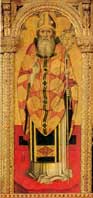
Lovro Dobričević
(a Croatian painter),
St Nicholas, 1448
A few sentences ago, I mentioned the story of the Oak King and the Holly King. The Oak King symbolizes the God in the waning ("growing") part of the year, while the Holly King resembles him in the waxing part. Logically, with the triumph of the Oak King on Yule we are told a story that is actually an allegory for the waning year i.e. the triumph of light over darkness. The exact opposite happens in the Summer solstice when the Holly King wins the battle against the Oak King.

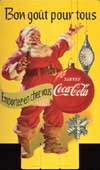
Now where does good old Santa Claus fit in here? This is a slightly more complex question which I will try to answer in a few lines. In Christianity, there was the belief that the presents on Christmas Eve were brought by St. Nicholas (this tradition survives even today) and that the baby Jesus brings them on Christmas day/after Christmas. This simply changed with time. Namely, the first depiction of St. Nicholas (which got "shortened" to Santa Claus) in the form of the Santa Claus we know today first came to exist in 1931. The person who ordered this depiction was no other than Coca Cola who dressed him in their signature colors (red and white). Until then, St Nicholas was depicted in a completely different way (as you can see by the pictures I put in this post). Though there were many other famous gift-bringers in other cultures too. Good examples would be Kristkindl in Germany (often depicted as a gnome of some sort, and when translated, it literally means baby Jesus), Pére Noël in France (translation: Father Christmas) and a slightly different example from Italy - the witch Befana. She would deliver presents to children on her broom and is obviously different from the previous examples. But at least she is proof that not all Witches are bad :D

Haddon Sundblom,
Santa Nicolas,
1931
You're surely familiar with the tradition of decorating the Christmas tree. This is a variation of the Pagan tradition of decorating the Yule log. This log was usually taken from an oak tree (a symbol of the triumph of the Oak King) and a part of this tradition still lives through a cake known as the Christmas/Yule log (at least in Croatia).

I think I've talked enough about other traditions, so let us return back to Paganism.

Let us return to the Goddess for a second and her aspects at this time. If we look at the Celtic tree calendar (which I talked about a bit in this post), we will notice that the Elder tree month lasts from November 25 until December 22, but also that December 23 doesn't fall under any category. This is because it is the so-called "plus one" (+1) day. To elaborate, this month is represented by the Elder tree, which is a symbol of the Goddess in her darker aspects. This plant has white flowers and dark red berries which reminds us of the combines symbols of purity (white, usually the color of female purity i.e. chastity) and menstrual blood (red, of course). December 22 is that day that signifies the death of the Goddess, or rather the God, but at this time, she mourns over him and starts to change (a symbolical death). The day after, December 23, is the day of her (and the God's) rebirth. This myth of the Goddess mourning over the God can also be found in Egyptian mythology when Isis mourns over Osiris after he is killed by his brother Seth (again, a myth in which darkness overcomes light, but light is born again and prevails). The story goes like this: after Seth kills Osiris, he scatters his body parts over the deserts so he can never be reassembled and thus reborn. Isis is the one who searches for these scattered body parts and, after finding them all, asks her sister Nephthys (also her dark side) for help with putting them together. They, of course, succeed in performing this task and banish Seth back to the Underworld...at least until next year hehe :) Connected to this story is the myth of Isis burying Osiris, which happens on December 21, but already on December 23, Isis gives birth to his son (also his reincarnation), Horus. Notice the similarities between the dates and importance of all these characters in various traditions.

I wouldn't like to go on too much longer, so here's a small table that might help you in creating your ritual since it somehow sums up all the important facts about Yule :)

Sabbat: Yule
Pronunciation: /'ju:l/
Date: December 21
Other names: Winter solstice, Yultide, Midwinter,
Christmas, Mother's night
Phase of the God: Dies (the Oak King)
Phase of the
Goddess:
Mourns the God
(the Crone)
Symbolism: Regeneration and rebirth during the
Winter months
Traditions:
Lighting a fire, the Yule log,
carrying candles around the circle
Symbols and
colors:
Red, green, white, silver, golden,
a log/small tree (in a pot), the wheel
Traditional food: Yule log, Christmas bread,
traditional gingerbread cookies,
"fritule", icicle cookies...
Traditional
incens:
Cedar, pine, rosemary

Of course, I could go on and on about this topic, but I think you feel the spirit of this festival like it or not so there isn't much point in endlessly talking about it :) Most of you probably decorate your own Christmas tree, the streets are probably decorated with Christmas lights...but when you look at all this, I just want you to remember that all of these traditions are intertwined some way or another. You will often hear Pagans saying that Christianity took this or that tradition from Paganism, but I don't see how this is in any way bad. And the end of the day, it's not important how we will celebrate a day/a certain God, but how we will celebrate this happy time of the year. If this isn't a happy time, then I don't know what is :) even though it may be dark by 4 p.m., the Sun will soon shine again and the God and Goddess be merry and in love before you know it. 

This is a time of giving...not only of physical gifts but also of emotional and spiritual ones. Remember the only rule of Wicca: harm none. This is the ideal time to apply this rule and think about its deeper meaning.

Since I talked about quite a few topics in this post and in the process managed to forget to mention something you find more interesting/important, feel free to ask questions or add what you feel necessary. If I'm able to answer, I will and I will always hear you out and add what you have to say to the post. 

For now, I wish you all a happy Yule!
Until next time. Yours,
Witch's Cat

7.5.13

Samhain (October 31)

All Hallows' Eve is probably a more familiar name to you and it is the name for the Christianized form of this Sabbath. It represents the beginning of the Celtic Winter season but it is also the Celtic New Year. If we look at the Wheel of the Year, we will see that Beltane (May 1) is just across from Samhain which is the beginning of the Summer season (since Celts only acknowledged these two seasons).

Precisely because this night is on the verge of the New Year (a transitional time), it was thought that it doesn't belong to either the Old or the New Year and hence neither to this or to any other world. This is where the belief of the veil between world being the thinnest in this time came from. And then came all the stories about ghosts, demons and many other entities. But, Witches find this belief to be true and take advantage of this thin veil by practicing divination and contacting the spirits of the deceased as well as other beings which can cross from other worlds to this world more easily on this night. Or so it is thought...

I already mentioned the division of the Sabbaths into the Sun and earth Sabbaths. Samhain isn't a solstice or an equinox (hence it is not a Sun festival), it has to fall under the category of earth festivals. So what actually happened to the earth in this time of the year?

Samhain is pronounced /'sawin/, which is simply an old name for the month of November. The weather was already quite cold about this time of year and this was a time for stocking up on meat which used to be preserved using salt (this was the only was of preserving meat...and does it remind you of consecrating rituals? hehe) and keeping it in a cold and dry place. People needed to have something to eat when the winter came. Also, people would get rid of any surplus of cattle in order to have less mouths to feed and more food to eat. In short, this was a time of concern about the advancing Winter.

All of the crops had to be gathered by October 31 because it was thought that what was left was eaten by an evil spirit called Pooka which would plunder the fields and torment passer-bys. It was thought that his most common disguise was a wild black horse.

The aforementioned tradition of contacting the spirits of the deceased was called Feile na Marbh (pronounced /failu nu morv/) or in translation the Feast of the Dead. Because of the veil being so thin, the spirits could join their loved ones in this world who would be gathered around a warm fire feasting.

People would spite this period of darkness by being merry and celebrating with heaps of food and drink and emphasizing fertility and life which would soon return with the coming of the Spring.

In even earlier times, there was probably some tradition that included any sort of sacrifice (according to some stories, these were often social outcasts like criminals, but in others, it was even the King himself). These sacrifices could have been carried out using fire. In Norse and Celtic mythology, there are even stories about Kings who died in their houses because of the houses catching fire. Luckily, all of these sacrifices later became symbolic.

Even today you can see bonfires being lit on Samhain and people gathering around them and being entertained with fireworks....al of this, of course, in good intent and with the goal of simply having fun. In Scotland and Wales, family fires called Samhnagan (in Scotland Coel Coeth) were lit. Each family would prepare their own fire on the nearest hill. You can still see this tradition live and kicking in some parts of these countries.

The tradition of divination on this day is logical. I have mentioned the thin veil between world, which can, if you believe in it, justify this tradition. But there is also the factor of human curiosity - everyone wanted to find out what the incoming Winter would be like and how they would survive it. In the beginning, the Druids were the only ones who would predict the future, but this later spread out into the common population. Young women would divine in order to see who their future husband would be (either by invoking his depiction in the mirror or by the way nuts would jump while being fried). There was also the tradition of the young woman preparing a tasty meal and setting it out for her future husband. He wouldn't, of course, be able to resist it and would then come to eat it. Upon eating the meal, he would be forever linked to the lady. Though he wouldn't arrive in human form but in astral form (this is yet another element of the thin veil background story).

The traditional food for this festival includes nuts and apples and in Scotland, Sowens are pretty
popular. Sowes were supposedly made using the starch remaining on the inner husks of oats after milling. These husks would then be left a few days to soak in water and ferment. The liquor produced would then be strained off and left aside for the starch matter to settle. The final liquid part can be drunk but the solid parts were edible. They had to be cooked in water with a bit of salt under they were thick enough. Most often, they were served with butter or were dipped in milk which would give a bit of sweetness to their sour taste.

The traditional meal of Ireland for Samhain is called the Barm back - a dark bread or cake with pieces of dried fruit in it. In Croatia, this cake is knows as the Fruitcake or even the Christmas cake (since it is made on Christmas here also). You will often come across soul cakes for which you can find many recipes on the internet. I'll just leave you to decide what to make for this occasion ;)

During the feasts, there were often a few chairs left empty as well as a bit of food in case the spirits decided to join the living for the celebration.

You are all probably familiar with the fact that this night is also called Halloween. Typically, children go from house to house asking for treats and if they aren't given what they asked for, the make your life a living hell :D this is called Trick-or-treating. This is also, believe it or not, an old tradition. This night was also knows as the Mischief night. This is the night when the God of Mischief reigns surpreme but we aren't here to shun him but accept him and join in with the mischief and merriment. We have to learn to spite and laugh at all the bad things in life which could await us that winter. 

Since this festival is both merry and serious, it is recommended that it be celebrated two times; once in peace with your coven or alone (whichever you decide) and the second time with your family and/or friends where you can dance and celebrate and indulge in the happy side. Preparations can include carving pumpkins (or oranges or beets if you don't have any pumpkins at hand), put on masks and have fun according to the local traditions (or any other ones if you prefer those).

I would also like to note the importance of the tradition of carving pumpkins. Namely, Witches would carry these canldes/pumpkins while walking towards the place where a ritual was to be held on this night. They would light the way both for them and the spirits. It was only a matter of time before the carvings started resembling the faces of the souls they supposedly lead. 

By the way, when you do the ritual part (alone or in a group), leave out the sacrifice part :p haha. This tradition has nothing to do in modern times. A symbolical sacrifice of a bit of leftover food and drink for the God and Goddess is more than enough. Focus on the other aspects of this festival; feasts, divination, communicating with other entities (if you believe in them), showing respect for the deceased, affirming life and having a good laugh.

Personally, I don't believe that spirits walk around with us no matter how thin the veil may be, but that is my opinion. If you believe in this, then research it before putting it into practice. Keep in mind that Witches don't "invoke" spirits but ask them politely to join them. I believe in reincarnation and I find it quite rude (no matter how politely you may ask) to call upon a spirit and disturb its rest in the other world.

When preparing your ritual space, try to decorate it with fitting symbols (pumpkins, apples nuts or even mirrors). If you can't make a fire, then simply put more candles around. Another option is lighting a small fire in your cauldron (it is always better to have a fire not matter how small). The appropriate colors include red, black, orange and white and as for the food and drinks, I recommend you have at least something with nuts (be it a cake made with nuts of actual nuts). Like our ancestors used to get rid of surplus cattle, you can get rid of unneeded/harmful things so you bear a smaller burden during the Winter. This can include burning reminders of unpleasant events/times or even writing down unpleasant experiences and memories  and then burning that piece of paper in a fire or on the flame of a candle.
Overall, try to stay true to the traditions and character of Samhain.

Good luck with the celebration :) I hope you will have enough time to get everything ready and use at least one of these ideas in your ritual/party.

Until next time. Yours,
Witch's Cat


Sabbath: Samhain
Pronunciation: /'sowin/
Date: October 31
Other names: All Hallows' Eve, Halloween,
the Feast of the Dead, Celtic New
Year, Ancestors' night, All Saints'
Eve, the Last Harvest, the Blood
Harvest
Phase of the God: Dies (the Oak King)
Phase of the
Goddess:
Mourns the God
(the Crone)
Symbolism: End of the Summer, showing
respect for the deceased
Traditions:
Divination (in smoke/fire/
mirrors), leaving food out,
carving pumpkins, lighting fires
Symbols and
colors:
Red, black, orange, white,
pumpkins, apples, nuts
Traditional food: Soul cakes, Fruitcakes (or anything
else made with pumpkins), nuts,
apples.
Apple pancakes
Mini pancakes
Pumpkin cake
Pumpkin & apple pie
Traditional
incens:
Sage, apple, mint, nutmeg

Mabon (September 21)

The Autumn equinox usually falls on September 21/22. It is the day when equality prevails (day-night, the Goddess-the God etc.), but in contrast to the Spring equinox which symbolizes strength and new beginnings, this equinox is a time for rest after a period of hard work. Also, the Sun enters the sign of the Libra, which is an obvious symbol of balance.

The restful characteristic of this period is visible in everyday life because this is the time after sowing and gathering all of the fruits of your labor when man can finally afford to put his feet up. But, Winter has not yet begun and the Sun is still with us, but its disappearance will be acknowledged about a week after this festival on Michaelmas (the celebration of the archangel Michael who is associated with fire and light).

Periods of change such as this often bring with them a certain dose of uneasiness and stress (as is common with any change), but don't worry because this will also pass.

If we wre to look at Robert Graves' calendar, we would see that this celebration is on the verge of the month of the Vine and the Ivy month; the only two plants in this calendar that grow spirally (the spiral is a symbol of reincarnation). An important symbol of this month is the swan (or its more domestic variant, the wild duck) who is also a symbol of the immortality of the soul.

While Lammas/Lughnasadh represented the ending of the harvest period, the Autumn equinox represents its actual completion and gratitude for the fruits of our hard work with a strong emphasis on the wish for the land to be equally fruitful next year.

In ancient Greece, this was the time of the Elusinian mysteries (the celebration of Demetre and her daughter Persephone and with them of the grain yield). We don't know much about these traditions since the initiates managed to keep quite a lot of it secret over the ages, but what we do know is that, during the initiation, the initiates were given a single ear of corn with the words: "In silence is the seed of wisdom gained.". I'll leave it to you to figure out its meaning ;)

Vine
You can guess that a common decoration for this celebration is corn and wheat (and other wheat-like plants) because of their symbolical meanings which date back all the way to the Elusinian mysteries (as explained in the previous paragraph). Other decorations include pine cones, blackberries (which is an ok replacement for wheat), Autumn flowers and leaves. An excellent ambient can be achieved using myrtle and sage (which is always great for cleansing the circle) for incense and decorating using Autumn colors (brown, red, orange, yellow and indigo).

If you usually eat and drink (take the cakes and wine) after your ritual, a good choice of food would be any sort of grain/cereal or cornbread. A simpler alternative would be an apple (which obviously isn't a type of grain but it is an Autumn fruit). A good idea would be to cover this food with any cloth since this was the tradition back in Elysium when the ear of corn (or its symbol) would be covered before the ritual, and uncovered when necessary.

So, if you plan do write your own ritual for Mabon, I recommend starting from the decorations. For examples, your quarter candles can be in Autumn colors in stead of the usual ones and you can put some pine cones or dried leaves/flowers on your altar and around the circle. If this is a bit too untidy for you, then you can choose a cloth of an appropriate color to cover your altar. In the end, it's the intention that counts. When you do your ritual, keep in mind that you are celebrating Autumn! Show gratitude for the food you have and for the fertility of the land which made this possible. Say goodbye to the Sun until Spring and show respect to the God who will soon (or more precisely on Samhain) leave for the Summerlands where will await to be reborn into yet another cycle. Celebrate the equality of day and night and any other form of equality you can think of or find important. If you believe in the immortality of the soul, now is the time to meditate on this and be thankful for it.

Ivy
An example of a Mabon altar (not mine
unfortunately)
Of course, not everything has to be so serious. A wonderful game which is great for both Mabon and Imbolc (February 2) is the candle game. More people are needed for this but here it goes anyway. The men sit in a circle separated so they can easily touch each others' arms. The women stand outside the circle. The men have to pass a burning candle in the circle and keep it burning while the women (without entering the circle) have to try to blow it out. The woman that succeeds in this has the right to "nip" the man a few times (traditionally, this is done using some sort of twig, rod, wicker or ritual cords, but I would recommend pinchip or something like this). In return, he gives her the Fivefold kiss. The game can then continue if everyone feels like it and if not....then let the real party begin! :D

As a small present, I give you the Celtic tree calendar that I mentioned earlier :)


BIRCH: Beth, December 24 – January 20 
ROWAN: Luis, January 21 – February 17
ASH: Nion, February 18 – March 17
ALDER: Fearn, March 18 – April 14 
WILLOW: Saille, April 15 – May 12
HAWTHORN: Uath, May 13 – June 9 
OAK: Duir, June 10 – July 7
HOLLY: Tinne, July 8 – August 4
HAZEL: Coll, August 5 – September 1
VINE: Muin, September 2 – September 29
IVY: Gort, September 30 – October 27
REED: Ngetal, October 28 – November 24 
ELDER: Ruis, November 25 – December 22


Along with this, I should explain the Ogham alphabet a bit. Namely, this old Druid alphabet was used
for divination and magick. The alphabetical symbols were engraved into wooden sticks which would then be thrown to get a reading. Each letter represents one tree (most often than not, this is the first letter of the Celtic name for that tree as you can see above). The symbols for each tree can be seen in the picture of the wheel.

It is obvious that trees played a big role in the lives of the Druids and it is possible that even the word druid itself came from the Old Celtic word for oak; derwydd or duirwydd.

December 23 doesn't have a corresponding tree because of tradition which states this is that one day in the period of a year and one day.

The other letters of the alphabet can be connected to other types of trees or woody plants (that don't have their own month) or with the Elements. But you can look into this in more detail by yourselves ;)

I hope that this post gave you some new information that you will find useful in your rituals, but also in life in general. Let me know if all went well! :D

Sabbat: Mabon
Pronunciation:/'meibon/
Date: September 21
Other names: The Autumn equinox
Phase of the God: Withering (the Oak King)
Phase of the
Goddess:
The Crone
Symbolism: The second harvest, mysteries,
saying goodbye to the Sun,
celebrating balance
Traditions:
Glorification of fruit (the love
of the God and the Goddess),
throwing leaves, the candle game
Symbols and
colors:
Orange, dark red, yellow, indigo,
brown, pine cones, Autumn
flowers and leaves, corn
Appropriate food: Apples, cornbread, anyting made
of corn or wheat
"Witches' fingers"
Apple pancakes
Dark mother bread with honey
Apple strudel
Appropriate
incense:
Myrtle, sage

I wish you a merry Mabon and a successful ritual! :D
Blessed Be! Yours,
Witch's Cat