Prikazani su postovi s oznakom Yule. Prikaži sve postove

23.12.15

Švedski čajni vijenac

Ovaj vijenac, kao što mu ime kaže, savršeno ide uz čaj (ili uz kavu ako je preferirate), a njegovi okusi i arome, prvenstveno božanstvena kombinacija cimeta i orašastih plodova, dozivaju ugodu Yulea (pa i Božića) i podsjećaju na ugrijani dom za vrijeme zimskih mjeseci.


Potrebno je:

Za tijesto:

  • 1 čaša mlijeka
  • 1/2 čaše šećera
  • 2 čajne žličice soli
  • cca. 50g maslaca
  • 1/2 čaše tople vode (oko 1 dl)
  • 2 vrećice instant kvasca
  • 2 jaja
  • 6 čaša brašna (običnog pšeničnog, ili namjenskog brašna za dizana tijesta)
Napomene: u čašu koju sam koristila za mjerenje stane oko 200 ml tekućine, a 125 - 130 g brašna. To je zapravo ona klasična mala čaša za kavu. 
U svoj kolač sam stavila samo 1 kvasac, ali bih vam predložila s obzirom na količinu brašna, da ipak stavite 1 i pol - 2 vrećice instant kvasca. Tijesto može samo ispasti još ljepše i razvedenije ako to napravite.
Također, u vezi brašna, predlažem da koristite ili isključivo namjensko brašno za dizana tijesta, ili izmiješate obično brašno s namjenskim. Ja sam za ovaj put isprobala kombinaciju 4 čaše običnog brašna i 2 čaše namjenskog te sam za pobrašnjivanje podloge koristila namjensko brašno.

Za punjenje:

  • 1/2 čaše šećera
  • 50 g otopljenog maslaca
  • 2 jušne žlice cimeta
  • 150 g orašastih plodova (ja sam izmiješala 75 g badema i 75 g lješnjaka)

Priprema:

  1. Stavite grijati mlijeko dok ne uskuha.
  2. Dodajte šećer i maslo i miješajte dok se ne otope.
  3. Izmiješajte vodu, kvasac i jednu čajnu žličicu šećera u veću čašu (uzmite u obzir da će se kvasac dignuti). Prekrijte prozirnom folijom i ostavite da se diže 10ak minuta. Kada kvasac postane pjenast i dođe do ruba čaše, ili je počne prelaziti, znate da je spreman za upotrebu.
  4. Ostavite mlijeko da se ohladi.
  5. Kad se mlijeko ohladilo i postalo mlako, prebacite ga u zdjelu, umiješajte kvasac i potom dodajte 2 jaja. Miješajte.
Napomena: potrebno je pustiti mlijeko da se ohladi jer ako se kvasac stavi u vruće mlijeko, poništit će se njegovo djelovanje. Isto tako, ako se jaja stave u vruće mlijeko, "skuhat" će se, što je također nepoželjno.
  1. Dodajte u smjesu 2 čaše brašna i miješajte.
  2. Dodajite jednu po jednu čašu preostalog brašna i miješajte (predlažem da za ovo koristite pjenjaču, ili drvenu kuhaču) pazeći da ne ostanu grudice.
  3. Kada postignete kompaktnu, relativno neljepljivu smjesu i kad se tijesto počne oblikovati u kuglu, izvadite ga iz zdjele na pobrašnjenu podlogu i mijesite 5 - 10 minuta. Po potrebi dodajte još brašna. Tijesto na kraju ne bi smjelo biti ljepljivo, iako je dobro da zadrži malo vlage i elastičnosti. Pod rukom bi trebalo biti mekano i na neki način glatko.
  4. Zdjelu lagano premažite suncokretovim uljem. Vratite tijesto u zdjelu i okrenite jednom tako da se ulje malo uhvati sa svih strana.
  5. Prekrijte vlažnom krpom i ostavite na toplom mjestu da se diže sat do sat i pol vremena.
  6. Tijesto bi vam sada trebalo biti duplo veće nego prije. Izvadite ga na pobrašnjenu podlogu i izvaljajte u pravokutnik otprilike 35 x 45 cm veličine.
  7. Prekrijte jedan lim za pečenje papirom za pečenje i raspršite na njega orašaste plodove (u ovom slučaju bademe i lješnjake). Upalite pećnicu na 200°C i zapecite ih samo 5 minuta. Nemojte više jer mogu postati gorki ako se previše zapeku.
  8. Pripremite punjenje: istucite orašaste plodove na nepravilne komade maljem za meso (možete ih prethodno zamotati u prozirnu foliju pa ćete olakšati sebi čišćenje). Izmiješajte ih sa šećerom i cimetom.
  9. Otopite maslac (ne mora biti u potpunosti otopljen, a i bolje je da ne bude vruć). Premažite razvaljano tijesto maslacem i pospite suhim punjenjem (od orašastih plodova, šećera i cimeta).
  10. Zamotajte tijesto u "kobasicu" pazeći da ne ostane previše zraka u njoj i da dobro spojite krajeve/rubove tijesta.
  11. Savijte tijesto u oblik vijenca i spojite krajeve najbolje što možete tako da se ne odvoje u pečenju.
  12. Koristeći škare, ili nož, zarežite tijesto do dvije trećine "dubine" vijenca otprilike svaku 2 cm. Odnosno, pripazite da vam vijenac bliže sredini ostane spojen i da nijedan komad ne odrežete od vijenca u potpunosti.
  13. Ako imate još malo vremena i volje, zarezane komade lagano nagnite u jednu stranu kako bi se bolje vidio presjek tijesta. U konačnici ćete dobiti vijenac koji je više nalik cvijetu (kao na slici poviše).
  14. Prebacite vijenac na lim za pečenje (koji je prekriven papirom za pečenje).
  15. Oblikovani vijenac ponovno prekrijte vlažnom krpom i ostavite ga da se diže na toplom mjestu još sat vremena.
  16. Pecite 25 - 30 minuta u pećnici zagrijanoj na 175°C.

Swedish Tea Ring

This ring, as the name suggests, goes perfectly with tea (or coffee if you prefer it), and its taste and aromas, primarily the divine combination of cinnamon and nuts, evoke the pleasantness of Yule (and also Christmas) and call to mind a warm home during the winter months.


You Will Need:

For the Dough:

  • 1 cup milk
  • 1/2 cup sugar
  • 2 tsp salt
  • ca. 50 g butter
  • 1/2 cup warm water (ca. 1 dL)
  • 2 packets instant yeast
  • 2 eggs
  • 6 cups flour (plain wheat flour, or self-rising flour)
Notes: the cup I used for measuring holds about 200 mL of liquids, or 125 - 130 g flour. This was actually your typical small coffee cup.
I put only 1 packet of instant yeast in my cake, but I would recommend that you use 1 and a half - 2 packets given the amount of flour that is needed for the recipe. The dough can only turn out even better and softer if you do this.
Also, with regard to the flour, I recommend you use either entirely self-rising flour, or mix both the self-rising and plain flour. This time, I experimented with a combination of 4 cups plain flour and 2 cups self-rising. I also floured the surface using self-rising flour.

For the Filling:

  • 1/2 cup sugar
  • 50 g melted butter
  • 2 tbsp cinnamon
  • 150 g nuts (I combined 75 g almonds and 75 g hazelnuts)

How To Prepare:

  1. Scald milk.
  2. Add sugar and butter to the milk and mix until both melt.
  3. Mix water, yeast and one teaspoon sugar in a larger cup (keep in mind that the yeast will rise). Cover the cup with plastic wrap and leave it to rise for about 10 minutes. When the yeast becomes foamy and rises to the edge of the cup, or perhaps even starts to overflow, you will know it's ready for use.
  4. Leave the milk to cool down until lukewarm.
  5. When the milk has cooled down, pour it in a bowl, mix in the yeast and add the eggs. Mix.
Note: it is necessary to leave the milk to cool down because if you put the yeast in hot milk, its effect will be nullified. Also, if you put the eggs in hot milk, they could end up being "cooked", which also isn't good at all.
  1. Add 2 cups flour to the mix thoroughly.
  2. Keep adding the remaining flour one cup at a time and blend it in (I recommend you use a whisk or a wooden spoon for this) minding that there are no clumps left.
  3. When you get a compact, relatively smooth, non-sticky dough and when the dough begins to form a ball, put it onto a floured surface and knead for 5 - 10 minutes. If needed, add more flour. In the end, the dough should not be sticky, although it's good to let it keep some moisture and elasticity. It should feel soft and satiny to the touch
  4. Lightly grease your bowl with sunflower oil. Place the dough back in the bowl and flip it once so that you get some oil on all sides of the dough.
  5. Cover with a moist piece of cloth and leave in a warm place to rise for about 60 - 90 minutes.
  6. Your dough should double in size. Get it out on a floured surface and roll it out into a rectangle about 35 x 45 cm in size.
  7. Place baking paper on a baking tray and scatter the nuts on it (in this case the almonds and hazelnuts). Heat your oven to 200°C and bake them only for 5 minutes. Don't leave them in the oven for too long otherwise they may get over-baked and take on a bitter taste.
  8. Prepare the filling: beat the nuts using a meat cleaver (you can wrap them in plastic wrap beforehand so you have less to clean later on). Mix the crushed nuts with sugar and cinnamon.
  9. Melt butter (it doesn't have to be completely melted and it's better if it's not hot). Smear the dough with it and sprinkle with the dry mixture of nuts, cinnamon and sugar.
  10. Wrap the dough into a long rope taking care not to leave too much air while rolling it and to connect the ends/edges together.
  11. Twist the rope into a ring and connect the two ends as best you can so that they don't fall apart in the oven.
  12. Using scissors, or a knife, cut the dough 2/3 the way ever 2 cm. That is to say, the ring should remain connected on its inner side and you should not cut the slices off the ring itself.
  13. If you have some more time and will left in you, gently twist the slices you just cut into one direction so that the cross-section of the dough is visible and the slices are slightly leaned against one another. In the end, your ring should slightly resemble a flower (as in the picture above).
  14. Move the ring to a baking tray (which is lined with baking paper).
  15. Cover the now shaped ring with a moist towel once more and leave it to rise in a warm place about another hour.
  16. Bake for 25 - 30 minutes at 175°C.

20.12.15

Yule i ciklus života


Yule poznat i kao zimski suncostaj ima dvije strane - svijetlu i mračnu. Nalazi se na razmeđu života i smrti jer njime završava mračni dio paganske godine, a počinje svijetli. Yule, između ostalog, označava produljenje dana. Međutim, zimski suncostaj označava i najmračnija noć u cijeloj godini i podsjeća nas na težinu zime, vrijeme kada su stabla ogoljena, tlo hladno, vjetar puše jače nego inače, a kiša i snijeg obasipaju zemlju. U ovo doba godine se čini kao da zemlja spava.

Yule označava početak zime i period najveće hladnoće kada će biti potrebna izdržljivost za preživjeti do prvog nagovještaja proljeća koji se pojavljuje tek za Imbolc (2.2.). Stoga je ovo vrijeme kada je potrebno dobro promotriti dubinu svoje duše i njegovati unutarnji plamen, bio on stvarni ili metaforički, sve do proljeća kada će pomalo utihnuti strah od toga da ga ugasi zimska bura.

Zima osigurava opstanak najjačih, a prije nekoliko dana, upravo pred Yule, izgubila sam još jednog člana obitelji. Na Ostaru mi je preminuo djed, a ovog puta baka. Njezina smrt me ponovno potaknula na razmišljanje o ciklusu života i smrti unutar prirode. Ona je bila slaba, a s dolaskom sve hladnijeg vremena joj je bilo sve teže i teže. U konačnici se pokazala njezina slabost i preminula je skoro pa u snu.

Njezin vječni san je za mene označio početak zime ove godine koja će biti teža nego inače. Yule, kao i Božić, je vrijeme kada se (moja) obitelj skuplja. slavi, pravi zajedno kolače, smije veselim trenucima, ali i plače zbog tužnih, dijeli poklone i ljubav. Ove godine je moja obitelj siromašnija za jednog člana i to za osobu koja je svakog Božića nekim svojim tradicijama obilježavala ovaj blagdan. Više neće moći raditi svoje tradicionalne njoke, niti svojim prekrasnim osmijehom sve druge nasmijati, ili kriomice dati nekoliko slatkiša.

Ali takav je ciklus života. Kolo godine se okreće, a život ga neminovno slijedi.

Yule prije svega slavi ponovno rođenje mladog Boga. Međutim, centralna figura iz paganske perspektive je Božica koja ga rađa. U mitološkom smislu, Božica se za Yule regenerira kao što se i Bog ponovno rađa. Ona se iz aspekta Starice (koji prevladava u trenutku kada ovo pišem) preobražava u prekrasnu mladu Djevu i započinje novu godinu u cvijetu svoje mladosti. Jasno, rođenje je ovdje centralna tema. No, rođenje ne postoji bez smrti. U paganskoj mitologiji, ali i u mitologijama brojnih drugih kultura i vjera, Bog je morao umrijeti da bi se ponovno mogao roditi. U nekom trenutku (koji je doduše mitološki manje precizno određen u paganizmu), i Božica je morala umrijeti kako bi mogla prijeći iz aspekta Starce u aspekt Djeve.

Ponovno se vraćam na dvostruku narav ovog blagdana koji ima i svoju nježnu stranu (rađanje), ali i okrutnu stranu (smrt, hladnoća, zima).

Kulture diljem svijeta su u ovom razdoblju slavile božice-majke i božice plodnosti kao što su Frigg, Holda, Bona Dea, Koliada i tako dalje. Međutim, slavile su se ujedno i mračnije božice kao što je to keltska Cailleach, ili slavenska Baba Jaga. Obje su učestalo prikazivane kao babe (Starice), a nerijetko i karikirane da predstavljaju smrt, utjelovljuju zimu i mrak.

Smatram da se u ovom kontekstu mogu malo više posvetiti figuri Babe Jage koja, barem po mom mišljenju, izvrsno utjelovljuje oba aspekta ovog blagdana. Ovisno o predaji i izvoru predaje, ona može biti zlonamjerna, ali i vrlo dobronamjerna. Većina priča o njoj navodi da ona živi u usamljenoj kolibi na najnedostupnijem rubu neke šume. Po nekima je koliba stajala na kokošjim nogama, a prema nekima ju je podupirao kolovrat čime se ističe Baba Jagina uloga predilje niti života i smrti. Kao takva ima moć dati i oduzeti život, kako od zemlje, tako i od ljudi. U mitologiji se redovito ističu njezine ktonične karakteristike i smatra se da je u podzemnom svijetu ona ta koja odlučuje hoće li duše otići u tijelo novorođenog djeteta (čime se ističe njezin dobronamjerni aspekt i motiv rađanja), ili ostati u podzemlju (čime se ističe njezin zlonamjerni aspekt i motiv smrti). Smatra je se i zaštitnikom fontane iz koje izlaze vode Života i Smrti. Njezina sveprisutnosti i misterioznost su istaknuti predajom da ona kroz noćno nebo ne jaše na metli, što je stereotipni prikaz, već u mužaru. Vozi se uz pomoć tučka, a svaki trag svog prolaska nebom i kroz živote onih na koje utječe briše metlom. Mužar i tučak u ovom slučaju predstavljaju kreativnu i destruktivnu silu jer se njime mliju žitarice (destruktivno) od kojih se kasnije pripravlja hrana, ali i lan koji se kasnije koristi za predenje. Svojom metlom može stvoriti i njegovati život, ali ga i obrisati s lica Zemlje samo jednim zamahom. Poanta svega ovoga jeste da sa svakom smrću dolazi i rođenje i da se mora nešto dati/uložiti da bi se nešto drugo dobilo.

Babu Jagu se ne vezuje izričito uz Yule, ali se meni ova asocijacija jednostavno nametnula ove godine. Iz godine u godinu shvaćam koliko su svi paganski sabati zapravo vrlo slojeviti i kompleksni i kako jedan blagdan ne predstavlja samo onu jednu stvar već cijeli splet ideja. Svaki ima svoje nevjerojatno duboke korijene koje se može izučavati godinama. Ali u tome i jest ljepota.

Ove godine razmišljam o Yuleu na znatno drukčiji način i ne vidim ga samo kao još jedno slavlje života nego kao i priznanje smrti kao jednakovrijednog dijela života. Svaka godina treba završiti, pa tako i svaki život. Takav je prirodni ciklus. Zato ću ovaj period provesti u tihoj meditaciji na ovu temu. No, potičem vas da istražite što za vas znači ovaj sabat i u skladu s time ga obilježite.

No, da ne završavam na previše tužnoj noti, želim vam svima sretan i blagoslovljen Yule. A vama koji ove godine u punom sjaju slavite zimski suncostaj (koji usput rečeno pada na 22.12.) želim da vam bude pun veselja, ljubavi, slavlja, gozbi i blagdanske radosti.

Do sljedećeg posta,
vaša Witch's Cat

Yule and the Cycle of Life


Yule, which is also known as the winter solstice, has two sides - one light and one dark. It is positioned at the crossroad between life and death because with it ends the dark period of the Pagan year, and the light period begins. Yule, among other things, signifies the lengthening of the day. However, the winter solstice also marks the darkest night of the whole year and reminds us of the difficulties of winter; the time of year when trees are bare, the earth cold, when the wind blows stronger than usual and rain and snow shower the earth. It seems as though the earth is asleep during this time of year.

Yule marks the beginning of winter and the coldest period of the year when endurance is needed to survive to the first inkling of spring which appears only at Imbolc (February 2). So this is a time when it is necessary to take a good look at the depths of one's soul and nurture one's inner flame, be it real or metaphorical, right until the coming of spring when the fear of winter tempests extinguishing our inner flames finally dies down.

Winter insures the survival of the fittest and a few days ago, right before Yule, I lost another family member. At Ostara my grandfather died, and this time my grandmother passed away. Her passing prompted me to once again think about the cycle of life and death in nature. She was weak and with the coming of colder days, she found it all the more difficult to live. Finally, her weakness prevailed and she died almost asleep.

Her eternal slumber marked the beginning of winter for me this year. It seems it will be more difficult than usual. Yule, just like Christmas, is a time when (my) family gathers, celebrates, bakes cakes together, laughs for the happy moments and cries for the sad ones and share gifts and love. This year, my family is one family member short. And this is not just any person. My grandmother was the one that practically brought Christmas every year with her little traditions. She will no longer be able to make her traditional gnocchi, or make everyone smile with her beautiful smile, or sneakily give out sweets.

But that's the cycle of life. The wheel of the year turns, and life inevitably follows it.

Above all, Yule celebrates the rebirth of the young God. However, the central figure from a Pagan point of view is the Goddess that gives birth to him. In the mythological sense, the Goddess is rejuvenated at Yule just as the God is reborn. She is transformed from her Crone aspect (which is predominant at the moment when I'm writing this) into a beautiful young Maiden and begins the new year in full bloom. Of course, birth is the central theme here. But birth does not exist without death. In Pagan mythology, but also in the mythology of numerous other cultures and faiths, a god has to die in order to be born once again. At some point (which is albeit less precisely defined in Paganism), the Goddess also has to die in order to move from her Crone aspect to her Maiden aspect.

I return to the dualistic nature of this holiday which has its gentle side (birth), but also its cruel side (death, coldness, winter).

During this time of year, cultures throughout the world celebrate mother goddesses and fertility goddesses such as Frigg, Holda, Bona Dea, Koliada and so on. However, they also celebrated darker goddesses such as the Celtic Cailleah, or the Slavic Baba Yaga. Both are often depicted as crones, and more often than not caricaturized to represent death and embody winter and darkness.

I believe I could focus a bit more on the figure of Baba Yaga in this context who is, in my humble opinion, an excellent embodiment of both aspects of this holiday. Depending on the tale and its source, she can be malevolent, or even very benevolent. Most stories about her suggest that she lives in a lonely cottage in the least accessible part of a forest. According to some, this cabin stood on chicken legs, while others claim that it was supported by a spinning wheel which emphasizes Baba Yaga's role as the spinner of the thread of life and death. As such, she has the power to give or take away life, both from the earth and from people. In mythology, her chthonic characteristics are often emphasized and it is believed that in the underworld, she is the one that decides which souls will go to a newborn child (which emphasizes her benevolent aspect and the motif of birth) and which ones will stay in the underworld (which emphasizes her malevolent aspect and the motif of death). She is believed to be the guardian of the fountain, which the water of Life and Death springs from. Her omnipresence and mysteriousness are emphasized by a tale which says that she does not ride throughout the night sky on a broomstick, which is a stereotypical image, but rather in a mortar. She propels herself using a pestle and she erases every trace of her passage in the sky and people's lives using a broom. The mortar and pestle in this case symbolize the creative and destructive forces because they are used to both grind grains (destructive) which are later used to prepare food, but also flax which is later used for spinning. Using her broom, she can create and nurture life, but she can also erase it from the face of the Earth with just one sweep. The bottom line of all this is that with every death comes a birth and that something has to be given/invested in order to get something else.

Baba Yaga is not exactly connected to Yule, but this association just seemed to impose itself to me this year. Year in, year out, I understand how all of these Pagan holidays I celebrate are actually very layered and complex and how one holiday does not represent just that one thing but rather a whole plexus of ideas. Each has its own unbelievably deep roots which can be studied for years. But this is wherein beauty lies.

This year, I think of Yule in a considerably different way and I don't see it as just another celebration of life, but also as an acknowledgement of death as an equally valuable part of life. Each year has to come to an end, and so does every life. Such is the natural cycle. This is why I will spend this period in quiet meditation on this topic. Nevertheless, I urge you to explore what this Sabbat means to you and celebrate it in accordance with this.

But not to finish on such a sad note, I want to wish you all a merry and blessed Yule. And to those of you who have decided to celebrate the winter solstice in its full glory (which, by the way, falls on December 22 this year), I wish it to be filled with happiness, love, celebration, feasts and holiday cheer.

Until next time.
Yours,
Witch's Cat

21.12.14

Zvjezdice s lješnjacima


Yule je vrijeme kada slavimo jačanje Sunca koje nam od zimskog suncostaja donosi sve više svjetla i topline. I naše Sunce je zvijezda, pa zašto ne proslaviti Yule uz ovaj prigodan simbol? 

Kao što vidite na slici, koristila sam razne oblike kalupa za svoje kekse - petokrake i šestokrake zvijezde, božićna drvca, zvijezde repatice, zvončiće i tako dalje. Naravno, svi ovi simboli imaju svoje značenje za Yule. Zvončići još od davnina predstavljaju zaštitu jer se vjerovalo da njihov visok zvuk tjera zle duhove i negativnu energiju. Božićno drvce je potomak julskog panja, a oboje predstavljaju isto ideju - prevlast života na smrću (Sunce se ponovno rađa i život se vraća zemlji, a drvo koje se uzima za julski panj, ili božićno drvce je gotovo uvijek zimzeleno, ili barem izrazito snažno i izdržljivo). Zvijezde su izvor svjetla, a svako Sunce je primarni izvor svjetla i topline. Ovi simboli su posebno prikladni za julsko slavlje kada se Suncu ponovno pruža dobrodošlica.

A sada pređimo na recept kako biste mogli i vi uživati u ovim finim, prhkim blagdanskim kolačićima!

Potrebno je:

  • 200 g maslaca
  • 150 g šećera
  • 200 g mljevenih badema
  • 200 g pšeničnog oštrog brašna
  • 150 g pšeničnog glatkog brašna
  • 1 čajna žličica cimeta
  • 2 žumanjka
  • 2 bjelanjka
  • šaka lješnjaka
  • 1 žlica jogurta
  • marmelada po želji (ja sam koristila marmeladu od miješanog voća)
  • kalupi za kekse (po vašem odabiru, makar se preporučaju zvijezde)

Priprema:

  1. Izmiješajte omekšalo maslo, šećer, bademe, cimet, žumanjak i brašno. Pritom izdvojite bjelanjke u posebnu zdjelu i ostavite u hladnjaku.
  2. Zamotajte tijesto u prozirnu foliju i ostavite u hladnjaku barem pola sata.
  3. Lješnjake zamotajte u prozirnu foliju i istucite maljem za meso (slobodno ostavite i neke veće komade).
  4. Obložite lim za pečenje papirom za pečenje.
  5. Izvadite tijesto iz hladnjaka, razvaljajte tanko i kalupima oblikujte kekse (ponavljajte ovo dok vam ne nestane tijesta).
  6. Složite kekse na lim, premažite bjelanjkom i pospite lješnjacima (pošto se 2 keksa marmeladom kasnije spajaju u jedan, ja sam ih slagala "u parovima" i samo bih svaki drugi keks premazala bjelanjkom i posula lješnjacima).
  7. Pecite na 175°C 10 minuta. Pazite da vam se keksi ne zarumene previše (možda će vam trebati i manje od 10 minuta ovisno o jačini pećnice).
  8. Kada su se keksi ohladili, premažite ih marmeladom i lijepite 2 keksa istog oblika zajedno.
Želim vam sretan i blagoslovljen Yule! Budite mi veseli i debeli za ove praznike. :)
Vaša Witch's Cat

Hazelnut Stars


Yule is the time of year when we celebrate the Sun's rebirth which, from the winter solstice onward, brings us more and more light and warmth. As our Sun is a star, why not celebrate Yule with this fitting symbol?

As you can see in the picture, I used all sorts of cookie molds - five-pointed and six-pointed stars, Christmas trees, comets, bells and so on. Of course, all of these symbols have a special meaning in regard to Yule. Bells have been a symbol of protection for ages because it was believed that their light tones could ward off evil spirits and negative energy. The Christmas tree is descendant of the Yule log, but they both symbolize the same notion - the predominance of life over death (the Sun is reborn and life is once more returned to the earth, in addition to this, both the Yule log and Christmas tree are always of some evergreen tree, or at least a tree that is a symbol of strength and endurance). Stars are a source of light and every Sun is a primary source of light and warmth. These symbols are therefore especially fitting for the Yule celebration when we welcome the Sun once more.

But let us now move on to the recipe so you can enjoy these fine, crumbly holiday cookies!

You Will Need:

  • 200g butter
  • 150g sugar
  • 200g ground almonds
  • 200g hard wheat flour
  • 150g plain wheat flour
  • 1 teaspoon cinnamon
  • 2 egg yolks
  • 2 egg whites
  • a handful of hazelnuts
  • 1 spoon yogurt
  • marmalade (whichever you prefer, I used one made of mixed fruits)
  • cookie molds (your choice, although stars are recommended)

How To Prepare:

  1. Mix together softened butter, sugar, almonds, cinnamon, egg yolks and flour. Separate the egg whites in a small bowl and put then in the fridge.
  2. Wrap the dough in cling film and leave it in the fridge for at least half an hour.
  3. Wrap the hazelnuts in cling film and smash them with a meat tenderizer (feel free to leave a few bigger pieces in there).
  4. Cover your baking tray with baking paper.
  5. Get the dough out of the fridge, roll it out thinly and form the cookies using your cookie molds (repeat this until you run out of dough).
  6. Place the cookies on the baking tray, daub with egg whites and sprinkle the hazelnuts on them (since 2 cookies are later "glued together" with marmalade, I placed them in pairs, so to speak, and only covered every second cookie with egg whites and hazelnuts).
  7. Bake for 10 minutes at 175°C. Take care not to let the cookies get too golden-brown (you may even need less than 10 minutes depending on the strength of your oven).
  8. Once the cookies have cooled down a bit, smear marmalade on them and glue 2 cookies (of the same shape) together.
I wish you all a joyous and blessed Yule! May you be cheerful and fat these holidays. :)
Yours,
Witch's Cat

13.12.14

Yule - slavlje ponovnog rođenja Sunca

(c) Anne Stokes - Spirit of Yule (Duh
Yulea / Kralj božikovine)
Dva kralja se bore za prevlast – Kralj hrasta i Kralj božikovine. Ali ovo nije tipična borba, jer oni nemaju vojsku, a bore se znajući da je sve u prirodi ciklično, pa tako i njihova vladavina. Oni su od pamtivijeka u sukobu, ali znaju da tako treba biti. Kralj hrasta vlada ljetnim dijelom godine (od zimskog do ljetnog suncostaja), a Kralj božikovine zimskim (od ljetnog do zimskog suncostaja). Stoga je Kralj božikovine poznat svima kao mračni kralj, onaj koji vlada opadajućim dijelom godine te kao onaj koji donosi duge noći i kojeg prati slabljenje Sunca.

Na dan borbe - Yule, zimski suncostaj - kraljevi su svjesni svoje uloge u kolu rađanja, smrti i ponovnog rađanja. Sada je red na Kralju hrasta da ponovno zavlada prirodom. Kralj božikovine se povlači, a skupa s njim i tama koja je obavijala zemlju. Dolazi vrijeme jačanja Sunca, produljivanja dana i oplodnje tla. No, ovo istovremeno za ljude znači kraj odmora i gniježđenja jer bez rada nema plodova.

Ove godine pagani slave zimski suncostaj (prvi dan zime), odnosno Yule 21. prosinca. Za nas, ovaj dan predstavlja važan prijelaz u ciklusu života. Zimski suncostaj označavaju najdulja noć i najkraći dan u godini. Međutim, za pagane ovo nije razlog za tugovanje već za slavlje jer od ovog datuma dani postaju duži, a noći kraće…Sunce dobiva na snazi – ono se ponovno rađa. Upravo na temelju ovoga mnogi shvaćaju Yule kao početak nove godine. Sunce se u paganizmu personificira figurom Boga, kao što se Mjesec ogleda u figuri Božice. Stoga se i Bog, poput Sunca, ponovno rađa na ovaj datum. Da nije tako, ciklus prirode se ne bi mogao nastaviti. 

Za Lughnasadh je Bog podnio žrtvu, dao svoje tijelo Majci Zemlji i time omogućio urod. Na Mabon njegova životna energija brzo opada, da bi u konačnici preminuo na Samhain. Božica tada tuguje za njim u aspektu Starice, ali se oboje, i Bog i Božica, preporađaju za Yule. Božica prolazi magičnu transformaciju iz Starice u Djevu te rađa Boga kako bi skupa mogli nastaviti okretati Kolo godine.

Zanimljivo je da sam naziv ovog blagdana, Yule, dolazi od nordijske riječi iul/hjól koja znači „kolo“. Na osnovu ovoga se Yule može shvatiti kao prvu žbicu na Kolu godine. Kao kod svakog početka, prvi okretaj ovog kola je uvijek najteži i najdulje traje. Stoga cijela priroda miruje u ovom razdoblju i u tom odmaranju se priprema za rad koji će stići na proljeće. Ona se zagrijava za nadolazeće okretaje.

(c) Anne Stokes - Oak King (Kralj hrasta)
Ipak, i ljudi su dio prirode pa i oni sudjeluju u svemu ovome. Ovaj zimski period mirovanja ljudima daje potrebno vrijeme za refleksiju na prošlost, na same sebe i na njihova okruženja. Yule je ujedno odlično vrijeme za razmišljanje o budućnosti i postavljanje ciljeva (koji su u ovo doba još poznati kao novogodišnje rezolucije). Čišćenje, kako fizičko tako i emocionalno i duhovno, također nije na odmet jer nitko ne želi ući u Novu godinu s bremenom, glavnom prepunom nedoumica i kućom koja je u neredu.

Jedini nered s kojim ćete se morati nositi jest gomila borovih iglica po podu. I da, čak i pagani mogu krasiti božićno drvce u vrijeme Božića. Zapravo, Božić i Yule imaju mnogo više sličnosti nego što bi se očekivalo. Dublja usporedba bi zahtijevala ulaženje u povijest obaju blagdana koji su se svakako ispreplitali, ali ću ovdje istaknuti samo neke zajedničke običaje i osnovne ideje. Ono što kršćani nazivaju božićnim drvcem, pagani nazivaju julskim drvom. Ponekad se koristi julski panj koji predstavlja u suštini isti koncept – vječnost. Zimzelena drva poput bora, ili ponekad ona najčvršća (poput hrasta od kojeg se najčešće priprema julski panj) su simboli vječnog života jer oni, barem naizgled, nikada ne umiru. Bor ostaje zelen tijekom cijele godine i time predstavlja prevlast života nad smrću, a hrast može doživjeti starost od nekoliko stotina godina i poznat je po tvrdoći drva i izdržljivosti svoga korijenja. Nije ni čudo da se ova stabla i sva ona slična njima uzimaju kao simboli vječnog života! Mnoštvo drugih zimzelenih i sezonskih biljaka i plodova se također koriste za ukrašavanje – božikovina, imela (i druge bobice), češeri, žirovi i tako dalje. Svi ovi materijali se koriste za izradu vijenaca, ukrasa za stolove, za stablo i dom općenito.

Još jedan običaj koji je svima drag u ovo vrijeme bez obzira na duhovne/vjerske stavove jest ostajanje u kući s ljudima koje volimo, uživanje u toplini doma, lijepoj hrani i toplim čajevima, ili kuhanom vinu. Ugođaj postaje još ljepšim kada dođe vrijeme za razmjenu poklona. Iako se danas ovaj običaj sveo na nešto puko materijalno, stari Rimljani su imali običaj poklanjati svijeće jedni drugima u ovo vrijeme. U začecima ovog sunčevog blagdana pokloni uopće nisu postojali, ali su uvedeni kao znak pažnje i ljubavi, ali i zaštite. Svijeća je simbol svjetla koje se samim poklanjanjem daruje osobi. Svjetlo u ovom kontekstu ima višestruko značenje – simboliku otjerivanja i zaštite od zlih sila (što je slično zvoncima koji su još jedan prikladan simbol) te solarnu simboliku (paljenjem svijeća se predstavlja porast Sunčeve snage koji se događa u ovo vrijeme, a po nekim vjerovanjima se Sunce čak i potiče na ovaj način). Možda je ovo dobro vrijeme da se prisjetimo da bit poklona nije sam poklon i njegova materijalna vrijednost, već namjera koja ide uz njega.

Uz sve ovo – bližnje, toplinu, hranu, piće, darove itd. – je dobra zabava zagarantirana! Yule je naposljetku jedan od osam paganskih sabata i samim time povod za slavlje. Ovaj mjesec slavimo povratak Sunca i pružamo mu dobrodošlicu. Stoga je prikladno da i sami počnemo zračiti svjetlošću i toplinom te njima ispunimo naše živote i one naših bližnjih.

Sretan vam i blagoslovljen Yule!

(c) Rick Landry - Winter Solstice Sunrise (Izlazak Sunca na zimski suncostaj)

Yule - the Celebration of the Sun's Rebirth

(c) Anne Stokes - Spirit of Yule
(The Holly King)
Two kings fight for dominance - the Holly King and the Oak King. But this is not any usual battle as they do not have an army and they fight knowing that everything in nature is cyclical, as is their reign. They have been rivals since the beginning of time, yet they know that this is how it must be. The Oak King rules during the summer half of the year (from the winter solstice to the summer solstice) and the Holly King during the winter half (from the summer solstice to the winter solstice). Hence the Holly King is known to all as the dark king, he who rules during the waning half of the year, he who brings dark nights and who is followed by the fading of the Sun.

On the day of the battle - Yule, the winter solstice - the two kings are aware of their roles in the birth-death-rebirth cycle. It is now the Oak King's turn to once more govern over nature. The Holly King draws back, as does the darkness which cloaked the earth. The time comes for the Sun to regain its strength, for the lengthening of the days and the fertilization of the land. Yet, at the same time, this means the end of the resting and nesting period for people because there are no fruits without labor.

This year, Pagans celebrate the winter solstice (the first day of winter) a.k.a. Yule on December 21. For us, this day represents an important transition in the cycle of life. The winter solstice is marked by the longest night and the shortest day of the year. However, for Pagans, this is not a reason to grieve but rather for celebration because from this day on, the days become longer and the nights shorter...the Sun begins to regain its strength - it is reborn. It is precisely on this basis that many see Yule as the beginning of the new year. In Paganism, the Sun is personified by the God, just as the Moon is mirrored in the image of the Goddess. Thus the God, as the Sun, is reborn on this date. If it were not so, the natural cycle could not carry on.

For Lughnasadh, the God sacrificed himself, gave his body to Mother Earth and in this manner enabled the yield of crops. On Mabon, his vital energy quickly ebbs and he dies on Samhain. After this, the Goddess mourns him in the aspect of the Crone but both the Goddess and God are reborn at Yule. The Goddess undergoes a magical transformation from Crone to Maiden and gives birth to the God so they may continue to turn the Wheel of the Year together.

It is interesting that the very name of this festival, Yule, comes from the Nordic word iul/hjól which means "wheel". Based on this, we may understand Yule as the first spoke on the Wheel of the Year. As with any beginning, the first turn of this wheel is always the hardest and always lasts the longest. Thus nature in its entirety remains sedate during this time of year and in this resting phase prepares itself for the work that has to be done with the coming of spring. She warms herself up for the oncoming turns of the wheel.

(c) Anne Stokes - Oak King
Still, humans are a part of nature as well so they too take a part in all of this. This winter period of resting gives people the necessary time to reflect on their past, on themselves and their surroundings. Yule is also a wonderful time for thinking about the future and setting goals (which are also known as New Year's resolutions during this time of year). Cleansing, be it physical, emotional or spiritual, also doesn't hurt because nobody wants to enter the new year with a burden, a head full of doubts and a messy house.

The only mess you may have to put up with is a bunch of pine needles on the floor. And yes, even Pagans can decorate the Christmas tree during Christmas time. Actually, Christmas and Yule have much more in common that you might expect. An in depth comparison would require looking into the pasts of these two holidays which most definitely were intertwined, but I will only mention a few common traditions and basic ideas here. What Christians call the Christmas tree, Pagans call the Yule tree. Sometimes a Yule log is used in stead of a tree, but they both represent the same idea really - eternity. Evergreen trees such as pine, or sometimes just the stronger trees (for example oak from which the Yule log is most often made) as symbols of everlasting life because they at least seemingly ever die. The pine tree remains green throughout the entire year and in this represents the prevalence of life over death. The oak tree can live up to a few hundred years and is well known for its hardness and the durability of its roots. It's no wonder that these trees and all those similar to them are taken as symbols of eternal life! A number of other evergreen and seasonal plants and fruits can also be used for decorations - holly, mistletoe (and other berries), pine cones, acorns and so on. All of these materials are used to make wreaths, table decorations, decorations for the Christmas/Yule tree or the home in general.

Another tradition that is dear to everyone in this time of year regardless of their spiritual/religious beliefs is staying home with loved ones, enjoying the warmth of the home, nice food, warn tea, or mulled wine. The atmosphere becomes all the nicer when the time comes for exchanging presents. Although this practice has been reduced to something merely material nowadays, the ancient Romans had a habit of giving candles to one another for this occasion. In the beginnings of this solar festival, presents didn't even exist, but were introduced as a symbol of caring and love, but also protection. The candle is a symbol of light which is also given to somebody in the very act of giving the candle. In this context, light has multiple meanings - banishing evil forces and protection from them (which is similar to the symbolism of bells which are yet another appropriate symbol of the season) as well as solar symbolism (by lighting candles, one represents the growth of the Sun's strength which occurs in this time of year and, according to some beliefs, the Sun is actually stimulated by this act). Perhaps this season is a good time to recall that the main point of presents aren't the gifts themselves and their material value, but rather the intention that goes with them.

With all of this  - loved ones, warmth, food, drinks, presents and so on - good fun is guaranteed! After all, Yule is one of the eight Pagan Sabbats and is therefore a cause for celebration. This month, we celebrate the return of the Sun and say welcome. It is only fitting that you too begin to emanate light and warmth and, with it, fill your own lives and the lives of your loved ones.

I wish you all a joyous and blessed Yule!

(c) Rick Landry - Winter Solstice Sunrise

21.12.13

Ledene sige (keksi)

Ovaj mi se desert jako svidio jer on nije samo desert već i ukras. Ipak, moram vas upozoriti da sam se dobro namučila radeći ove kekse jer je tijesto iznimno prhko pa se lako lomi pri oblikovanju. To je samo malo upozorenje, ali sam bez obzira na sve poteškoće u radu zadovoljna s konačnim rezultatom i izgledom i okusom. :D


Potrebno je: 

  • 2.5 čaše glatkog brašna
  • 1/4 čajne žličice soli
  • 1 čaša šećera (ja sam stavila samo pola čaše)
  • 3/4 čaše omekšalog masla
  • 60 g rastopljene bijele čokolade (ja sam stavila 100g, ali sam zato stavila i malo više masla)
  • 2 jaja
  • 1 čajna žličica ekstrakta vanilije
  • kristalni šećer (po potrebi jer će se koristiti za ukrašavanje)

Priprema:

  1. U zdjeli izmiješajte brašno i sol.
  2. U drugoj zdjeli pomiješajte maslo i šećer dok smjesa ne postane pjenasta. Dodajte rastopljenu bijelu čokoladu (preporučam da je otopite na pari je će bijela čokolada zagoriti u mikrovalnoj pećnici), jedno jaje i vaniliju. 
  3. Kada ste dobro pomiješali drugu smjesu, u nju dodajite smjesu s brašnom malo po malo dok sve grudice ne nestanu.
  4. Oblikujte smjesu u kružnu ploču (naprosto istucite smjesu rukama dok ne postane plosnata), zamotajte ju u prozirnu plastičnu foliju i ostavite da odstoji u hladnjaku 30 minuta.
  5. Zagrijite pećnicu na 175°C.
  6. Izvadite tijesto iz hladnjaka.
  7. Počnite formirati kekse tako da uzmete punu jušnu žlicu tijesta i izvaljajte je u konop (sami odredite duljinu, ja predlažem oko 25cm duljine jer je tijesto prhko i mrvi se ako radite išta manje).
  8. Dobiveni "konop" savijte na pola i počnite zavijati (oba kraka) tako da se omotaju jedan oko drugog. Pazite da na vrhu ostavite rupu/prsten ako želite objesiti keks (kroz tu rupu ćete kasnije provlačiti vrpcu) i da se forma keksa stanjuje pri dnu kako bi što više ličio na ledenu sigu. Trebali biste dobiti nešto slično onome na slikama poviše.
  9. Nakon što formirate keks, razbijte jedno jaje i odvojite bjelanjak (nemojte ga tuči). Premažite kekse bjelanjkom i pospite ih šećerom (koji bi se trebao zalijepiti na njih).
  10. Ponavljajte korake 7, 8 i 9 dok ne iskoristite sve tijesto.
  11. Posložite kekse na tepsiju obloženu papirom za pečenje. Ostavite malo prostora između keksiju.
  12. Kekse pecite na 175°C otprilike 8-10 minuta, ali pripazite da ne porumene previše (trebaju ostati blijedi, pa se ravnajte po donjem dijelu keksa koji najprije porumeni).
  13. Ostavite kekse da se ohlade i potom, ako želite, provucite vrpce kroz rupe koje ste ostavili kako biste kekse mogli objesiti negdje lijepo. :)
Od navedene smjese mi je ispalo otprilike 20 komada (koje sam radile od trake duljine oko 25cm). 

Nadam se da ćete uživati u keksima i lijepo provesti s obitelji i prijateljima! :D
Blagoslovljen vam svima Yule!

Icicle Cookies

This desert caught my attention because it isn't only a desert; it's also a decoration. Although, I have to warn you that I really did have a hard time making the cookies because the dough is very fragile and often broke while I was molding the cookies. This was just a quick note, but I have to say that despite all the difficulties I came across, I'm very satisfied with the final result; both taste-wise and appearance-wise. :D


You Will Need: 

  • 2.5 cups all-purpose flour
  • 1/4 teaspoon salt
  • 1 cup sugar (I only put half a cup)
  • 3/4 cup softened butter
  • 60g melted white chocolate (I used 100g, but I also added a bit more butter because of this)
  • 2 eggs
  • 1 teaspoon vanilla extract
  • granulated sugar (as much as is needed because you'll only be using it for decoration anyway)

How to Prepare:

  1. Mix the flour and salt in a bowl.
  2. In another bowl, blend sugar into butter until the mixture is foamy. Add melted white chocolate (I recommend you use double-boiler system to melt it because white chocolate tends to blacken if you melt it in the microwave for too long), one egg and vanilla.
  3. When you have prepared the second mixture, add the flour mix into it bit by bit and stir until the whole mixture is smooth (there are not clots).
  4. Shape the dough into a flat disc (simply press down/hit it with your hands until it's flat), wrap it in plastic wrap and live it to sit in t he refrigerator for 30 minutes.
  5. Preheat the oven to 175°C.
  6. Take the dough out of the fridge.
  7. Start forming your cookies by taking a heaping tablespoon of dough and rolling it out into a rope (feel free to choose the length of the rope yourself but I recommend about 25cm because if the dough tends to break/crumble if you make the cookies any smaller).
  8. Fold the "rope" in half and start twisting (both ends together) so they are twisted around each other. Take care to leave a loop at the top if you want to hand the cookies later on (the ribbon will go through it so that's why). Also, make sure to taper the end of each cookie (i.e. make it narrower at the end) so that it resembles an icicle. You should have something similar to the pictures on the right.
  9. After shaping the cookies, separate the egg white from one egg (don't beat it) and lightly cover the cookies with it with a brush. Sprinkle the sugar on the cookies (it should stick to them).
  10. Repeat steps 7, 8 and 9 until you use up all the dough.
  11. Cover your baking pan with baking paper and place the cookies on it. Leave a bit of room between each cookie.
  12. Bake the cookies at 175°C for about 8-10 minutes, but keep an eye on them so they don't get too brown (they should actually be very pale and the bottom part will turn brown the fastest so judge according to the bottom parts).
  13. Leave the cookies to cool down and, if you want, tie ribbons through the hoops so you can hand your cookies somewhere nice. :)
This amount of dough yielded about 20 cookies for me (made of approximately 25cm long ropes).

I hope you all enjoy the cookies and have a great time with your families and friends! :D
Blessed Yule to you all!

9.5.13

Yule (December 21)

Yule usually falls somewhere between the 21st and 23rd of December. It is also knows as the Winter solstice; the day of the year when the night is the longest and the Sun is just beginning to regain its strength since from this day on, the day will begin to get longer. The name itself comes from the Norse word iul which mean wheel (as in the wheel of the year, life etc.).

In some traditions, this day signifies the death of the Sun God and the triumph of the Oak King over the Holly King (for more details on this story, you can have a look at my earlier post entitled "Wiccan Beliefs"). This wheel symbolizes the death and rebirth of the Sun God for what has an ending must have a beginning (at least in Paganism). The Goddess is at this point in her Crone phase, but her time will also come to be rejuvenated.

A Synthesis of Beliefs and Traditions

I would like to take a bit of my time to talk about other traditions and beliefs which have a few things to do with this celebration in order to make this Pagan festival a bit clearer to you non-Pagans out there :) and if you are, no harm from broadening your horizons a bit, right? So let's start.

The Holly King
The Oak King
The Christmas story of the birth of baby Jesus (who is often compared to the Sun) can be related to the story of the rebirth of the Sun God on Yule (what with the Sun beginning to regain its strength from this point onward). My goal isn't to demean any other faiths, but to simply emphasize the fact that traditions have always borrowed traditions and beliefs from one another since humanking has existed. This made them all, in a way, synthesized. Even other Sun gods (for example Mithra in Persian mythology) "take" this day for their date of birth. It wasn't until the year 273 AD that the Church took this date as the official date of birth for their savior. Mind you that Christianity wasn't even accepted (or legal) at this time. This happened in 313 AD with Constantine the Great's Edict of Milan. In order for Christians to assimilate into the Pagan society of that time, they took the same date as the Pagans did for their celebration so on this day, they celebrated their God while the Pagans celebrated their gods. If we decide to compare the Virgin Mary with the Goddess, we can see a few similarities here too. On this day, both of them give birth to the Sun God/bringer of Light/Savior or whatever you decide to call him. So slowly but surely, the cult of the Virgin Mary became popular (but don't comprehend the word "cult" as something bad but simply as a group of worshipers/followers of something). But, the worshiping of the Virgin Mary was only accepted in 431 AD with the First Council of Ephesus. She was then allowed to be praised and viewed as an important figure in the Catholic faith, but she still wasn't glorified as much as God was (not even closely). What happened was that she gained some godly characteristics and hence became slightly less humanized. 

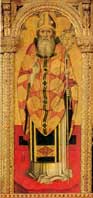
Lovro Dobričević
(a Croatian painter),
St Nicholas, 1448
A few sentences ago, I mentioned the story of the Oak King and the Holly King. The Oak King symbolizes the God in the waning ("growing") part of the year, while the Holly King resembles him in the waxing part. Logically, with the triumph of the Oak King on Yule we are told a story that is actually an allegory for the waning year i.e. the triumph of light over darkness. The exact opposite happens in the Summer solstice when the Holly King wins the battle against the Oak King.

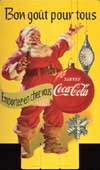
Now where does good old Santa Claus fit in here? This is a slightly more complex question which I will try to answer in a few lines. In Christianity, there was the belief that the presents on Christmas Eve were brought by St. Nicholas (this tradition survives even today) and that the baby Jesus brings them on Christmas day/after Christmas. This simply changed with time. Namely, the first depiction of St. Nicholas (which got "shortened" to Santa Claus) in the form of the Santa Claus we know today first came to exist in 1931. The person who ordered this depiction was no other than Coca Cola who dressed him in their signature colors (red and white). Until then, St Nicholas was depicted in a completely different way (as you can see by the pictures I put in this post). Though there were many other famous gift-bringers in other cultures too. Good examples would be Kristkindl in Germany (often depicted as a gnome of some sort, and when translated, it literally means baby Jesus), Pére Noël in France (translation: Father Christmas) and a slightly different example from Italy - the witch Befana. She would deliver presents to children on her broom and is obviously different from the previous examples. But at least she is proof that not all Witches are bad :D

Haddon Sundblom,
Santa Nicolas,
1931
You're surely familiar with the tradition of decorating the Christmas tree. This is a variation of the Pagan tradition of decorating the Yule log. This log was usually taken from an oak tree (a symbol of the triumph of the Oak King) and a part of this tradition still lives through a cake known as the Christmas/Yule log (at least in Croatia).

I think I've talked enough about other traditions, so let us return back to Paganism.

Let us return to the Goddess for a second and her aspects at this time. If we look at the Celtic tree calendar (which I talked about a bit in this post), we will notice that the Elder tree month lasts from November 25 until December 22, but also that December 23 doesn't fall under any category. This is because it is the so-called "plus one" (+1) day. To elaborate, this month is represented by the Elder tree, which is a symbol of the Goddess in her darker aspects. This plant has white flowers and dark red berries which reminds us of the combines symbols of purity (white, usually the color of female purity i.e. chastity) and menstrual blood (red, of course). December 22 is that day that signifies the death of the Goddess, or rather the God, but at this time, she mourns over him and starts to change (a symbolical death). The day after, December 23, is the day of her (and the God's) rebirth. This myth of the Goddess mourning over the God can also be found in Egyptian mythology when Isis mourns over Osiris after he is killed by his brother Seth (again, a myth in which darkness overcomes light, but light is born again and prevails). The story goes like this: after Seth kills Osiris, he scatters his body parts over the deserts so he can never be reassembled and thus reborn. Isis is the one who searches for these scattered body parts and, after finding them all, asks her sister Nephthys (also her dark side) for help with putting them together. They, of course, succeed in performing this task and banish Seth back to the Underworld...at least until next year hehe :) Connected to this story is the myth of Isis burying Osiris, which happens on December 21, but already on December 23, Isis gives birth to his son (also his reincarnation), Horus. Notice the similarities between the dates and importance of all these characters in various traditions.

I wouldn't like to go on too much longer, so here's a small table that might help you in creating your ritual since it somehow sums up all the important facts about Yule :)

Sabbat: Yule
Pronunciation: /'ju:l/
Date: December 21
Other names: Winter solstice, Yultide, Midwinter,
Christmas, Mother's night
Phase of the God: Dies (the Oak King)
Phase of the
Goddess:
Mourns the God
(the Crone)
Symbolism: Regeneration and rebirth during the
Winter months
Traditions:
Lighting a fire, the Yule log,
carrying candles around the circle
Symbols and
colors:
Red, green, white, silver, golden,
a log/small tree (in a pot), the wheel
Traditional food: Yule log, Christmas bread,
traditional gingerbread cookies,
"fritule", icicle cookies...
Traditional
incens:
Cedar, pine, rosemary

Of course, I could go on and on about this topic, but I think you feel the spirit of this festival like it or not so there isn't much point in endlessly talking about it :) Most of you probably decorate your own Christmas tree, the streets are probably decorated with Christmas lights...but when you look at all this, I just want you to remember that all of these traditions are intertwined some way or another. You will often hear Pagans saying that Christianity took this or that tradition from Paganism, but I don't see how this is in any way bad. And the end of the day, it's not important how we will celebrate a day/a certain God, but how we will celebrate this happy time of the year. If this isn't a happy time, then I don't know what is :) even though it may be dark by 4 p.m., the Sun will soon shine again and the God and Goddess be merry and in love before you know it. 

This is a time of giving...not only of physical gifts but also of emotional and spiritual ones. Remember the only rule of Wicca: harm none. This is the ideal time to apply this rule and think about its deeper meaning.

Since I talked about quite a few topics in this post and in the process managed to forget to mention something you find more interesting/important, feel free to ask questions or add what you feel necessary. If I'm able to answer, I will and I will always hear you out and add what you have to say to the post. 

For now, I wish you all a happy Yule!
Until next time. Yours,
Witch's Cat