Prikazani su postovi s oznakom Litha. Prikaži sve postove

4.7.16

Lemon and Strawberry Slices

Refreshing cakes are just the kind of sweets we need in the middle of summer and the combination of lemons and strawberries in this cake not only give it a certain tartness but they also represent the wonderful, vibrant colors of the sun which governs over the sky this time of year. 

With this post, I would also like to wish you all a happy and blessed Litha, albeit with delay. I hope you celebrated this sabbat as you wanted to and that this recipe will be useful to you sooner or later and enrich your celebration.


You Will Need:

For the crumbly base:

  • 3/4 cup softened butter
  • 1/2 cup (brown) sugar*
  • 2 cups (whole-wheat) flour*
  • 1/4 tsp salt

For the filling:

  • 1 cup freshly-squeezed lemon juice (ca. 3 large lemons)
  • 2 tsp lemon zest (ca. 2 lemons)
  • 1 cup roughly chopped strawberries
  • 3/4 cup (brown) sugar*
  • 2-3 tbsp agave syrup
  • 4 eggs
  • 1 (to 1 1/2) cup (whole-wheat) flour*
  • 1 packet baking powder
  • 1/4 tsp salt

  • powdered sugar for sprinkling

Note: You can substitute the ingredients that have a star (*) next to them if you want the cake to be lighter in color. The lighter version is, in my opinion, aesthetically much more pleasing, although this version is slightly healthier. So you can use plain wheat flour instead of whole-wheat and normal granulated sugar instead of brown sugar. With the light version of the cake, the base will be very light (almost white) and the strawberries and lemon will color the filling a pinkish color. But it's all up to you.

How To Prepare:

The base:

  1. Heat the oven to 175°C.
  2. Cover a deeper baking pan with baking paper approximately 22 x 38 cm in size.
  3. Mix the butter and sugar using an electric mixer. Add the flour and salt and mix until you get a crumbly mixture.
  4. Pat the mixture into the baking pan so you evenly cover the whole surface. And make sure it's well-packed (i.e. firm, with no holes, etc.) otherwise the base will be too crumbly and won't hold.
  5. Bake for 15 minutes.

The filling:

  1. Grate and squeeze the lemons and chop up the strawberries.
  2. Mix the lemon juice, lemon zest, strawberries  and sugar together. Add the eggs and mix. Add the flour, baking powder and salt and mix until combined.
  3. Pour the mixture onto the base while it's still hot.
  4. Return in the over for another 25 minutes.
  5. Leave it to cool and then sprinkle with powdered sugar.

Ploške od limuna i jagoda

Osvježavajući kolači su upravo ono što nam treba u sred ljeta, a kombinacija limuna i jagoda ne samo da daju blagu kiselost ovom kolaču nego i predstavljaju prekrasne, žarke boje sunca koje dominira nad nebom u ovo doba godine.

S ovim postom vam ujedno želim i sretnu i blagoslovljenu Lithu, makar sa zakašnjenjem. Nadam se da ste proslavili ovaj sabat kako ste htjeli i da će vam ovaj recept kad-tad poslužiti za obogatiti slavlje.


Potrebno je:

Za hrskavu podlogu:

  • 3/4 čaše omekšalog maslaca
  • 1/2 čaše (smeđeg) šećera*
  • 2 čaše (integralnog) brašna*
  • 1/4 čajne žličice soli

Za biskvit:

  • 1 čaša limunovog soka (ca. 3 velika limuna)
  • 2 čajne žličice limunove kore (ca. 2 limuna)
  • 1 čaša nasjeckanih jagoda
  • 3/4 čaše (smeđeg) šećera*
  • 2-3 žlice agavinog sirupa
  • 4 jaja
  • 1 (do 1 1/2) čaša (integralnog) brašna*
  • 1 prašak za pecivo
  • 1/4 čajne žličice soli

  • šećer u prahu za posipanje

Napomena: sastojke sa zvjezdicom kraj sebe (*) možete zamijeniti ako želite da vam kolač bude svjetliji. Svijetla varijanta je po mom mišljenju estetski mnogo ljepša, ali je ova nešto zdravija. Dakle integralno brašno možete zamijeniti običnim glatkim brašnom, a smeđi šećerom običnim kristal šećerom. Kod svijetle varijante ćete dobiti svijetu hrskavu podlogu (gotovo bijelu), a jagode i limun će vam obojati biskvit u rozo. Odluka je na vama.

Priprema:

Podloge:

  1. Zagrijte pećnicu na 175°C.
  2. Papirom za pečenje prekrijte jedan dublji pleh za pečenje otprilike veličine 22 x 38 cm.
  3. Izmiješajte maslac i šećer električnim mikserom. Dodajte brašno i sol te miješajte dok se ne napravi prhka smjesa.
  4. Utapšajte tijesto u lim za pečenje tako da ravnomjerno prekriva površinu i da je dobro nabijen.
  5. Pecite 15 minuta.

Biskvita:

  1. Naribajte i iscijedite limune te isjeckajte jagode.
  2. Izmiješajte sok od limuna, limunova koru, jagode i šećer. Dodajte jaja i miješajte. Dodajte brašno, prašak za pecivo i sol te miješajte da se sve sjedini.
  3. Prelijte još vruću podlogu voćnom smjesom.
  4. Pecite sve skupa još 25 minuta.
  5. Pustite da se ohladi i pospite šećerom u prahu.

26.6.15

Peach Cake

Summertime brings intense heat and therefore also a need for all things refreshing. This light cake made from yogurt and fresh fruit is a great choice for all of you that have a sweet tooth but who also feel like eating something refreshing. :) Actually any seasonal fruit (which doesn't lose its quality in the oven) can be used for this cake, but peaches give the dough that special juiciness which is why it stays soft for days after its been made!


You Will Need:

  • peaches (I used 5 or about half a kilogram, but you can use however many you like)
  • 2 eggs
  • 100-150 g brown sugar
  • 1 cup (2 dl) yogurt/cooking cream
  • 2 cups flour
  • 1 packet baking powder
  • 1 dcl oil
  • powdered sugar

How To Prepare:

  1. Using an electric mixer, mix together eggs and sugar then add the yogurt and oil.
  2. Add the baking powder to the flour and add this to the above mixture bit by bit. If needed, add some more yogurt so the final mixture isn't too dense.
  3. Grease your baking tin with oil and sprinkle it with flour. Pour in the mixture.
  4. Peel off the skin from the peaches, take out the pit and cut it into pieces (whichever size you like).
  5. Heat the oven to 175°C.
  6. Bake the cake for 10 minutes.
  7. Take out the cake and "sprinkle" the peach chunks on it.
  8. Put the cake back in the oven for about another 30 minutes (you'll know when the cake is done when you poke a toothpick in it and the dough doesn't stick to it).
  9. When it has cooled down a bit, sprinkle some powdered sugar over it.
Enjoy!!! :D
Until next time. Yours,
Witch's Cat

23.6.15

Biskvit od breskvi

Ljetno vrijeme sa sobom donosi velike vrućine, a time i potrebu za osvježenjem. Ovaj lagani kolač od jogurta i svježeg voća je zato super izbor za sve slatkoljupce koji imaju potrebu za nečim slatkim, ali istovremeno osvježavajućim. :) Zapravo bilo koje sezonsko voće (koje ne gubi na kvaliteti u pećnici) može poslužiti, ali breskve daju posebnu sočnost biskvitu koji ostaje mekan još danima poslije!


Potrebno je:

  • breskve (količina po želji, ja sam ih iskoristila 5 tj. otprilike pola kilograma)
  • 2 jaja
  • 100-150 g smeđeg šećera
  • 1 čaša (2 dcl) jogurta/vrhnja
  • 2 čaše brašna
  • vrećica praška za pecivo
  • 1 dcl ulja
  • šećer u prahu

Priprema:

  1. Električnim mikserom pomiješati šećer i jaja te dodati jogurt i ulje.
  2. Pomiješati brašno s praškom za pecivo i pomalo dodavati u smjesu poviše. Po potrebi dodati još malo jogurta ako je smjesa previše gusta.
  3. Namazati lim za pečenje uljem, pobrašniti ga i uliti smjesu.
  4. Oguliti koru s breskvi, izvaditi koštice i isjeckati na komade (veličina po želji).
  5. Zgrijati pećnicu na 175°C.
  6. Peći kolač 10 minuta.
  7. Izvaditi kolač i "pobacati" komade breskvi.
  8. Vratiti kolač u pećnicu još 30ak minuta (biti ćete sigurni da je kolač gotov kada zabodete čačkalicu unutra i ništa se ne bude lijepilo za nju).
  9. Kada se kolač malo ohladi posuti ga šećerom u prahu.
Uživajte!!! :D
Vaša Witch's Cat

Litha kao vrijeme suočavanja

Kada pomislimo na Lithu, pomislimo na ljeto, sunce, veselje i, za nas koje živimo na moru, kupanje (ali i za vas koji putujete na more). Ali kao i svaki drugi sabat, Litha je mnogo kompleksnija od toga.

Istina je da je Sunce za Lithu na vrhuncu snage i da je dan zbog toga najduži, ali ovo je ujedno dan kada se Sunce (mitološki predstavljeno figurom Boga) žrtvuje kako bi se Kolo godine nastavilo okretati, a zemlja mogla preporoditi od silne vrućine. Od ovog dana nadalje rastu sile kaosa, a sile kozmosa se smanjuju, dani postaju sve kraći i sunčeva snaga opada. Ova žrtva je potrebna kako bi se prirodni ciklusi nastavili.

Prema Kolu godine, sve kulminira na Lithi - svi naši planovi i ciljevi koje smo "posadili" za Imbolc su klijali i rasli preko Ostare i Beltanea dok nisu dosegli svoju punu snagu upravo za ovaj sabat. Što je sada ostalo napraviti? Sagledati unatrag što smo napravili i jesmo li ostvarili sve što smo naumili. Stoga je ovo vrijeme introspekcije. Ovo nije lagan zadatak i može uzrokovati isplivavanje raznih emocija i saznanja na površinu, ali je nužan za daljnji individualni rast i razvoj.

Za mene je ova Litha bila upravo to - prilika za introspekciju. Moram priznati da sam saznala dosta novog o sebi i svojim bližnjima te da mi većina ovih saznanja nije baš lako pala. Ali očito je da je ovakvo nešto bilo potrebno. Zahvaljujući tome znam što dalje trebam činiti i kakve ciljeve postaviti.

Uobičajeno je za Lithu iskoristiti golemu količinu energije koja kruži za suočavanje s problemima i rješavanje istih. I toga je bilo u mene. Neki će ovu energiju koristiti za pomoć drugima, bilo ljudima, životinjama ili biljkama. Njegovanje je zato još jedan važan aspekt Lithe. U ovom pogledu sam doživjela najljepša iskustva u životu koja su mi vratila nadu u ljude, u njihovu dobrotu i velikodušnost. Ovo razdoblje mi je općenito bilo jako burno, iako postajem svjesna da su i takvi periodi potrebno. Oni šokantni trenuci nas prodrmaju, razbude i ukažu nam na toliko toga (iako ponekad na grubi način) što nam je potrebno za nastaviti dalje kroz život.

Potičem vas da i sami stanete, osvrnete se na prošle mjesece i dokučite nešto novo! Možda neće biti lagano...čak će vam ovo novo saznanje možda biti bolno, ali naposljetku svako "zašto" ima svoje "zato".

Neka vam ova Litha bude blagoslovljena i donese mudrost, razboritost, odlučnost i hrabrost.
Vaša Witch's Cat


22.6.15

Litha as a Time of Confrontation

When we think of Litha, we think of the summer, sunshine, happiness and, for those of us that live near the sea and for those of you that travel to get to the beach, bathing season. But as is the case with every other Sabbath, Litha is much more complex than this.

It's true that the Sun is at the height of its power on Litha and that this is the longest day of the year because of this, but the summer solstice is also the day when the Sun (mythologically represented by the figure of the God) sacrifices itself so the Wheel of the Year could continue turning and the earth could regenerate itself after the intense heat. From this day onward, the forces of chaos grow and the forces of cosmos decline, the days become shorter and the Sun begins to lose its strength. But this sacrifice is necessary for the natural cycles to continue.

When you look at the Wheel of the Year, everything culminates on Litha - all of our plans and goals which we "planted" on Imbolc and watched grow through Ostara and Beltane to this point have now reached their full potential. So what is left for us to do? Look back at what we have done and see if we have achieved everything we planned to. Therefore, this is a time for introspection. This is not an easy task and it may lead to many emotions and facts coming to light, but it is necessary for further individual growth and evolution.

This Litha was precisely all that for me - a time of introspection. I have to admit that I have come to know a lot more about myself and my loved ones and that most of this knowledge was hard to take in. But obviously this was necessary and thanks to all of this, I now know what I have to do next and which goals to set myself.

It is normal for Litha to use the huge amounts of energy flowing around in order to face certain problems and solve them. This aspect of Litha was also present for me. Some use this energy to help others; be they humans, animals or plants. Nurturing is therefore another aspect of this Sabbath. I had some of the most touching experiences of my life in this respect. They restored my faith in people, their goodness and generosity. Generally, this period was very tumultuous for me, although I am becoming aware that these phases are also a necessary part of life. It is these shocking moments that really shake us and wake us up and point out (albeit sometimes in an indelicate way) so many novelties to us which are necessary for us to continue in life.

I urge you to stop, look back at the past few months and grasp something new! It may not be easy... This new knowledge may even be painful for you, but in the end, every why has a wherefore.

May this Litha be blessed and may it bring you wisdom, prudence, determination and courage!
Yours,
Witch's Cat

22.6.14

Biškoti od meda i lavande

Lavanda, med  i naranča - tri prekrasna sastojka u ovim kolačićima kojih se može naći na pretek ljeti. Upravo su zato i prikladna za Lithu! :D A svaki daje svoju posebnu notu. Naranča daje svježinu, med slatkoću, a lavanda ono nešto posebno što se ne može naći u svakom kolaču. :) 

Ovi biškoti me zapravo jako podsjećaju na pandolette jer su oboje prilično suhi kolači čiji je glavni sastojak brašno. Također, oba imaju kora od voća u sebi samo što se u ove biškote stavlja lavanda umjesto badema. Čak je i slični način pripreme! Pandolette su vam sigurno radile mame, ili bake pa ako bude problema s kolačem, možete njih pitati. Makar se nemojte mene ustručavati pitati.


Potrebno je:

  • 3 čaše brašna
  • 1 žličica praška za pecivo
  • 1/2 žličice sode bikarbone
  • 1/4 žličice soli
  • 2/3 čaše šećera
  • 3 jaja
  • 3 žlice meda
  • 1/2 žličice vanilijinog ekstrakta
  • 2 žlice narančine kore
  • 1 žlica osušene lavande (cvijet)

Priprema:

  1. Ugrijte pećnicu na 175°C (malo manje ako vam je jača).
  2. Obložite jednu tepsiju papirom za pečenje.
  3. U jednoj manjoj zdjeli izmiješajte brašno, prašak za pecivo, sodu bikarbonu i sol.
  4. U velikoj zdjeli izmiješajte šećer i jaja mikserom, dodajte med, vanilijin ekstrakt, naribanu narančinu koru i osušene cvjetove lavande.
  5. Dodajte suhu smjesu u smjesu s jajima i miješajte kuhačom dok smjesa ne postane kompaktna. Dodajte još malo brašna ako vidite da je smjesa i dalje previše ljepljiva (iako treba biti malo ljepljiva).
  6. Pobrašnite radnu površinu i na njoj oblikujte tijesto u kobasice (širina i duljina ovisi o veličini vaše tepsije i pećnice te o tome koliko želite da vam biškoti budu veliki).
  7. Posložite kobasice na tepsiju (ili više tepsija ako imate više kobasica) i stavite peći.
  8. Pecite 10 minuta pa onda izvadite tepsiju i okrenite je za 180°. Nastavite peći još 10 minuta na istu temperaturu (sve skupa 20 minuta pečenja).
Napomena: tijesto ne bi smjelo puno promijeniti boju tijekom pečenja! Na donjoj strani će možda uhvatiti nešto više boje ako vam je jača pećnica kao meni, ali s gornje strane treba ostati gotovo iste boje kao kada ste ga stavili peći. Provjerite čačkalicom nakon otprilike 15 minuta je li vam kolač gotov (ako je ljepljiv onda nije), ali bi trebao biti idealan nakon 20 minuta.
  1. Izvadite tijesto i pustite ga da se ohladi nekoliko minuta.
  2. Smanjite temperaturu na nešto iznad 125°C.
  3. Dok je tijesto još toplo, izrežite ga na ploške debljine otprilike 2-2,5cm. 
  4. Posložite ploške polegnuto na tepsiju ostavljajući dovoljno prostora među njima da vrući zrak može kolati. 
  5. Vratite tako posložene ploške u pećnicu i pecite još cca. 10 minuta (možda će trebati 7, a možda 15 minuta ovisno o jačini pećnice i o tome koliko je dobro zagrijana pa provjerajite redovito). 
  6. Izvadite biškote iz pećnice, pustite ih da se u potpunosti ohlade i spremite u hermetičku posudu jer će tako moći trajati i nekoliko tjedana.

Ako po prvi put pečete ovakvu vrstu kolača, trebate zapamtiti da se biškoti stvrdnu kada se ohlade pa im ne smijete dozvoliti da previše porumene u pečenju. Ako vidite da su još previše svijetli, ili mekani iznutra kada razrežete kobasice, onda će sigurno trebati još onih posljednjih 10ak minuta pečenja, ali sami procijenite hoće li taj korak uopće biti potreban (meni je bio za one deblje dijelove kobasica). Na fotografiji najbolje vidite kakve trebaju biti teksture i boje i uočite koliko je donji dio biškota tamniji od gornjega. 

Nadam se da će ove napomene pomoći. :) Zaista je jednostavan kolač, ali je potrebno malo prakse, ili iskustva s ovom vrstom kolača kako bi tempiranje bilo savršeno. Javite kako su vam ispali i uživajte! 

Do sljedećeg posta,
vaša Witch's Cat

Honey-Lavender Biscotti

Lavender, honey and oranges - three wonderful ingredients in this recipe that you can find in abundance during summer. This is precisely why they are so appropriate for Litha! :D And each gives their own special note. The orange zest gives freshness, the honey gives sweetness and the lavender gives that special something that you just can't find in every cake. :)

These biscotti actually remind me a lot of pandoletti. These pandoletti are a traditional recipe in Croatia and most mothers and grandmothers know how to prepare them. They are essentially a dry cake, just like these biscotti, because their main ingredient is flour. Another similarity they have to biscotti is that they also have orange/lemon zest as an important ingredient, except they have almonds in stead of lavender. They are even prepared similarly! In any case, feel free to contact me if you have any problems with the recipe; it can be tricky if you're trying it for the first time. 


You Will Need:

  • 3 cups all-purpose flour
  • 1 teaspoon baking powder
  • 1/2 teaspoon baking soda
  • 1/4 teaspoon salt
  • 2/3 cup granulated sugar
  • 3 eggs
  • 3 tablespoons honey
  • 1/2 teaspoon pure vanilla extract
  • 2 tablespoons orange zest
  • 1 tablespoon dried lavender blossoms

How To Prepare:

  1. Heat up your oven to 175°C (a little bit less if your oven is strong).
  2. Cover one baking pan with baking paper.
  3. In a smaller bowl, mix flour, baking powder, baking soda and salt.
  4. In a large bowl, mix sugar and eggs with an electric mixer then add honey, vanilla extract, orange zest and lavender. 
  5. Pour the dry ingredients into the egg mix and mix together with a wooden spoon until the mixture becomes compact. Add a bit more flour if the mixture is still too sticky (although it should be slightly sticky).
  6. Flour your working area and shape the dough into a log (the length and width depend on the size of your baking pan and your oven, but mostly on how big you want your biscotti to be).
  7. Put the log(s) onto your baking pan and into your oven.
  8. Bake for 10 minutes and then take out the baking pan, turn it around for 180° and put it back in. Leave to bake for another 10 minutes (that makes 20 minutes of baking altogether).
Note: the dough should not change color while baking! It may become golden-brown on the bottom if your oven is a bit stronger like mine, but the color should remain almost unchanged on the top. After about 15 minutes of baking, start checking the dough with a toothpick (if its still sticky, then it's not done yet), but it should be ideal after 20 minutes.
  1. Set the cake aside to cool a few minutes.
  2. Lower the oven temperature to a little above 125°C.
  3. While the cake is still warm, cut it into slices about 2-2.5cm in thickness.
  4. Place the slices on the baking sheet lying flat but take care to leave enough room between them for the hot air to circulate.
  5. Bake on the lowered temperature for about another 10 minutes (it may take 7, or even 15 minutes depending on the strength of your oven and how well heated up it is but do check the biscotti often enough so they don't get too crisp).
  6. Take the biscotti out of the oven, set them aside to cool down completely and store them in an airtight container. This way they will be good for a few weeks.

If this is your first time baking a cake such as this one, you have to remember that the biscotti harden once they have cooled down. This is why you should not let them get too crisp and golden-brown while baking. If you see that they are still too light or soft after you have cut the log into slices, then steps 12 and 13 will be necessary (only the "fattest" pieces of my log needed extra baking). But you will see in the picture what their texture should be like, what color they should be and so on. Oh, and notice how my biscotti are a bit more brownish on the bottom than on the top; that's normal if you have a stronger oven.

In any case, I hope these tips helped. :) This really is a simple cake, but you need a bit of practice or experience to get the timing just right. Be sure to tell me how your biscotti turned out! 

Until next time. Yours,
Witch's Cat

20.6.13

Limun kuglice


Ova mala poslastica je pravo ljetno osvježenje...vrlo je prhka, a limunova kora i sok joj daje upravo ono što vam treba za ljeto :) Evo ja upravo jedem jednu kuglicu uz malo mlijeka :D 

Uz to što je osvježavajuće je jako lagan recept, ali to možete i sami prosuditi ;)

Potrebno je:

  • 340 g oštrog brašna
  • 6 žlica šećera u prahu (ja sam smanjila na 5)
  • 2 limuna (sok od jednog limuna+izribana kora od dva)
  • 1 prašak za pecivo
  • 120 g maslaca
  • 2 istučena jaja
  • malo ulja
  • malo mlijeka
Napomena: od ove količine mi je ispalo nešto više od 50 keksića iako nisu previše sitni. Ukratko, saaaasvim dovoljno za najesti se! 

Priprema:

  1. Kuhačom pomiješajte brašno, šećer, limunovu koru i prašak za pecivo.
  2. Dodajte omeškali maslac (možete kuhačom ili rukama ovo izmiješati).
  3. Dodajte izmučeno jaje i limunov sok. Ja sam sada miješala mikserom. U originalnom receptu nije bilo ni ulja ni mlijeka, ali sam dodala 3-4 žlice oboje kako bi smjesa bila kompaktnija (prhko je tijesto i ponekad ga je teže umijesiti jer se počne mrviti).
  4. Ako želite, možete staviti tijesto u hladnjak na sat vremena (ja nisam jer nisam imala previše vremena, ali to može tijesto učiniti još finijim...makar sam ja i s ovim rezultatima jako zadovoljna).
  5. Postavite papir za pečenje na plitku tepsiju i zagrijte pećnicu na 180°C (ja sam smanjila na 170°C pošto mi je malo jača pećnica).
  6. Oblikujte tijesto u malene kuglice i posložite na papir za pečenje (ostavite centimetar-dva prostora između njih).
  7. Pecite od 10-15 minuta. Keksi će biti jako svijetli od gore, ali otvorite peć nakon 10-12 minuta i provjerite kekse na dnu. Ne bi smjeli biti previše tamni već rumeni.
  8. Izvadite ih da se ohlade i onda pospite šećerom u prahu (ako želite, naravno). 
To bi bilo to :D vrlo jednostavno, zar ne?
Zaista vam neće trebati predugo da ispećete ovo...znam da se nikome ne sviđa usred ljeta, za kada je ovaj kolač i namijenjen, stati u vrućoj kuhinji :)

Sretna vam Litha i uživajte! :D
vaša Witch's Cat

Lemon balls


This little desert is a real summer refreshment...it's very crumbly and the lemon juice and zest give it exactly what you need for summer :) I'm actually eating one of them at the moment with a glass of milk :D

Apart from the fact that this recipe's refreshing, it's also very easy, but you can be the judge of that :)

You will need:

  • 340g of pastry flour
  • 6 spoons of powdered sugar
  • 2 lemons (juice from one lemon+zest from both lemons)
  • 1 packet of baking powder (about 2 teaspoons)
  • 120g of butter
  • 2 beaten eggs
  • a bit of sunflower oil
  • a bit of milk
Note: I ended up with slightly more than 50 cookies out of this quantity of ingredients, although I didn't make them too small so don't worry, you definitely won't go hungry ;)

How to prepare:

  1. Mix together flour, sugar, lemon zest and baking powder.
  2. Add softened butter (you can mix it in with your hands or a wooden spoon, whichever your prefer).
  3. Add beaten eggs and lemon juice. I started using a mixer at this point. Also, there was no milk or sunflower oil in the original recipe but I added just 3-4 tablespoons of both to make the mixture more compact (since these cookies are crumbly, it can be tricky to make the dough into balls).
  4. If you want to, you can leave the dough in the fridge for about an hour, though I didn't do this because I didn't really have the time. This is supposed to make the dough finer, but I'm pretty happy with the results even without this step :)
  5. Put some baking paper on your baking pan and heat up your oven to 180°C (since my oven is a bit stronger, I put it at 170°C).
  6. Make the dough into small balls and place them on the pan making sure to leave a centimeter or two between each one.
  7. Bake for 10-15 minutes. The cookies will be quite pale on the top, but take care to check what their bottom looks like after 10-12 minutes of baking (it should be slightly rosy).
  8. Leave them out to cool down a bit and sprinkle with powdered sugar if you like.
And that would be it :D pretty simple, isn't it?
It really won't take too long for you to bake these cookies...I know that no one feels like staying in a hot kitchen, especially not at summer time for which these cookies are intended.

Anyway, merry Litha and enjoy! :D
Yours,
Witch's Cat

Zakoni o vještičarstvu i kraj progona

Za koji dan (tj. 22. lipnja) će biti šezdeset i druga godišnjica kraja službenih progona vještica! :D mislila sam da će biti prikladno reći nešto o događajima koji su doveli do ovoga jer, kao što znate, vještice su bile proganjane stoljećima. Za službeni početak progona se može uzeti 1484.g. kada je Papa Inocent VIII izdao svoju bulu kojom se izjasnio da podržava progone vještica. Dvije godine kasnije je napisana poznata knjiga Malleus Maleficarum koja će poslužiti kao vrsta priručnika za lovce na vještice. 

U ovom bih se postu ipak htjela bazirati na Englesku pošto se Zakoni o vještičarstvu prvenstveno odnose na ono što se zbivalo u njoj, a ne toliko na kontinentu. Oni su za wiccu važni jer je njihovo povlačenje omogućilo "javno" tj. slobodnije prakticiranje vještičarstva u dvadesetom stoljeću. Među ljudima kojima je ovo olakšalo život je svakako spadao Gerald Gardner (osnivač wicce) koji je do tada morao svoja vjerovanja držati u tajnosti i objavljivati knjige pod pseudonimima, ili pak pod krinkom romana.

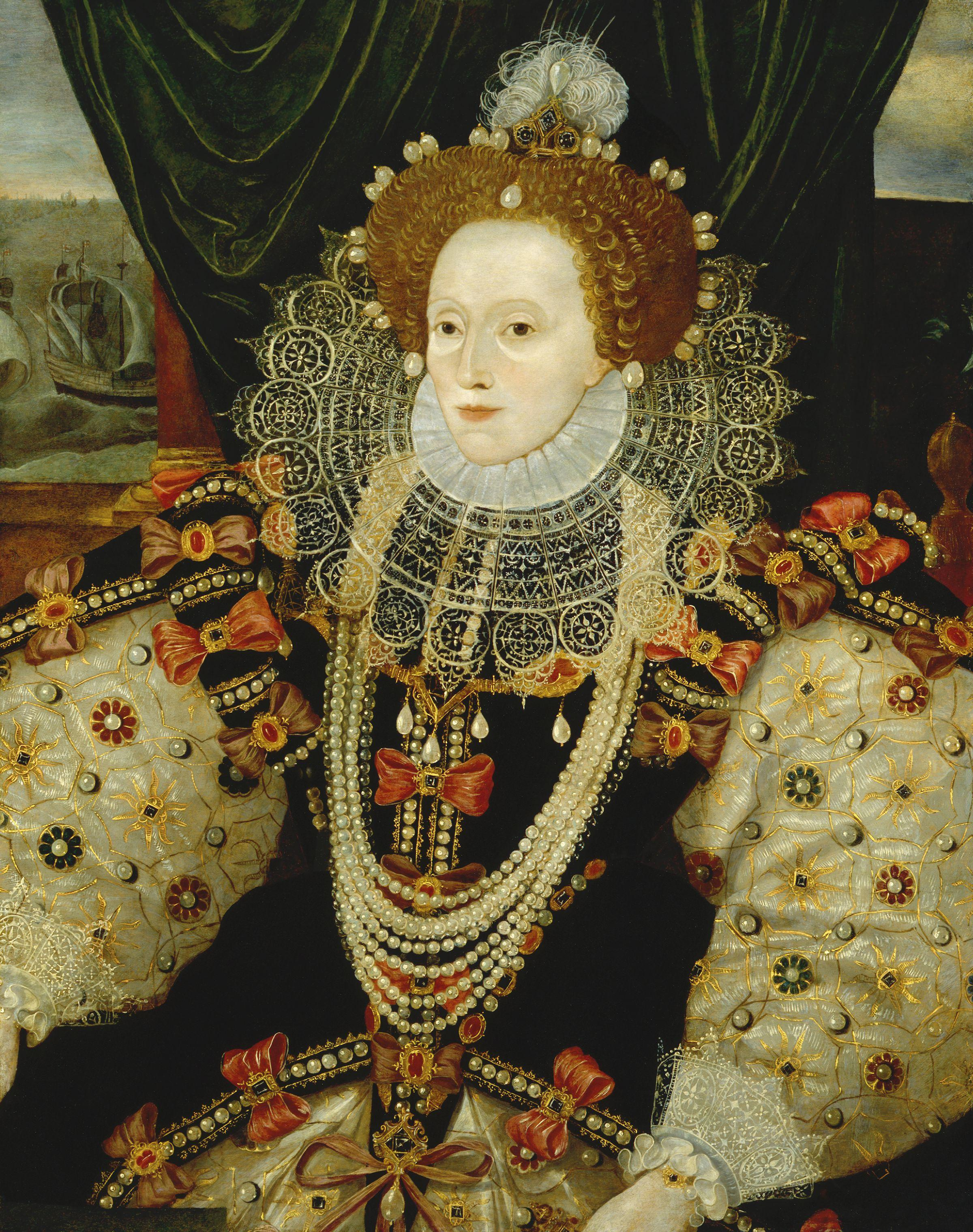
Portret kraljice Elizabete I
Godina s kojom bih započela ovu priču je 1547. kada je engleski kralj Edvard VI (vlada 1547.-53.g.) povukao Zakon o vješticama iz 1541.g. kojeg je uveo njegov otac, Hernik VIII (vladao od 1509.-47.g.). Ovo je, dakle, bio prvi Zakon o vješticama.

Godine 1562./63. (ovisno o izvorima), ovaj je zakon ponovno uveden "zahvaljujući" kraljici Elizabeti I, kćeri Henrika VIII (1558.-1603.g.). Odnosno, sada već pričamo o drugom Zakonu o vješticama. On je bio dosta blag naspram prijašnjim kaznama. Za osobu kojoj je to bio prvi prestup, kazna je bila postavljanje na stup srama, ako bi osoba bila optužena tri puta za isto krivično djelo, onda bi bila smaknuta. Progoni su u Engleskoj bili najokrutniji za vrijeme njezine vladavine, iako nikada nisu bili toliko oštri kao na kontinentu jer je mučenje bilo zabranjeno u Engleskoj. Na kontinentu je mučenje bilo sastavni dio svakog priznanja za praktički bilo koje krivično djelo, a pogotovo za bavljenje vještičarstvom. 

No, jedna knjiga smiruje situaciju - The Discoverie of Witchcraft (prevedeno Otkrivanje vještičarstva) čiji je autor bio Reginald Scot. Ona je bila među prvim djelima koja je zauzela racionalni stav i ljude navela da posumnjaju u svoja praznovjerna poimanja vještičarstva. Ona ipak nije zaživjela dugo jer je njezino spaljivanje naredio Jakov VI, kralj Škotske koji je postao engleskim kraljem 1603.g. i imenovao se kraljem Jakovom I od Engleske. Njegova majka, Marija I, kraljica Škotske, je zagovarala smrtne kazne vješticama i provodila svoje ideje u djelo ubijajući oko 200 vještica godišnje u Škotskoj. On je majčine zamisli očito preuzeo i imao ih na umu kada je dao spaliti sve kopije ove knjige. Isti taj Jakov je objavio traktat o demonologiji i vještičarstvu, nakon čega je postao pokrovitelj lovcima na vještice.

Portret kralja Jakova I
engleskog
Sljedeći tj. treći Zakon o vješticama je stupio na snagu već 1604.g. (samo godinu dana nakon što je Jakov I. došao na vlast). Smatra se da je godišnji broj ubijenih vještica bio 500 tijekom prvih osamdeset godina sedamnaestog stoljeća. Uzmite u obzir da i dalje govorimo samo o Engleskoj, što znači da ova brojka ne uključuje broj ubijenih na kontinentu!

S vremenom su ljudi počeli sve manje i manje vjerovati u istinitost svih negativnih tvrdnji o vješticama, a pomalo i sumnjati u njihovo postojanje. Ipak su postojali neki pojedinci poput Josepha Glanvila koji su htjeli ljude uvjeriti u to da one postoje i da svima pakoste. On je te svoje ideje iznio u knjizi Sadducismus Triumphatus. Dokaz o ovoj nevjerici je suđenje Jane Wenharn iz 1711. godine. Ova je žena bila optužena za vještičarstvo, ali ju je sudac oslobodio optužbe. Ovaj se slučaj uzima za posljednje suđenje vještičarstva u Engleskoj.


Portret kralja Juraja II
Na vlast uskoro dolazi kralj Juraj II (1727.-60.g.) za čije je vlasti izdan četvrti Zakon o vješticama (1735.g.). No, ovaj je bio nešto drukčiji od prethodnih. Sva dotadašnja sumnja u postojanje vještica je akumulirala u ovom događaju jer ovaj zakon kaže da vještice zaista ne postoje i da se stoga nikoga ne može kazniti na temelju toga, ali da se sada može suditi ljudima kao varalicama jer to očito jesu ako glume da su vještice.

Ljudi su se malo po malo uozbiljili po pitanju vještičarstva. Dokaz ovoga je djelo Del Congresso Nottorno delle Lammie (O noćnim sastancima vještica) čiji je autor Girolamo Tartarotti. Ova knjiga je bila revolucionarna jer je prva sagledala vještičarstvo kao tradiciju. Tartarotti tvrdi da su vještice zapravo sljedbenice drevnog Dijaninog kulta, iako je malo pokvario dojam o vješticama povezavši ovaj kult sa nekim pravcima ceremonijalne magike koja se bavila, kako on kaže, prizivanjem demona.


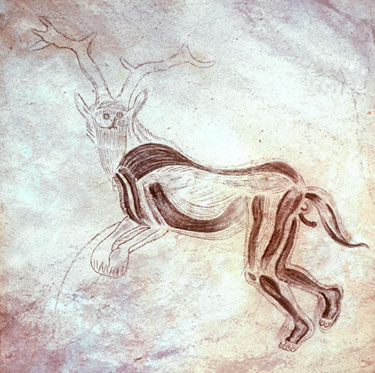
Prikaz "Rogatog Boga" u spilji
Les Trois Frères u Francuskoj
Tako su se stvari nastavile razvijati da bi se do 1848. godine u potpunosti razvio moderni spiritualizam. Allan Kardec je 1857.g. upoznao zapadni svijet sa pojmom reinkarnacije, a u sljedećem stoljeću se na scenu pojavila dr. Margaret Alice Murray, koja vam je do sada vjerojatno već poznata ako ste čitali moj blog. Objavila je nekoliko knjiga 1921.g.: The Witch Cult in Western Europe (Vještičji kult u zapadnoj Europi) i The God of the Witches (Bog vještica). Ove su knjige, na neki način, naslijedile Tartarottijevu knjigu u smislu da tvrde da vještice nisu nešto novo, ali ne povezuju vještičarstvo sa demonima na ikoji način. Margaret Murray u njima tvrdi da je vještičarstvo ostatak drevnih europskih paganskih religija te da je Rogati Bog kojeg se štuje zapravo najstariji prikaz božanstva uopće u povijesti čovječanstva. To jest, ona ga poistovjećuje sa rogatim bićima prikazanima na spiljskim crtežima. Ako vas zanima više o ovoj tematici možete pogledati jedan zanimljiv članak po nazivu "Psiho-antropologijsko jedinstvo Sapiensa" koji se bavi prikazima poput ovih u spilji Les Trois Frères. 

Dakle, sve ovo vrijeme je Zakon o vješticama i dalje na snazi, makar je sve nekako pritajeno. Vještice se ne spominju baš toliko, nema nikakvih kažnjavanja ni suđenja jer je društvo postalo u potpunosti skeptično po tom pitanju i uspjelo zaboraviti na sve tragedije koje su se dogodile tijekom stoljeća. No, morao se pojaviti netko tko će ih podsjetiti, a to je bio Gerald Gardner koji je 1949.g. objavio knjigu High Magic's Aid (Pomoć visoke magije) pod pseudonimom Scire. Kako bi izbjegao kršenje ikakvih zakona i suđenje uopće, ogradio se pseudonimom i time što je knjigu zamaskirao kao roman makar se u njoj nalaze potpune instrukcije za izvođenje nekih rituala koji se i dan danas prakticiraju u wicci. Kao primjer bih uzela ovaj citat iz knjige koji opisuje dio procedure otvaranja kruga. Ne bih ga htjela prevoditi jer će samo uništiti cjelokupni dojam, pa se nadam da razumijete engleski koliko-toliko :)
"Upon the altar-table lay the athame, the magic sword, the burin and the sprinkler, also materials for their work; four iron discs, two-and-a-half inches in diameter, already purified by fire, had been prepared previously. There were writing materials, lengths of cord, some black cloths and a scourge, laid ready. Before the bench were two stools. The inner circle, seven feet in diameter ... was already drawn on the floor; surrounding it was a double circle eight feet in diameter, with names of . power between the two. Thur took the magic sword and retraced all the markings with its point, for the painted circle has no power of protection, which comes from power of the magic sword or the athame. It but serves as a guide to the latter, to ensure they draw the circle perfectly."
Gerald Gardner, isječak iz intervjua
Dvije godine nakon objavljivanja ove knjige (dakle 1951.g.) je došao trenutak kojeg su sve vještice čekale! Povučen je Zakon o vješticama iz 1735.g.! Na njegovo mjesto je došao Zakon o neovlaštenim medijima (eng. Fraudulent Mediums Act). Kada kažem "medij" mislim na osobu koja prenosi poruke između ovog i drugih svjetova. Naime, ovaj je zakon priznao mogućnost predviđanja budućnosti, duhovne komunikacije, psihičkih moći i svega što ide uz to, ali je svjestan da te "moći" ne posjeduje svatko. Smo one osobe koje su glumile da ih posjeduju su trebale biti kažnjene, a bilo bi im još gore ako su tražili novac za svoje usluge. Gardner je sada bio slobodan objavljivati knjige pod pravim imenom, što je i napravio 1954.g. sa svojim djelom Witchcraft Today (Vještičarstvo danas). Ovo je bila prva knjiga koja opisuje tko vještice zaista jesu i što rade, a ono što je rečeno u njoj je autentično jer je Gardner prepričavao svoja vlastita iskustva.

Sada znate zbog čega mi danas možemo tako slobodno prakticirati svoja uvjerenja, makar su drukčija od tuđih. Ja sam zahvalna svim nevinim dušama koje su umrle prije mnogo godina i žrtvovale se za svoja uvjerenja, a žalim za onima koji su krivo "optuženi". Nadam se da ćete uzeti barem minutu vremena 22. lipnja i razmisliti o slobodi koju imate, o svim ovim ljudima i promisliti što za vas znači sloboda mišljenja, uvjerenja i djelovanja.

Ako vas ova tematika dodatno interesira, možete pročitati sljedeće knjige u kojima ćete naći nešto više podataka:
Marion Gibson - Witchcraft and Society in England and America (Vještičarstvo i društvo u Engleskoj i Americi)
Gerald Gardner - The Meaning of Witchcraft (Značenje vještičarstva)
Raymond Buckland - The Witch Book; the Encyclopedia of Witchcraft, Wicca and Neopaganism (Vještičja knjiga; enciklopedija vještičarstva, wicce i neopaganizma)

Uživajte u sljedećih nekoliko dana! Sutra (21. lipnja) je ljetni suncostaj tj. Litha, a 22. lipnja je ne samo godišnjica kraja progona nego i noć punog mjeseca, dakle vrijeme je za ezbat! Makar je i ovaj puni Mjesec poseban jer će Mjesec biti najbliži Zemlji i stoga najveći puni Mjesec u cijeloj ovoj godini! Neki ga nazivaju "super Mjesec", makar je stručni naziv za ovu fazu perigej (eng. perigee) Mjeseca.

Pokupite energije za nadolazeće dane, a ja ću vam opet pisati uskoro. :)

Do sljedećeg posta,
vaša Witch's Cat

The Witchcraft Acts and the End of the Witch-Hunts

In a few days (or more precisely on June 22nd), it will be the sixty-second anniversary of the official end of the witch persecutions! :D I thought it would be appropriate to say a word or two about how they even came to be because, as you know, Witches were hunted down for centuries. We can take the year 1484 as the official beginning of the persecutions because it was in this year that Pope Innocent VIII delivered his bull in which he clearly stated that he supports witch hunts. Two years later, the famous book entitled Malleus Maleficarum was published. It turned out to be quite important since it was used for a long time as a sort of witch hunters' manual.

Though, in this post, I would prefer to stick to England since the Witchcraft Acts primarily tell us what happened there and no so much about what was happening on the continent. They are important to Wicca because after they were repealed, it was possible to "publically", or better said freely practice witchcraft in the twentieth century. Among the people whose life was made easier when this happened was Gerald Gardner (the founder of Wicca) who, up to that point, had to keep his beliefs a secret and publish books under pen names and under the guise of novels. 

A portrait of Queen Elizabeth I
The year with which I would like to begin our story is 1547 when King Edward VI (reigned 1547-53) repealed the Witchcraft Act from 1541 which his father, King Henry VIII (reigned 1509-47), had passed. This was, therefore, the first Witchcraft Act. 

In 1562/63 (depending on the source), this Act was reinstated "thanks to" Queen Elizabeth I (reigned 1558-1603), who just so happened to be Henry VIII's daughter. This was the second Witchcraft Act. Now, this Act was quite mild in comparison to previous regimes. For a person who was a first-time offender, the sentence was only being put on the pillar of shame. But if a person were to be accused of the same crime three times, they would have been put to death. The persecutions in England are thought to be the most gruesome during her reign, although they were, as I said, mild compared to what was going on on the continent because torture was illegal in England at that time. On the continent, torture was a normal part of any confession for practically any felony, and especially for dabbling in witchcraft.

But then came one book which calmed the situation down - The Discoverie of Witchcraft whose author is Reginald Scot. It was among the first works which took on a rational attitude lead people to question their superstitious notions of witchcraft. Though it didn't have a long reputation since King James IV of Scotland (who became the king of England in 1603 and took on the title of James I of England) ordered every copy to be burnt. His mother, Mary, Queen of Scots was all for death penalties for Witches and realized her ideas by killing about 200 Witches per year (in Scotland that is). His mother's ideas influenced him and obviously had them in mind when he gave out the aforementioned order. That same James wrote a treatise on demonology and witchcraft, after which he became the patron to witch hunters.

A portrait of King James I
The next, or rather the third Witchcraft Act already came into force in 1604 (only one year after King James I succeeded the throne). It is thought that the annual number of killed Witches was about 500 during the first eighty years of the seventeenth century. But keep in mind that we're still talking about England alone, which means that this number doesn't include the number of victims on the continent!

In time, people started believing less and less in the verity of all the negative allegations regarding Witches, but they also started doubting their existence. Though there were a few individuals such as Joseph Glanvil who tried to prove to people that Witches really did exist and that they were malicious. He wrote these ideas in his book entitled Sadducismus Triumphatus. Proof of this disbelief is the trial of Jane Wenharn from 1711. This woman was accused of witchcraft, but the judge acquitted her of all claims. This case is thought to be the last witchcraft trial in England.


A portrait of King George II
Soon enough, George II succeeded the throne (reigned 1727-60). It was during his reign that the fourth Witchcraft Act was passed (1735). But this one was different from the previous ones. All the accumulated suspicion in the existence of Witches reached its peak in this historical moment because this Act stated that Witches in fact do not exist and therefore, no one can be punished for being a Witch. Although, people could be trialed as charlatans because that's the only thing they could be if they were pretending to be a Witch.

Little by little, people got a bit more serious about witchcraft. Proof of this is the book Del Congresso Nottorno delle Lammie (On the Nocturnal Meetings of Witches) whose author is Girolamo Tartarotti. This book was revolutionary because it was the first one ever to look at witchcraft as a tradition. What Tartarotti claimed in his work was that Witches are actually descendants of an ancient cult of the goddess Diana, but he managed to ruin this compliment by connecting this cult to some branches of ceremonial magick which, as he claims, dabbled in invoking demons.

A depiction of the "Horned God" in the
cave of the Trois Frères, France
The situation continued to progress and by 1848, Modern Spiritualism was born and already on its feet. Allan Kardec introduced the western world to the concept of reincarnation in 1857 and in the next century, Dr. Margaret Alice Murray came onto the scene (who is probably familiar to you if you have read some of my previous posts on the blog). She published several books in 1921: The Witch Cult in Western Europe and The God of the Witches. In a  way, these books are the descendants of Tartarotti's work in the sense that they claim that Witches aren't something new, but they, on the other hand, don't connect Witches to demons in any way. In these two books, Margaret Murray claims that witchcraft is a remainder of ancient European Pagan religions and that the Horned God, who Witches worship, was the first God to be depicted in the history of humankind. That is, she identifies him with the horned entities depicted in cave drawings. If you want to learn more about this subject, then I recommend you read an interesting article entitled "The Psycho-Anthropological Unity of Sapiens" which deals with depictions such as those in the cave of the Trois Frères.

Don't forget that the last witchcraft Act is still effect all this time, even though it's all hush hush. Witches aren't mentioned all that much, there aren't any trials or punishments because society became much too skeptical when it came to Witches and managed to forget all about the tragedies that had happened throughout the centuries. But someone had to remind them, and that someone was Gerald Gardner who published a book entitled High Magic's Aid in 1949 under the pseudonym of Scire. In order to avoid breaking any laws or trials, he covered his real name up with this pen name and he wrote the book as if it were a novel, even though it contains complete instructions for carrying out some rituals which are practiced to this day in Wicca. As an example of this, I would like to take a quote form this book in which the procedure of opening the circle is described.
"Upon the altar-table lay the athame, the magic sword, the burin and the sprinkler, also materials for their work; four iron discs, two-and-a-half inches in diameter, already purified by fire, had been prepared previously. There were writing materials, lengths of cord, some black cloths and a scourge, laid ready. Before the bench were two stools. The inner circle, seven feet in diameter ... was already drawn on the floor; surrounding it was a double circle eight feet in diameter, with names of power between the two. Thur took the magic sword and retraced all the markings with its point, for the painted circle has no power of protection, which comes from power of the magic sword or the athame. It but serves as a guide to the latter, to ensure they draw the circle perfectly."
Gerald Gardner, a clip from an interview
Two years after this book was published (that would be 1951), the moment all Witches had been waiting for finally came! The Witchcraft Act from 1735 was repealed! In its place came the Fraudulent Mediums Act. The word "medium" in this phrase refers to a person who conveys messages between this world and other worlds. To elaborate, this law actually acknowledged the ability to see into the future, spiritual communication, psychic powers and everything else that goes with this, but it was aware that not everyone possesses these "powers". Only the people to pretended to possess them had to be punished and it was all the worse if they charged a fee for their services. Gardner was now free to publish books under his real name, and he did so in 1954 with his work Witchcraft Today. This was the first book which described who Witches really are and what they do and what is said in it is authentic because Gardner himself simply wrote down his own experiences in it.

Now you know how it is that we can practice our beliefs so freely today, even though they may be different. I for one am grateful to all those souls who died so many years ago and sacrificed themselves for their beliefs. I also mourn those that were wrongly "accused". I hope that you will take at least a minute of your time on June 22 and think about the freedom you have, about all these people and meditate on what freedom of thought, beliefs and action means to you.

It this topic has intrigued you and you want to read more, you can read the following books in which you can find more information:
Marion Gibson - Witchcraft and Society in England and America 
Gerald Gardner - The Meaning of Witchcraft 
Raymond Buckland - The Witch Book; the Encyclopedia of Witchcraft, Wicca and Neopaganism

Enjoy the next few days! Tomorrow (June 21) is the summer solstice and June 22 isn't just the anniversary of the end of the witch trials but also a night of the full moon. So, time for an Esbat! Although this full moon isn't just any full moon; on this night it will be closest to Earth and thus the largest full moon in all of 2013! Some call it a "super moon" but the official term for this moon phase would be a perigee moon.

Gather your energy for the next few days and I'll write to you again soon. :)

Until next time. Yours,
Witch's Cat

16.6.13

Litha (21.06.)

Litha je starorimski naziv koji se u wicci koristi za ljetni suncostaj koji pada najčešće na 20. ili 21. lipnja. Ove godine ćemo ovaj vrhunac ljeta doživjeti 21. lipnja. Sunce je u ovo doba godine najjače i najsjajnije, ali tada i dan traje najdulje. Logično je da će se ovo i slaviti jer tko ne voli Sunce? Radeći rituale za Lithu se pokušava produljiti još ljeto i zadržati plodnost zemlje koja će nestati čim dođe zima. 

Sunce je važno kao simbol Boga, pa bih spomenula, nadovezujući se na ovo, dva aspekta Boga na koje ste mogli naići u drugim postovima - Kralja hrasta i Kralja božikovine. Kralj hrasta vlada proljećem i ljetom, a Kralj božikovine tijekom jeseni i zime. Dva suncostaja su vrijeme preokreta kada jedan od ta dva aspekta pobjeđuje i time ostvaruje "pravo" na vladavinu tijekom te polovice godine. Tako se i na ljetnom suncostaju, po mitologiji, vodi borba između ova dva kralja. Ovaj put pobjeđuje Kralj božikovine, a Kralj hrasta sniva slatki san do Yulea (zimskog suncostaja) kada će se ista bitka ponoviti, on pobijediti, a time i Sunce dobiti na snazi.  

U vezi s ovim su nastale brojne priče u narodnoj predaji vezane uz požrtvovnost/žrtvovanje Kralja hrasta kako bi se prirodna ravnoteža uspostavila (tj. kako bi došla zima). U nekima je Kralj hrasta spaljen, u ostalima oslijepljen ili čak postavljen na T križ (Robert Graves ovaj mit uspoređuje s onim o Samsonu kojemu su oduzete moći i u kojemu je oslijepljen). Graves također smatra da je Ivan Krstitelj (koji je ubijen 24. lipnja) bio smatran ekvivalentom Kralja hrasta. Bilo je sasvim prirodno nakon njegove smrti "okruniti hrastom" Isusa Krista - osobu koja je logični Ivanov nasljednik te koju je sam Ivan krstio. 

Iako se tijekom ovog sabata treba voditi računa o ovom mitu borbe između dvaju aspekata Boga, ne smije se zaboraviti i na Božicu koja je za ovo vrijeme Majka. Kako je ovaj sabat posvećen vatri (Sunce), tako je posvećen i vodi kao njezinoj suprotnosti.  

Zamolila bih vas da ne miješate Lithu i Beltane, što ljudi često čine. Došlo je do zabune tijekom vremena tako da neki ovaj datum uzimaju za dan sjedinjenja Božice i Boga, makar je to zapravo Beltane. Lako je moguće da je za ovaj spoj tradicija i mitologije "kriv" sv. Patrik koji je premjestio Irsku "noć vatrometa" s Beltanea (01.05.) na večer uoči dana sv. Ivana Krstitelja. Ovo je sve bilo s ciljem pokušaja brisanja paganske povijesti iz Irske, no naziv Beltane je irsko ime za svibanj tako da se ova dva blagdana nisu mogla tako lako pomiješati izuzev van Irske (kao što se i dogodilo). Zbog ovoga se nemojte čuditi ako naiđete na neke sličnosti između ova dva sabata. 

Neki od zajedničkih običaja su svakako paljenje vatre (i vatrometa), preskakanje te vatre (praktičnija verzija je zapaliti dvije vatre/svijeće i proći između njih), ali i vođenje stoke kroz njezin pepeo (ili opet između dvije vatre, ali više o ovome možete pročitati u postu o Beltaneu). U nekim se zemljama čak vjerovalo da će usjev rasti onoliko visoko koliko se uspije preskočiti vatru! Neki su smatrali da će zemlja biti plodnija ako se po njoj pospe pepeo od ove vatre. Bilo je i raznih drugih običaja koje se ne može tako lako povezati s Beltaneom poput kotrljanja nizbrdo i paljenja kola (simbola Sunca).  

Očito je da je simbolika vatre od izuzetne važnosti za ovaj sabat pa je logično da će se to iskazati i u ritualu. Inače se vatra pali u kotlu, ali se za ovu priliku on koristi za držanje vode (kojom svećenica škropi ostale članove kovena). Tada poprima naziv Cerridwenin kotao (pripada božici Cerridwen) koji je u mitologiji i tijekom vremena postao poznat kao kotao mudrosti i pjesničke inspiracije. Kako bi se ovaj problem riješio, element vatre se može zastupiti postavljanjem dvaju svijeća. 

Zbog toplog vremena, ovo je jedan od najpogodnijih sabata za obavljati ritual nag (eng. skyclad) što se prije smatralo povoljnim za žene koje žele zatrudnjeti. Obično bi prošetale kroz vrt nage kako bi svoju plodnost podijelile i s biljkama koje tu uzgajaju. Naravno, ovo nije novi običaj. Smatralo se da šetnja nagih osoba kroz polje osigurava plodnost polja. Često se u ovo uvodilo jahanje konjića/metli (falusni simboli), što se s vremenom odlično uklopilo u stereotip vještica. Nemojte me shvatiti krivo, ovo nije obaveza! Vi možete raditi unutra, možete raditi i u potpunosti odjenuti...na vama je :) ja samo govorim koji su bili običaji.


Kako je ovo ipak razdoblje kada priroda buja, vrijedi istaknuti kako možete njezine plodove iskoristiti :) Prikladni mirisi za vaš oltar su limun, mirta, bor i ruža, a boje pokušajte držati što veselijima i prirodnijima (dugine boje i tamno zelena). Ovo je i prigodno razdoblje za sušenje biljaka (za čajeve ili druge pripravke). Za dodatan ukras možete upotrijebiti i kotao sa cvijećem ili čak načiniti krug od cvijeća (uz otvaranje kruga athaméom i/ili elementima). 

Za vas nadobudne, preporučila bih da pročitate poglavlje "The Fire-Festivals of Europe" u knjizi The Golden Bough od Frazera. Ima odličnih stvari u njoj općenito, ali je ovo poglavlje direktno vezano uz Lithu i njezine običaje :D 

Sabat: Litha
Izgovor: /liθa/ (jednostavnije /lita/)
Datum: 21.06.
Ostala imena: Midsummer, ljetni solsticij/suncostaj,
Aerra Litha
Faza Boga: Zeleni Bog, na vrhuncu snage,
Kralj božikovine pobjeđuje Kralja

hrasta 
Faza Božice: Majka (na vrhuncu plodnosti, trudna)
Simbolika:
Vrhunac energije (sunčeve i magijske),
održavanje i slavljenje sunčeve snage te
plodnosti
Običaji:
Preskakanje vatre/prolaženje između 
dvije vatre, paljenje kotača, sušenje
biljaka, kotrljanje nizbrdo, hodanje nag
kroz vrt/polje
Simboli & boje:
Plava, zelena, žuta, dugine boje, tamno
zelena, zrcala za hvatanje sunčeve 
svjetlosti, kotač, kotao sa cvijećem/
mačem
Prigodna hrana: Dok ne napravim vlastitu kuharicu,
preporučam vam da pogledate sljedeće
web stranice za inspiraciju :D
Svakako, hrana treba biti svježa pošto
je ljeto ^^
Raven and Crone recepti za Lithu
My Moonlit Path - recepti 1
My Moonlit Path - recepti 2
A evo i neki moji recepti:
Limun kuglice
Biškoti od meda i lavande
Prigodni mirisi: Limun, mirta, bor, ruža

Želim vam svima unaprijed sretnu Lithu i sreću sa pravljenjem kolača, valjanjem po sunem obasjanoj travi i, na kraju krajeva, u ritualu :D

Do sljedećeg puta,
vaša Witch's Cat

Litha (June 21)

Litha is an old Roman word which Wicca adopted and now uses to refer to the summer solstice which usually falls on June 20/21. This year, we will witness the peak of the year on June 21. I say "peak" because this is the time of year when the Sun is strongest and brightest, but also when the days are longest. It seems logical that this will be celebrated because who doesn't like the Sun? By doing rituals for Litha, we try to prolong the summer and keep the land fertile since it will become barren when winter comes.

The Sun is important as a symbol of the God so I would like to mention, in connection to this, the two aspects of the God, which you may have come across in my other posts - the Holly King and the Oak King. The Oak King reigns during spring and summer, while the Holly King reigns during the autumn and winter months. The two solstices (summer and winter) are times of drastic change because, in mythology, the two Kings battle on these days and the one who wins reigns until the next solstice. According to some myths, the Holly King defeats the Oak King on the summer solstice thus gaining the right to reign until the winter solstice when the Oak King will wake up from his six-month-long slumber and defeat the Holly King. The rising of the Sun's power will follow the Oak King's victory and it will reach its peak on the summer solstice, which also marks the death of the Oak King.

In connection to this, many legends have survived and, by the way, they are all associated with sacrifice. The sacrifice is usually that of the Oak King in order to restore balance to nature (i.e. to let winter come). In some of them, the Oak King is burnt, in others her is blinded or even crucified on a T-shaped cross (Robert Graves compares this myth to the story of Samson who was also blinded after his power was taken from him). Graves also believes that John the Baptist (who was killed on June 24) was thought to be the equivalent of the Oak King. It was quite natural to name Jesus Christ as his successor after his death since John himself baptized Christ and who is thus his logical heir. 

Even though we have to keep in mind this battle theme of the summer solstice, we mustn't forget the Goddess. She is in her Mother aspect at this time of year. Since this Sabbat is dedicated to fire (the Sun), it is also dedicated to water as its opposite.

Now, I have to ask you not to confuse Beltane and Litha, which is what people often do. A small misunderstanding has happened over time so that some people now take Litha as the mythological day when the God and Goddess unite, even though this is actually what Beltane is all about. It is possible that the "main culprit" fro this misunderstanding was St. Patrick who transferred the Irish "bonfire night" from Beltane (May 1) to St. John's Eve (June 23/24). By doing this, he attempted to erase Ireland's Pagan past, but this was a very difficult thing to do since Beltane is the Irish name for the month of May. This makes it very hard to confuse people from Ireland, but he was able to trick those that weren't Irish. So don't be surprised if you find many common traditions for these two holidays.

Some common traditions are definitely lighting a fire (and bonfires), jumping over this fire (a more practical option is two light two fires/candles and pass between them), but also leading cattle through its ashes (or again between two fires but you can read more about that in my older post on Beltane). In some countries, it was even believed that the crops would grow only as high as you could jump over the fire! Others believed that scattering the ashes of the fire over the land would make it more fertile. There were many other traditions that can't as easily be connected with Beltane such as rolling downhill or burning a wheel (a symbol of the Sun).

It is obvious that the fire is of great importance to this Sabbat, so it is logical that this will be expressed in rituals. Fire is usually lit in a cauldron, but for this occasion, the cauldron is used for holding water with which the High Priestess will sprinkle all the coven members. It takes on the name "Cerridwen's cauldron" (named after the goddess Cerridwen) has over time and in mythology been knows as the cauldron of wisdom and poetic inspiration. In order for this problem to be solved, the element of fire can be represented by two candles.

Because of the warm weather during this season, this is one of the best Sabbats to hold skyclad (naked). This was even recommended for women who wanted to get pregnant (they would usually walk through their garden naked to share their fertility with their plants). Of course, this is not a new tradition. It was long believed that walking through a field naked would ensure a good harvest and fertile land. Traditions which were incorporated into this included riding a horsey/broom (phallic symbols), which soon became one of the main attributes of the stereotypical Witch. But don't get me wrong, this is not obligatory! You can work indoors or outdoors, naked or fully dressed...it's up to you :) I'm just stating the customs here.

Since this is, after all, a time when nature flourishes, it's worth noting that it's best if you take advantage of her fruits :) Appropriate aromas for your altar include lemon, myrtle, pine and rose and try to keep the colors as happy and natural as possible (for example the colors of the rainbow and dark green). This is also a great time to dry plants (to make teas and other products). For additional decoration, you can fill a cauldron with flowers or perhaps make a circle out of flowers (along with opening the circle with your athamé and/or the Elements).

For those of you that are ambitious, I recommend you read the section entitled "The Fire-Festivals of Europe" in the book entitled The Golden Bough by Frazer. There are many interesting things to read in there in general, but this chapter is directly connected to Litha and its traditions :D

Sabbat: Litha
Pronunciation: /liθa/ (simply put, /litha/)
Date: June 20-21
Other names: Midsummer, the summer solstice, Aerra
Litha
God phase: The Green God, at the peak of his strength,
the Holly King defeats the Oak King
Goddess phase: Mother (at the peak of her power, is
pregnant)
Symbolizes:
Energetic peak (both magical and solar),
maintaining and celebrating the Sun's 
strength and fertility
Traditions:
Jumping over fire/passing between two
fires, burning a wheel, drying herbs, rolling
downhill, walking naked through a garden/
field
Symbols &
colors:
Blue, green, yellow, colors of the rainbow,
dark green, mirrors for catching sunlight, 
wheels, a cauldron with flowers/a sword
Food: Since I don't have my own cookbook, I
recommend the following websites for
inspiration :D
And by all means, keep the food fresh and
cooling since it is summer, after all.
Raven and Crone recipes for Litha
My Moonlit Path - recipes pt. 1
My Moonlit Path - recipes pt. 2
And here are some of my recipes:
Lemon balls
Honey-lavender biscotti
Incense: Lemon, myrtle, pine, rose

I wish you all a merry Litha in advance and good luck with baking goodies, rolling beneath on fresh grass, basking in the Sun and, of course, with your ritual :D

Until next time. Yours,
Witch's Cat