Prikazani su postovi s oznakom Magic. Prikaži sve postove

8.11.14

Visualization and Imagination - Tools of Magic

(c) Antonio Mora
"What is visualization?" you ask. Well, when we visualize something, we form a mental image of it. In Paganism and many other spiritual paths and religions, visualizations are used for motivation, reaching goals, healing, reinforcement and many other things. In her book The Encyclopedia of Magic and Alchemy, Rosemary Guiley explains visualization nicely: "In visualization, a mental picture of the desired result is held firmly and vividly in the mind, as if it were already real. Visualization is most effective when practiced in an altered state of consciousness, such as in meditation or in ritual, when the psychic forces of the mind flow more easily. In an altered state, the conscious mind connects with the Higher Self and aligns itself to the flow of cosmic forces in the universe". This may sound confusing to you now, but I promise that it will be crystal clear by the end of this post!

Visualization has been mentioned on this blog possibly too many times, but I assure you that there is a reason for this! I have talked about it in posts such as "Communing with Nature", "Raising Group Energy", "Minimalistic Rituals", "Protection in Magic and the Power of Positive Thinking" and many many more. In most cases, I mentioned visualization as a part of a certain meditation or magical act (magic=directing energy towards a certain aim with a specific intention).  This is because visualization is an integral part of both meditation and magic. 

If you will allow me to digress, I would also like to say that I believe visualization to be an inherent part of ritual as well. Here's why: I have recently come to the conclusion that there is such a thing as intentional and non-intentional magic/intuitive magic. When a person performs magic (i.e. does a specific magical act, or performs a magical ritual) then this magic is intentional because the individual consciously decides to perform magic (send energy to a goal with a strongly defined intention). But in some cases, as in devotional rituals, the practitioner may perform magic intuitively. For example, this devotional ritual may not include an explicitly magical act. Yet, despite this, the practitioner will visualize certain things (e.g. the cleansing of the ritual space, the opening of the circle etc.) and send certain energy (e.g. positive energy for blessing the altar, participants, or simply to cleanse the ritual space). Essentially, even this is magic, albeit "intuitive magic". I say this because even in these processes, the practitioner sends certain energy to a certain goal with certain intentions. The only difference here is that a large portion of this process is performed intuitively or at least without the intention of performing a strictly magical act. We can conclude that magic is inherent in all rituals and that visualization therefore also forms a large part of rituals.

Now that we have established that visualization plays an important role in meditation, magic and rituals, it's time to explain why visualization is so useful and widespread.

The Triangle of Causation

The Triangle of Causation is originally a Kabbalistic concept, but one that can be understood even if you have absolutely no background knowledge of this school of thought. Nevertheless, it is necessary to mention that, from the perspective of Kabbalistic magic, all work is done on the astral plane. If we consider what we see around us to be an ordinary and visible reality, then the astral plane would encompass everything that is invisible and out of the ordinary, mental, spiritual and so on. When a person performs magic, they send energy, images and intentions. Although none of these exist physically, they do exist astrally/mentally. In short, the images that a person visualizes, the energy that a person sends and the intentions that go with it manifest themselves on a mental/spiritual/astral level. I don't want to complicate things further so, for now, I'll just say that these manifestations can then be used to bring about physical, emotional, mental and spiritual changes. 

Now, the Triangle of Causation defines three main factors which are needed for this manifestation: 
  1. Desire
  2. Visualization
  3. Imagination
There are two additional factors which are needed to transform these mental manifestations into physical ones: 
  • will
    &
  • organization
If the world of magic isn't familiar to you, let's take a practical example. Let's say you want to paint something. Well, first you should have the desire to paint something. Even if this desire is artificial (e.g. a teacher gave you the task of painting something as an assignment), it still exists. You still want to do this, even if it is only to get a passing grade for your art class. The way I see it, desire is basically motivation. The next step is slightly less abstract and is more mental. Visualization basically means thinking up ideas, "visualizing" the finished painting, testing out your own theories in your mind before you start putting them on paper. As Rosemary Guiley put it, visualization would mean holding a vivid image of the desired result in one's mind (in this case, the desired result would be the finished painting). Imagination actually works hand in hand with visualization because we can try to visualize something infinitely, but if we have no imagination, our attempts will be fruitless. We need imagination in order to start thinking things up.

Will and organization are there for physical, practical purposes. If we had no will and organization, then all our ideas would remain ideas. So in the painting scenario, our will is that which makes us pick up a paint brush and start painting. Organization helps by categorizing our ideas, goals and actions and making a logical chain of events. Without organization, we would pick up a paintbrush and start painting on air because we forgot to prepare the paper/canvas. We would then be left without a physical realization of our ideas.

A more modern version of this triangle, which is slightly more simplified and also includes the process of physical manifestation of ideas is composed of:
  1. Thought
  2. Imagination
  3. Will
It's clear that imagination and will exist in both triangles. But where have desire, visualization and organization gone? My understanding of this modern triangle is that will also include desire (usually, if we have the desire to do something, then we are automatically willing to do it). I believe that thought could also include organization because most of our organization begins in thought also. We first think of preparing the canvas, brushes and paint and then, thanks to willpower, actually do it. As for visualization, I believe that visualization and imagination are inseparable and condition one another in a way. Since the focus of this post is on visualization and imagination, perhaps it is best if we talk more about them.

Visualization + Imagination

As we have already established, imagination and visualization are closely connected, if not inseparable. Our imagination enables visualization and is the seed from which actual physical results spring from. When we speak of the power of imagination, we talk about experiencing something that we haven't (at least not up to that point) experienced in real life. We can imagine different worlds, different outcomes and all sorts of wonderful things in our imagination. Of course, we can also imagine things that have happened in the past, but in this post, we will stick to the effects imagination can have on our future.

One thing that most people forget about is that imagination isn't only related to the sense of sight, but can also include all the other senses as well. People are mostly visual and are used to understanding that something is real if they can see it. So, even in our imagination, we try to "create" something (make it partially real) by visualizing it. Nevertheless, some people are not visual types and pay more attention to some other sense(s). For instance, auditory types will imagine birds by hearing chirping sounds. Olfactory types will recall a walk in the woods by recalling the wet smell of the earth and so on.

Of course, our senses are mainly used in order to perceive reality. But we are unaware that what we perceive is only part of what can be perceived. Our senses are not all that heightened and sometimes we may not pay attention to all our senses. Therefore, we will usually get only partial input as to what reality is like. A lot of people will completely ignore their sense of smell, touch and taste, but will put more focus on sight and hearing. By not smelling, touching and tasting a lot of the time, we don't get a complete picture of our reality. In his book Visual Magick, Jan Fries wrote a wonderful passage that really makes you think about this (by the way, I sincerely recommend you read this book because it is very helpful when it comes to strengthening imagination and visualization):
"This world-view very easily becomes habit and is rarely questioned as it seems utterly real and convincing. Before long we may forget that what we experience is not all that can be experienced, that we live in a selection, not in the fullness of all possible realities. When we remember that we select our reality we may remember to select a reality worth living in." (p. 55)
I remember that I was at the beach this summer and I saw a little boy, about 4 years old, playing with a stick. He was obviously enjoying himself because he had a huge smile on his face. His parents came along with an inflatable toy boat, picked him up, put him in the boat and gave him a tiny paddle. Now, the boy was so attached to his stick that he threw away the plastic paddle and started using the stick to paddle the boat. The parents were obviously frustrated because of this and threw the stick away and gave him back the paddle. The boy played along but as soon as they came close to the place where they threw the stick, he got out of the boat, took the stick and continued playing with it. So what does this story tell us? Well, children have a HUGE imagination. This stick was so much more interesting to the boy because it wasn't defined by its shape and could therefore become anything his imagination desired - a sword, a paddle, a laser, a spear, a  microphone...and the list goes on. This is the power of imagination. This is exactly what Fries referred to in the above quote. Adults perceive reality out of habit, so, for them, the stick will be nothing more than a stick. Children experience reality differently, more freely and use their imagination to create different realities, even though they do this just for fun.

Just imagine what we could do if we had the power to visualize in the way that children do! :)

Visualization in Magic and Meditation

It's logical enough that we are all born with the power to imagine and visualize if even children can do this. But, with time, these capabilities shrivel if we don't develop them. This can easily be done with practice, of course. As with any skill, it's best to start out with something simple and go on to more complicated things. But why, you may ask, is it even important to develop the skill of visualization and the power of imagination? If you're reading this post, then that means you are interested in magic, rituals and meditation. So, it's better to ask how these skills can be used in these contexts. The answers are numerous. Essentially, you have to use your imagination and visualization in any magical act because, as we have said, magic is the act of sending thoughts and energy to a certain goal with a well-defined intention. These thoughts and the energy itself are defined by what you visualize. For instance, if you are performing healing magic, then you will always try to visualize the person you are trying to heal as being healthy, active, full of vital energy, rosy in the cheeks and so on. Since magic is an integral part of rituals, then the same can be applied here. If you want to cleanse something in ritual, then you will first visualize it (most people visualize a white/blue light passing through the space/object they are cleansing). As for meditation and trance, well the type of visualization you do depends greatly on the aim of the meditation itself.

In any case, visualization enables us to reach deep inside ourselves, get the energy we need to do something and make it happen. I think this is also a great time to elaborate on Guiley's thought that "in an altered state, the conscious mind connects with the Higher Self and aligns itself to the flow of cosmic forces in the universe". It's interesting that, when we reach into ourselves in such a way, we contact what Jung called the Self (the unification of the conscious and unconscious part of our minds, i.e. the psyche as a whole). The way I see it, when we are unified with the Self and then perform magic (send energy, thoughts and intentions into the universe), we are doing this as Self. Somewhere in this universe, we are connected to our higher consciousness, or the Higher Self that Guiley mentioned. The universe is also filled with the thoughts, intentions and energies of many many people and our thoughts have to somehow pass through all of these in order to get to their destination. There's no point in pushing and shoving so our thoughts simply harmonize/align themselves with all these other thoughts and slowly but steadily reach their goal. After all, nothing is realized in an instant. Physical realization of ideas takes time and patience.

Jan Fries incorporated a few wonderful exercises into his book which can be very useful for activating the imagination and including all our senses in this process. When we learn to activate our imagination, ad with it our ability to visualize things vividly, performing magic, doing rituals and meditations becomes so much easier and more effective. You can find the full exercises in his book, but here are the simplified versions.

Exercise 1

  • Ask yourself what you are aware of right now.
  • Say aloud what you are currently perceiving with all your senses. Start with one sense (any one you prefer).
  • Let the sense you are describing fully permeate you.
  • Move on slowly to all the other senses in turn.
This exercise enables two things: (1) the ability to "go into" each sense deeply (this way, you connect to each sense and develop it - if you continue developing it then it will enhance your everyday experiences as well as meditations, rituals and magical experiences); (2) the ability to move your attention from the inner (problems, troubles, wishes) to the outer (this too can enhance the quality of your everyday experiences as you will be more aware of the things that are going on around you).

Exercise 2

Here you will actually repeat exercise 1 but modify it a bit. You will practice changing the tone, tempo and volume of your voice while saying what your senses are sending to you. 
  • Try to speak in a friendly way (i.e. change the modulation of your voice). How does this affect your experience?
  • Try to speak fast, loudly as if you were very excited about something. Let yourself go and you will see that you will automatically start speaking even faster, even louder and that you will become even more excited. How does this affect your experience?
  • Try the "ceremonial magic" voice. This voice is very solemn and vibrates words. Like Fries said: "try to sound important, as if each of your words would have a world-shaking impact". How does this affect your experience?
  • Speak slowly and calmly and gradually slow it down even more. How does this affect your experience?
  • Try switching from your physical voice to you inner voice. What does it sound like and how does it affect your experience?
  • If you are not pleased with the way your inner voice sounds, then try to change it, try "speaking" with it in a more friendly, calm way if need be. Just experiment. This is necessary because you will need your inner voice equally as much (if not more than) your actual voice in rituals.
By now, you will probably know that changing the tempo, volume, dynamics and modulation of you voice will change your mood and greatly affect your experience. Be aware of this and learn to use it in your rituals because this also can affect your visualizations.

Exercise 3

  • Find a tree.
  • Walk around it, see it, listen to the sounds around you, feel the tree, focus on what you can taste, smell the tree.
  • Speak aloud as you do all of this and express your sensory experiences in words.
This will also help you get in touch with all your senses, it may also let you know which senses are less developed and which are slightly more developed. Work on this. :) And allow yourself to speak freely. Even though this isn't really connected to the topic of visualization and imagination, it will be of great help in rituals.

____________________________________________________

So how will all of this help you? Before I answer this question, I would like to quote Jan Fries once more:
"There are people who find it difficult to become conscious of their inner senses. When they close their eyes they see darkness, and as they continue to use their physical eyes, darkness is all there is. Inner vision is not seen but imagined." (p. 59)
I have heard possibly too many stories in which people start off by saying "I just couldn't visualize anything. I saw nothing". This is because people focus too much on their physical senses and not enough on their inner senses. This may sound ironic after all of these exercises which focus on our physical senses, but here's the trick. Once we learn to fully sense physically, we will enhance all our experiences. These experiences will be easier to recall in our mind's eye later on (i.e. imagine) and will aid us in visualization. Remember, visualization doesn't only include the sense of sight but all the other senses also. In addition to this, by learning to focus on the external via our senses, we will also have more control over them and be able to tune them out when necessary (e.g. when focusing solely on our inner senses). I hope this cleared things up a bit. :)

After all of this babbling, it would be nice to sum things up. Basically, visualization and imagination are cornerstones of magic, ritual, meditation and trance. They enable us to envision the aim of our actions and help us reach a deeper state of consciousness if necessary (or perhaps open up to the world around us in some cases). The exercises mentioned in this post will help you not only improve your ritual and magical work, but also the overall quality of your life because, by developing your senses, you will be open to new experiences which will be all the more intense after you have mastered the senses.

So good luck with all of this! :D Until next time. Yours,
Witch's Cat

21.9.14

Prayer or Magic

Have a quick look at the picture at the beginning of this post. If you are Pagan, you've probably heard the sentence "I'll pray for you" at least once, and you have probably found it irritating and condescending. Also, you might have thought about doing (or actually have done) magic for the benefit of others. If you are Christian, maybe you think of magic as being sinful. Well, you might understand this picture differently by the end of this post. :)

The number of conversations that I have had on the topics of prayer and magic/witchcraft are innumerable. Most of my closest friends are devoted Catholics and I love talking with them about religion because it proves to me that religious tolerance is indeed possible. I was inspired by one of these conversations to write about the possible similarities between prayer and magic. 

I have come across several definitions of prayer. Most of them revolve around the same notion - communication with the Divine. Prayer has been defined as "words that you say when praying to God or gods" (from the Longman Dictionary of Contemporary English), "an address (as a petition) to God or a god in word or thought; a set order of words used in praying; an earnest request or wish; the act or practice of praying to God or a god"(from the Merriam-Webster Dictionary) and so on. 

In my previous post on magic, I listed several definitions of magic according to some noteworthy Pagan/occult authors and practitioners:

"Magic is the art and science of causing change to occur in conformity with will." - Aleister Crowley 

"Magic is the projection of natural energies to produce needed effects." - Scott Cunningham

"We do not affect fate by our magical operations, we affect ourselves; we reinforce those aspects of our nature which are in sympathy with the powers we invoke." - Dion Fortune

"Magic is making something happen that you want to happen." - Raymond Buckland

"The work of magic involves transformation, and the first transformation is the shift of perception." - Marion Weinstein

"Magic is the art of effecting change in consciousness at will." - William Butler

Essentially, magic is about sending messages to the universe via words, energy and actions. In short, communication with the universe. 

Now, you might say that God and the universe are not the same. Well, for a number of people, they are. Even if they are not the same, they are similar in some aspects. Many Pagans see the God and Goddess as archetypes rather than actual entities. Some see them as symbols of the creative powers of the universe. Many Christians also don't perceive God as a bearded man in the sky. In fact, the people that I have talked to see him as a creative entity. Whether or not God, from the Christian perspective, will be present in the universe and everything in it, or perhaps "above" all creation varies from individual to individual. Or rather, this depends on whether the individual sees God as being immanent or transcendent. I would just like to point out that the Bible implies that God is transcendent in some places, and that he is immanent in others. Therefore, Christians will have different perceptions of God, just as Pagans have different perceptions of the God and Goddess.

But what if we just say "the Divine" in stead of "God/Goddess/the Universe"? Well then, both prayer and magic would be based on communication with the Divine! This makes things slightly more complicated.

I believe magic and prayer refer to the same thing but only with different connotations and slight differences in approach. Even the terms "invocation" and "evocation" could be compared to prayer and magic. Just to clarify, invocation is the act of invoking ("inviting in") a deity/entity into one's body. Evoking is the act of simply inviting a deity/entity in one's vicinity (not inside the person themselves!). So what is the basis for comparing all of these terms? Communication and contact with the Divine.

When a person prays, they address the Divine with words. Sometimes a certain action is included, such as counting Rosary beads, for example. These words can be spoken in the spur of the moment, or they may be learnt by heart. Although many Christians don't realize this, the prayers they learn by heart and repeat over and over again are intended to lead the individual into a trance-like state. This is what any sort of repetition and monotony does. Shamans use monotonous and repetitive drum beats to achieve trance, Pagans often use mantras and so on. Repetition and monotony are the key to trance. In this case, trance is just one doorway to the Divine. Also, a person praying doesn't just send out words; they also send out energy and intentions. When a person prays, they do so with a certain intention, be it for asking help with an issue, for health or any other reason.

When a person performs magic, they also have to have a specific intention and be ready to devote time and energy to the process. Magic is a very broad term that can imply speaking words, performing actions or, on the contrary, not saying/doing anything at all but simply projecting thoughts/energy towards the Divine. Similarly enough, prayers can also be sent in the form of thoughts. 

The only difference between magic and prayer is in the attitude the practitioner may/may not have. Many Christians do not communicate directly with God when praying (e.g. they address their prayers to Jesus/a saint/the Pope etc. and ask them to take their prayers to God). Then again, some Christians don't share this "passive" attitude. I believe this has a lot to do with one's upbringing, doctrine and possibly the belief in predestination that is quite widespread among Christians.

Pagans, on the other hand, do not believe in predestination. We believe that we have the ability to form our own futures and that we do so every second of the day. Therefore, we may address the Divine in one way or another, but we don't believe that this alone will change anything. Most Pagans believe that prayer/magic can help in bringing about change, but that prayer/magic alone will not achieve anything. Basically prayer/magic is a supplement to our own actions.

This is why I see Paganism as being an inherently slightly more "active" spiritual path than Christianity. Yet, they both strive to communicate with the Divine. The approach is the only thing that differs. Here is an analogy so you understand what I mean. Let us imagine that prayer/magic are everyday communication and that the Divine is a physical person. Pagans would be the ones walking up to that person and talking with them face to face (sometimes even in a cheeky way). Christians would be the ones politely leaving them a message on their phone to see when they could meet for a chat. Some level of communication is present in both situations, but the chosen method of communication is different. Neither method is good or bad; they are just different. The choice of method is up to the individual and is determined by their personality, beliefs, upbringing, the impression they want to make and so on.

I would say that invocation and evocation are slightly more "Pagan" terms than they are Christian simply because this approach can be even more direct than typical magic. I say this because both imply explicit contact with the Divine. When Pagans evoke a deity/entity, they aren't just walking up to them and asking them about something like in the previous analogy about magic. They are, in fact, inviting them into their homes. When a Pagan evokes a deity/entity, they are saying: "Hey, ____, come into my home/ritual circle and join me in whatever I am doing". Invocation gets even more personal because, metaphorically speaking, Pagans ask the deity/entity to move in with them for a certain period of time. So invocation would sound something like this: "Hey, ____, why don't you move in with me for a while? Take this relationship to the next level...". 

As most Christians see God as being more transcendent than immanent (if not completely transcendent), the possibility of God "hanging out" with you, let alone moving in with you is just absurd! Most Pagans believe the Divine exists in all of us (i.e. is immanent) and that we share this universe with entities/deities. This makes it possible for us to communicate in such a way.

Yet, magic and prayer have the same basis. At the core of both of these notions lies communication with the Divine, regardless of the perception one has of it. This communication can be achieved with words, actions or thought and includes intentions. Although prayer usually implies "petitioning", this isn't always the case. Some Christian prayers are about giving thanks or simply communicating for the sake of carrying on the human-Divinity relationship. Pagans also include prayers in their rituals and address the Divine to ask for something, thank them for something, or just to say hi or perhaps sympathize. With these words and thoughts, energy is also sent out. Practitioners of magic are usually aware that energy is key, while there is much less emphasis on energy in prayer. Nevertheless, the exchange of energy is present in prayer also. 

Like I said, the main difference is in the implications and chosen method of approach. Prayer is "implicitly Christian", whereas magic is "implicitly non-Christian". Pagans have a more "proactive" approach when it comes to communicating with the Divine, while Christians are, I dare say slightly more timid. I believe the boundaries aren't so strict and hope I have explained why in this post.

I would just like to end with a quote from Scott Cunningham's book Wicca, a Guide for the Solitary Practitioner:

"Religious magic?This isn't as strange as it might seem. Catholic priests use "magic" to transform a piece of bread into the body of a long-deceased "savior." Prayer - a common tool in many religions - is simply a form of concentration and communication with Deity. If the concentration is extended, energies are sent out with the thoughts which may in time make the prayer come true. Prayer is a form of religious magic." (p. 6)

Think about these words. ;) Hopefully, by now, your understanding of the picture at the beginning of this post has changed.

Until next time. Yours,
Witch's Cat

28.3.14

On Gray Magic: Why Black and White Magic Don't Exist

A wise person once said to me that there is no such thing as white or black magic, just as there is no such thing as green and orange polka-dotted magic. Although the second image may seem funnier to you, all of these notions are equally absurd. If I were to leave it at this, that would just be unfair, so I will have to elaborate. 

Honestly, writing about black/white/gray magic is my pleasure because there are simply too many people out there who believe in this misconception. I realize that most of you reading this may find my claim presumptuous, but I truly hope that you will understand my viewpoint by the end of this post. :)

What is Magic? 

I covered this topic in much more detail in my previous post entitled "Magick and Wicca" so I won't dwell too long on this section of the post. But just to recap, basically all the existing definitions of magic say the same thing; that magic(k) is the art of making something happen (or change) with a certain intent by directing energy. 

The very idea that magic really works makes sense to most Pagans and Wiccans because an integral part of Pagan ideology is the belief that everything is interconnected and that everything vibrates and thus has a specific frequency. The latter belief is also something that Pagans share with scientists. In any case, these beliefs explain how energy can be sent, received and how it circulates in general. Magic is the very process of sending/receiving energy (not the energy itself!!!). As everything is interconnected, it isn't a problem for this energy to travel from point A to point B. Also, when a practitioner performs magic, they realize that everything has its own frequency. The goal is to get two (ore more) objects/ideas to vibrate at the same frequency. When this is achieved, magic happens, or rather something is made to happen (and the practitioner's goal is realized).

Black and White Magic

Let's get this out of the way before we continue, shall we? Obviously, we are dealing with two opposites here. Many people will say that white magic is good magic and that black magic is bad/evil magic. 

White magic is also referred to as "unselfish"; this implies any form of magic which is performed for unselfish purposes such as some systems of healing (but only when the healing is done with the permission of the patient!), protective magic and some would even say love magic (but only if does not interfere with any individuals' free will). 

Black magic would, in contrast, be "selfish"; i.e. any magic which is performed for an individual's or group's personal gain (this would also by contrast include healing without a person's permission and taking away a person's freedom of choice and free will). Hexes and curses are common examples of "black magic".

As I have stated before, magic is the very process of sending/receiving energy, not the energy itself!!!. Energy is neither good nor bad; it is neutral and adaptable. Hopefully, it is more than clear from what has been said up to now that the practitioner's intent and goal are what make the magical process "good" or "bad". So a person's intent can be "black" or "white", but energy cannot.

The above definition of black magic leaves the practitioner between a rock and a hard place because most people perform magic in order to gain something (money, health) or to get rid of something bad in their lives (a bad influence, habit etc.). This is also personal gain, is it not? But how can anyone perceive this as bad if it has positive side-effects? Well, not everything is black and white.

Relativity and Gray Magic


"Why, then, ’tis none to you, for there is nothing either good or bad, but thinking makes it so."
William Shakespeare, "Hamlet", Act 2, Scene 2

This quote is one of my personal favorites when it comes to ideas of black and white. It basically says that the notions of good or bad (i.e. white and black) are very relative. Each individual may perceive them differently and depending on their intent, goal and many uncontrollable external factors, something that seems good may turn out bad, but something thought of as bad may have very positive side-effects. 

Let me give you two examples to make this clearer. If they are a bit extreme, please do not take this the wrong way; I'm just trying to illustrate my point in the clearest way possible so exaggeration helps somewhat.

Imagine you are asked by a friend to perform some healing magic on a friend of theirs (let's call them X) who has some fatal disease. As we have said, healing magic falls under the category of "white magic", right? So what can go wrong? Well...a lot of stuff. So X gives their consent and you heal them (whether or not western medicine had anything to do with this is irrelevant now). X is now healthy and alive, so you did something good, right? Now imagine X kills a person or an animal, or to be more elaborate and realistic starts a business which ends up destroying forests, or personal lives, or harming animals etc. The possibilities are endless really. But did you do good if this one life ended up causing so much harm? A very gray area in my opinion.

Here's another example.

Imagine person A decides to do some "black magic" because they hate person B. A decides to throw a curse on B and cause him/her to fall ill. B is now sick in bed with a very high fever and incapable of going to an important business meeting which will determine their future. Now imagine that B always takes the bus at 7:30 a.m. to get to work on time. This particular day, B is at home sick and isn't on this bus. Now it just so happens that the bus crashes that day and that most of the passengers die (not to be pessimistic, but this is just hypothetical anyway). By cursing B, person A actually saved a life! So was this really black magic? The intent may have been bad, but the outcome was indeed positive from one perspective. 

So what's really happening here? When on paper, notions of "black" and "white" magic seem very simple and straightforward, but when transferred to reality, they are much much more complicated.

Obviously, one cannot speak of only good or bad. Everything we do can be placed in a morally gray area depending on whose perspective we take, what the initial goal was, what intent was behind the whole process and so on. Just to add a bit of humor to the post, here's how Adam Sandler puts it:
"Chemistry can be a good and bad thing. Chemistry is good when you make love with it. Chemistry is bad when you make crack with it."
Good and bad and consequentially black and white are indeed very relative. When something is relative, it must be considered in relation or in proportion to something else. Ultimately, it changes its characteristics according to the surrounding factors. 

Gray Magic and Gray Areas


So if magic isn't strictly black or white, it has to be something in between, right? The most logical thing to do would be to call it gray, so that's what everyone did! Even Raymond Buckland comments on this topic in his The Witch Book and says: "There is an area between the two [black and white magic] that is neither positive nor harmful; this is called "gray" magic". He claims that binding spells are an example of gray magic. These kinds of spells simply "bind" a person or rather stop them from speaking ab something that is potentially harmful to an individual or group. Buckland gives this example:
"A number of years ago, a group of professional men and women were investigating and experimenting with Ceremonial Magic, attempting to conjure one of the entities that supposedly had been invoked in centuries past by the ritualists of the period. The group was operating solely for academic reasons, yet an acquaintance of one of the would-be magicians, upon hearing of the project, thought he might make some money selling the group's story to a tabloid newspaper. He was apparently unconcerned that his expose might seriously harm the reputations of those involved.
When the magicians learned what the man was planning to do, they decided to stop him by using sympathetic magic. To do this, they made a poppet - a clay image of the man -and held a ritual in which they bound the figure and sewed-up its mouth. Subsequently, the man found that he was totally unable to tell anyone of what he knew, no matter how hard he tried. The spell had no other effect on him; it simply made him mute on that particular subject.
That binding spell is an example of gray magic. The man was not harmed, so it was not black magic. He certainly was not helped, so it was not white magic. Instead, the spell covered a gray area between the two.
"
I actually believe that ALL magic is gray. As with all actions, magic also has its consequences. Indeed, every single thing we do has consequences (some more serious than others). Some of the aftermath is out of our control; the Cosmos, karma, external factors or whatever you call it might have something to do with this, but whatever the forces governing the outcomes, we still play the passive role occasionally. 

Everything we do falls into a moral gray area because we can never fully control our actions and their outcomes. There are simply too many factors included in our lives which have their sticky fingers all over us...their interference is inevitable.

Assuming that you all want to be "good people" (as do I), you are probably asking yourselves the following question:

"So what can I do?"

When there are so many things influencing us and our actions, we may feel as if everything is out of our control. This isn't completely true. We can channel our intentions and actions in a certain direction and even redirect them later on. We can correct our mistakes, or at least try to. I will always say that intent is the most important part of magic, but also of any action we take in life. Intent is where it all begins; intent is the core of any action. Some of you may not agree with this, but hey, you're free to have a different opinion. :)

Just to end on a more positive note, here's a cute motivational picture for you!


Until next time. Yours,
Witch's Cat

3.1.14

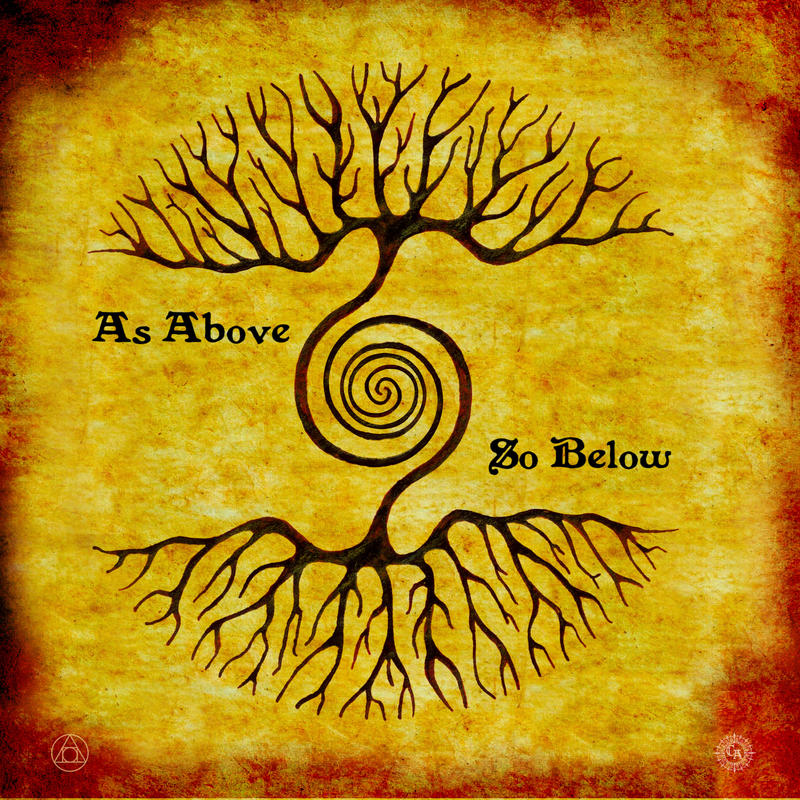
"As above, so below"...what's that now?

Perhaps you have heard this saying, and I wouldn't be surprised if you have because it has become on of the most well-known phrases used in Paganism, Hermeticism, Wicca and other related philosophical and spiritual paths as well as an accepted idiom in occult circles. Even if you haven't heard of it up to now, I'll try to explain it as best as I can! :)

But what does it actually mean? 

Let me bore you for a second with the full phrase which reads:
"That which is below is like unto that which is above, and that which is above is like unto that which is below, for the performing of the miracles of the One Thing."

This sounds a bit tiring, doesn't it? Well, that's why it was shortened (supposedly by Eliphas Levi - a French occult author, among other things. But going into his biography would take too long so if you want to find out more about him, have a look here).

Simply put, what this phrase means is "what is found in the heavens is reflected here on earth". Although, there are a few ways in which we can interpret this, but I'll get to that in a bit. 

Before giving any detailed interpretations, I would first like to talk about the origins of this interesting sentence which can be found in the 6th-8th century (although some claim it dates all the way back to antiquity). 

The Emerald Tablet

The full phrase mentioned above comes from the famous Emerald (also called the Tabula Smaragdina and the Smaragdine Tablet). It is a Hermetica (a Greco-Egyptian wisdom text from the 6th-8th century, although the majority of them were written in the 2nd/3rd century on papyri and are of a magical and/or religious character) which forms the basis of Hermeticism along with a few other texts. 

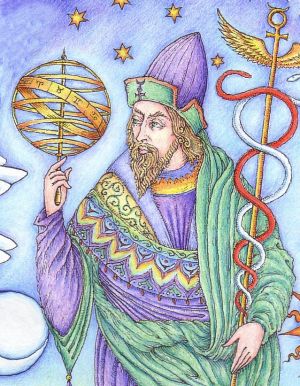
Hermes Trismegistus is named as the author of the text itself (which, by the way, was originally quoted to us in Arabic and translated into Latin in the 12th century). I will say more on the origins of the Emerald Tablet, but let me first say a few words about Hermes Trismegistus.

The Thrice Great Hermes

This is what "Hermes Trismegistus" translates to. But what do we know about him? What is he so great?

As it occurred in all cultures and religions, there came a time of syncretism of Egyptian and Greek beliefs. Syncretism (the fusion of beliefs, primarily those of a religious character) has been natural and always will be because people change, cultures change, we accept traditions, sometimes alter them a bit, but some things simply don't change; they get passed down from generation to generation and thus from era to era. In this case, the syncretism started during Egypt's Hellenistic period which started in 323 BC (the death of Alexander the Great who conquered Egypt) and ended in 30 BC (with the death of Cleopatra and the Roman conquest on Egypt).

But let us get back to the topic. I mention syncretism because this is how Hermes Trismegistus came to be. He was a fusion of the Greek god Hermes (a.k.a. the messenger of the gods) and the Egyptian god Thoth (who was also known as a mediator and to whom the Egyptians credited the invention of writing and alphabets). Upon their arrival in Egypt, the Greeks noticed these similarities as well as some other ones (e.g. both gods were psychopomps, both were connected to magic etc.) and came to the conclusion that Thoth was basically the Egyptian equivalent of their god Hermes. This is how the two deities came to be worshiped as one and were given a new name - Hermes Trismegistus. 

The Khnum temple of Esna
The adjective "Trismegistus" (thrice great) was added due to an unusual interpretation of a later Mycenaean clay tablet from Pylos where both the name Hermes and a similar adjective to the previous one (Thrisheros -  "triple hero") were found and simply put together in time. A very interesting explanation (and the one that seems the most logical to me) is that the adjective was simply transferred from Thoth to this syncretic deity. Namely, Thoth was described as "the great, the great, the great" (i.e. thrice great) in the Temple of Esna (a.k.a. the Greek city Latapolis which dates back to the Ptolomaic or Roman eras). This adjective is also mentioned in the Emerald Tablet itself where Hermes Trismegistus is said to know the three parts of the wisdom of the whole universe: alchemy, astrology theurgy (the practice of rituals).

One could conclude that Hermes Trismegistus was simply a deity who, being attributed the invention of writing and being a mediator, was logically named as the author of many religious texts. But things aren't that simple. Some believed that he was a Pagan prophet (e.g. some important Christian scholars such as Augustine, Marsilio Ficino, Giordano Bruno etc.) who may have been Moses' contemporary or even an Egyptian priest king (which is possibly another reason why he was called "thrice great" as he would have been a priest, a kind and a philosopher). The theory of him being Moses' contemporary was abandoned during the Renaissance as it was discovered that the Hermetica dates from the 2nd/3rd centuries (at the earliest). 

Of course, deifying humans was not unusual so the fact that many people thought (and still do think) of Hermes Trismegistus as a historical figure must not be undermined. Other well-known Egyptian historical figures that really were deified were, for example, the scribe Amenhotep, the priest Imhotep and the wise man Teôs. 

Who Hermes Trismegistus was and when he lived still remains a mystery to us. But this aside, I would prefer to let you dwell on this problem and continue with the post. ;)

Origins of the Emerald Tablet

The text of the tablet is known to us through various translations and quotes, the oldest of which (at least in record) is the Kitāb sirr al-ḫalīqa (Book of the Secret of Creation and the Art of Nature) which is supposed to have been written in the 8th century. The author of this text, Balinus, claims that the tablet is a collection of ancient Hermetic wisdom and that he found it in a vault below a statue of Hermes in Tyana (modern day Kemerhisar, Turkey). There are even claims that it wasn't discovered by Balinus but by Abraham's wife Sarah (though this is a completely different story in which Hermes is one of Adam's sons). Another version of the story states that the tablet was found by Alexander the Great in Hermes' tomb at Hebron.

There are so many legends about the origins of the Emerald Tablet and nobody is really 100% sure about which of them is true (if any are). But they have all said similar things about the appearance of the Emerald Tablet. It is supposed to have been made out of an emerald (or some other green crystal; hence its name) and rectangular in shape. The writing on it was supposed to have been Phoenician or something similar to it. 

If you feel like reading more about the origins of the tablet, I would recommend you have a look at this page. After all, the main focus of this post isn't on the history but on interpreting the phrase "As above, so below". 

Hermeticism

Yes, yes. I know I'm still circling around the main topic, but trust me when I say that it's necessary to explain this one last thing before interpreting the phrase! :)

So how does Hermeticism go hand in hand with this phrase? Simply put, Hermeticism takes those texts written by Hermes Trismegistus and puts them in the center of its philosophy. It is both a religious and a philosophical path which has once again become widespread in recent times as it was in the Renaissance and during the Reformation.

The associations brought to mind when someone says the word "hermetic" are that of something airtight, completely closed off, secretive and so on. In the 1630s, the adjective hermetic actually meant "dealing with occult science or alchemy". Its origins are in the Latin word hermeticus which was derived from the name of the Greek god Hermes (previously mentioned). But how on earth are Hermes and the adjective "hermetic" connected semantically? Hermes Trismegistus once more enters the scene. The invention of a special secret seal was attributed to him by the alchemists (by the way, Hermes Trismegistus was a patron of alchemy). This seal was important to them for the process of distillation because it was used to create an airtight glass tube. Now that we've cleared the etymology, let us go on.

At the center of Hermeticism is the Corpus Hermeticum - a collection of 18 chapters written by...(drumroll) Hermes Trismegistus! Other works make up the Hermetic philosophy such as The Perfect Sermon, The Kybalion (1912) and so on.

The philosophy of Hermeticism is centered around something they call the Absolute (God?). But this concept is far wider than either the monotheistic or polytheistic concept of "God" or "gods" because it includes us, other beings and basically the whole universe. From what I understood, everything is connected, everything is One.

The concept of "As above, so below" fits into this philosophy easily, as I will now explain.

The Meaning of "As above, so below"

The full maxim (translated into English by Dennis W. Hauck from the Emerald Tablet) reads: "That which is Below corresponds to that which is Above, and that which is Above corresponds to that which is Below, to accomplish the miracle of the One Thing."

Since everything is connected according to Hermetic philosophy, and since the Above reflects the Below, then every level of reality reflects itself on...well...every other reality (be it physical, emotional or mental; and keep in mind that there can be several of each according to this philosophy).

The most common interpretation of this phrase is in the sense of macrocosm and microcosm. The macrocosm can be God, the universe, man, atoms etc. all depending on what the microcosm is. For instance, man is a microcosm if the universe is a macrocosm. The important thing is that they all reflect each other, that they are all intertwined and can all be understood through each other. In this sense, man can understand God if he understands himself (!!!). Although this isn't nearly as simple as it sounds.

Now that we've covered all the basics and that you understand the essential meaning of this phrase, you might be asking yourselves what this has to do with Paganism or Wicca? After all, this is a Pagan blog. This leads us to the next subtitle of this post! :)

The Maxim in Rituals and Magic

Rituals and magic make up a significant part of Pagan and Wiccan practices. Rituals can be both devotional and magical (that is, the focus can be on a religious aspect or a deity, or a magical work, although many Pagans and Wiccans don't practice magic at all). This maxim is valid for both types of ritual and I will explain why.

"As above, so below" is most often connected to magic. As I have defined it before, magic is the art and science of causing change to occur in conformity with will. When someone performs a magical act, they first have to have an intention and will power. They have to strongly believe that the change will occur. If they don't, then nothing happens. It's as simple as that. The implications of "As above, so below" enable the practitioner to make sense of the universe and make magic logical. If everything is connected, if everything is One, then there is nothing stopping channeled energy (which is sent by the practitioner as a part of a magical act) from reaching its target. There are no barriers. 

Let me use this analogy to explain. Imagine that the energy a practitioner sends is a car. The universe through which the energy (car) has to travel to reach its target is an endless road. If everything was separate, then the road would have many tollbooths and, more importantly, it would still have parts missing (as if it wasn't completely built). You would have to attempt to jump a huge gap in the road to reach the other side, and your chances of success would be slim to none. 

But if you believe that everything is connected, then there are no obstacles, no gaps in the road and nothing to stop the energy from reaching its goal. A very interesting scientific take on this is the theory of quantum entanglement.

As for rituals, their main purpose is to connect the practitioner to the higher force(s) (be it a God, Goddess, several gods, the Universe or whatever the name is). This is why Pagans invoke the God and the Goddess. The invocation is the culmination of the ritual itself. If you consider the logicality of the "As above, so below" principle, then you can understand why it makes invocation easier. If every reality really is mirrored, then God exists in this reality also. If microcosm does reflect macrocosm, then man reflects God. Basically, we are all connected with God or perhaps even are partially gods ourselves. As Pagans like to see it, the Higher Power (call it as you wish) is already a part of us. During rituals, we reflect its actions and it reflects ours. This statement is often said aloud during Pagan rituals in order to emphasize its importance (often during consecrations, for example, of the food and drink which is in itself seen as a contact with the God and Goddess, of their influence on our lives and a metaphor for their unity in the form of the Great Rite).

This maxim also explains the possibility of astral travel and the existence of an astral body and so on. The astral is a different reality from ours, but according to this principle, all thought forms are manifested in all realities (as well as this one). So our thought forms are reflected in the astral reality. But you can read more on astral travel in another section of my blog.

I would like to conclude with a quote from Janet Farrar and Gavin Bone's book Progressive Witchcraft:


"A true spiritual cosmology is a graphic interpretation of the magical levels of reality. Such a map must include a physical, psychological, energetic, and spiritual approach, creating a holistic view of the cosmos, and abide by the old magical law “As above, so below.” In practice, this means that you should be able to stand in a witch’s circle and see the worlds around you on all levels."
Yours,
Witch's Cat

12.10.13

"I don't feel like it..."

You must have said this sentence a thousand times up to now. And even if you haven't said it to someone, you probably have to yourself. I know I have because I've been repeating it for the past few days.

One of the factors which influenced this passivity of mine is the lack of people with which I can practice my religion freely (with the exception of a wonderful group of people who live on the other side of the country and a handful of promising individuals in my hometown with which I haven't yet had the privilege to work with). Most people find it more titillating and intense to work in a group than by oneself, which is why this post is dedicated to all you Solitaries out there who find yourselves in this dilemma.

In case you don't know, I live in a town called Split, and the stereotype here definitely includes laziness (although we have a less coarse word for that here). And believe me, you will often hear this phrase in Split. Maybe society has finally gotten to me, or may just be the autumn rain and gloomy clouds over all our heads, but I really don't feel like doing anything. I would be the happiest person in the world if I could just stay home with a nice cup of tea and read all day. So one day, while I was drinking tea, I got to thinking about this state of mind and then started feeling guilty for not performing my Mabon ritual as planned.

In fact, I was planning to do a short ritual (as I always do for Sabbats when I'm not in a group), mark that day with some nice food and drinks and other small gestures. It just so happened that I had a trip planned on the day after Mabon so I found myself focusing too much on the holiday planning; so much that I forgot to plan my Mabon celebration! I approximately knew what I needed so grabbed some groceries, materials for the decorations I planned to make etc. But the ritual remained unwritten. In the end, I came to the conclusion that I really have no desire to perform and improvised ritual this time; I hadn't put any effort into it so it would have probably left me completely apathetic. So I just admitted that I don't feel like it...

So in this post, I'll address the issue of "laziness" in ritual and magical practice. We are all human after all, and we don't always have to have the energy or the will power to do everything, so why do something under coercion?

Nothing Good Comes from Force

Imagine you're trying to fit your whole closet into a small suitcase. Of course all of it won't fit! If you use force to close the suitcase, you can only break it. Then you won't even have a suitcase anymore!

This is usually what it's like in life. It's best not to use force in any situation because you can only end up hurting yourself and/or others (also, remember the Wiccan Rede: "Harm none").

In a previous post entitled "Magick and Wicca", I mentioned two factors which I find important when doing magic and rituals and they are feeling and intention. To quote myself:
"This intention has to stay constant and stable throughout the whole magical work; from the establishment of the essential idea, through the preparations, execution of the plan all the way to the end of the whole performance (and preferably even after this). In doing all of this, you put more and more energy into that specific magical rite, and the more energy there is, the better the outcome will be (imagine it like making bread; the more times you knead the dough, the more time, effort and energy you put into it, the better and tastier the bread will be).
 The second factor is feeling. Without feeling, you won't get very far. You have to feel what you do and be excited about it. This is why it is recommended that every individual does magic only for themselves or for a certain goal that induces subjective feelings and emotions. Basically, the more you want something to succeed, the bigger the chances are that it actually will!"
Now imagine you find yourself saying that you don't feel like doing a certain ritual. You won't have any motivation, the intention will be weak, and don't even get me started on feeling! So what's the point in doing a ritual which you will do only superficially? Can you even achieve anything with it? My answer is no.

Is It Pointless? 


There have been a few discussions on this topic so I would like to give my opinion on the subject, as well as the opposing viewpoint. So allow me to begin with my side of the story.

I believe that any ritual (be it magical or religious) which a person has to force/persuade him/herself to do is pointless. Rituals requite a lot of energy being put into them, so why waste energy if you're not going to do it properly? Also, rituals aren't like homework; you aren't there just to pass and they aren't obligatory. Besides, gods aren't like teachers who grade you and they don't believe that the most important thing is just to get something done, but rather to do something with love and willfully. The moment a person starts perceiving something as an obligation, they lose their will to do it.

Others, on the other hand, will claim that magic is a discipline which has to be practiced often and regularly attended to in order to work. It's the same case with rituals in this case. People who think like this are usually very systematic and often stick to a certain "timetable" of rituals which is often so detailed that they know what day and what hour they have to perform a rite. This may be good in a practical sense, but it just seems too cold to me.

Although I do agree that magic is a discipline/craft and that a person can fall out of habit, but also that they can quickly get back into shape (it's worth noting that the beginnings, while one still hasn't gained this "shape" or "stamina" are the hardest).

It goes without saying that you're free to have and express your own opinions about this. You may agree with me, or you may not. I can't say either theories are correct/wrong in a general sense, but they can be wrong/right for an individual.

Apathy

You may sometimes be able to blame laziness for not "being able" to do something, but apathy is also a very common issue that may stop you from getting up and being active. If laziness is your problem, then I recommend that you work on that since it can be a big obstacle later in your life. Then again, if you're dealing with a usual amount of apathy, then that's all healthy and natural.

If you are apathetic during a certain period and really don't have the energy to carry out a ritual, then simply don't do it! Find some replacements for the ritual that suite you better at that time and try to set aside at least a bit of time and will power to dedicate to your goal. The way in which you do this isn't that important. :) And don't worry, I'll suggest a few alternative options at the end of the post to help you out.

Illness


As I already said, we are all human. We can all get both physically and even mentally ill (e.g. when we have a high fever and aren't able to think straight) and not be able to carry out a ritual. This is more than a valid excuse.

Imagine yourself doing a ritual, sneezing and blowing out half the candles and also blowing away a load of incense ash and who knows what else. Or what if you have a high fever! You won't even be able to stand on your feet properly, let alone run in the circle lifting energy. And there's not point even talking about raising energy since we don't have enough of it for ourselves when you're sick.

We can only make the situation worse for ourselves if we send off energy that we need to regain our strength and health. In this case, I believe that it is best to postpone the ritual for another time when you can do it properly rather than stick to a strict time limit and do it superficially.

Alternatives

So you don't feel like doing a ritual? There are many seemingly mundane things that you can do in order to celebrate the Sabbats but also do magic without the complicated rituals and a whole bunch of materials. All you will need is a bit of imagination as well as some time (it is needed after all). So here are some ideas from me. :)

Note: these ideas are primarily intended for marking the Sabbats (since this is when most attention is payed to the ritualistic aspect), but they can also be valid for Esbats or perhaps other days on which you want to do something special (be it a ritual or magic) even though this doesn't necessarily have any connection to the aforementioned celebrations.
  1. Cook something nice
    Kitchen witchery has become very popular recently. The basic idea of it is that cooking is also a form of magic if you direct energy into what you are making. Of course, this doesn't include only cooking meals but also baking cakes, making home-made drinks etc. It has become a tradition for me to make something nice for each Sabbat, and that something brings a smile to my family's and friends' faces, but it also makes my ritual nicer. If you want to see what I have prepared so far, then have a look at the section entitled "A Witch's Cookbook". If kitchen witchery interests you more, you can find more information on it in Scott Cunningham's book Wicca in the Kitchen.
  2. Be Creative
    (music and visual art)
    Everyone can be creative, and so can you! You don't have to make anything too complicated, but any form of handiwork is an excellent way to direct your energy towards a certain goal (be it celebrating a Sabbat or an alternate magical goal). If you have more experience in this field of expertise, then perhaps you can try something more complicated like wood carving or metalwork. If you have a gift for knitting or sewing then get your hands on some yarn or thread and make yourself a ritual robe or a decoration for your home. Some of you may know how to draw/paint well so you can pick up a paint brush. You must know how to write nicely; if you prefer poetry then write a thematic poem, or if you prefer prose, then write your own story/myth based on a certain theme. Since you've already written a song, then why not add music to it if you know how to play an instrument? For some ideas, you can have a look at the art corner of this blog. 
  3. Pick a Divination Technique
    Even though some Sabbats are more appropriate for divining, you can do this for yourself and others whenever you feel like it. Use the energy of these special times of the year to get to know yourself better, understand the specificity of that day or simply to see what awaits you in the future. Many divination techniques exist, so if you're not familiar with any of them, perhaps this is a good time to get acquainted. A good overview can be found in the book Illustrated Encyclopedia of Divination (Stephen Karcher) and I also think this e-book could be useful. They can help you find out which techniques you like the best and motivate you to look more into the subject.
  4. Meditate
    Everyone knows how to meditate, although some may now be aware of this knowledge. There are many way to meditate, starting from the ones which include movement to the ones which require no movement and an empty mind. Almost every book on Wicca and Witchcraft has some meditation techniques in it. If you don't know where to begin, I recommend you have a look at a related blog post on the blog "Harm None" (although it is in Croatian). The second best thing I can give you is this link. For more meditation tips and techniques, have a look at the "Literature" section of this blog. If you are meditating by focusing on something, then I would recommend focusing on something related to your goal or the Sabbat you are performing that meditation on.
  5. Visit Nature
    Love of nature (and its celebration and reverence) is what all Pagan faiths have in common. You will learn much more about a Sabbat or any Pagan principle by going out into nature and consciously experiencing nature than you would by reading a thousand books. This is a great way to relax and to reconnect with yourself as well as your surroundings. I often go for a bike ride into nature with a beach towel, a bottle of water and a good book. I read a bit and I meditate...the time just flies by! For some more ideas on what to do in nature, have a look at my previous post entitled "Communing with Nature".
  6. Spend Time and Chat with Your Friends
    Sabbats are celebrations after all...so celebrate! If you don't want to do the formal part of the ritual, then do the social part. Get your friends together, get something nice to eat and drink and celebrate whatever there is to celebrate on that day! If you don't feel all that festive, then just get a small group of friends together who know what's going on and talk about it. If you don't have anyone which whom you can share these kinds of things, you can just meditate on it or write your thoughts down. Then again, the Internet isn't that bad an option; there are many forums where you can find like-minded people so why now talk to them? If you are aware of that day being special for some reason, that will make it all the more special.
Of course, each Sabbat has some specific traditions for that time of year or that just fits into the context of that festival. In my previous posts on the Sabbats, I listed some traditions that have been around for quite some time (although that isn't even a tenth of what exists). The lists I made are made up of only a few traditions to get you going, but feel free to do some research on your own...and do inform me if you find something interesting. :)


I realize that some may find it strange to hear me talking about rituals in this manner, but you have to remember that Paganism is very flexible (especially when you're a Solitary). Don't hesitate to adapt some things to your needs; if you happen to be working a double shift on a Sabbat then you won't have enough energy to carry out a ritual that evening. It's better to just sleep it off and postpone the ritual for a day or two when you will have more energy. In short, focus on your spiritual path when you're calm on the material plane. This relationship between the spiritual and mundane in Paganism is a very interesting topic which I definitely plan to write about in one of my future posts.

For now, I hope you found the answers to your questions in this post and that I at least manage to relax you a bit. I wish you all the best in your future works; be they in your atelier, kitchen or in nature. :)

Yours,
Witch's Cat

6.9.13

Raising Group Energy

You will probably ask yourselves why this is necessary? Every ritual has to have a beginning, climax and an ending, as does any good story, for example. Energy raising (be it in a group of by oneself) enables this climax. This also enables the sending of this energy towards a certain goal and every ritual/magical act has to have a goal. This goal has to be the same for all the members of a group (if done in a group), i.e. everyone has to visualize the same thing, think about the same thing and this visualization has to be precisely defined before the ritual. If it is not done, then the energy which is sent won't be unified which will cause the results to be worse (if there are any at all).

Magick

All the definitions of magick I have come across are based on the control of energy or more precisely, the directing of that energy towards a certain goal. Pagans believe that energy is all around us and that everything is made up of it. It is actually always the same energy which circulates constantly. We can conclude from this that everything is connected through it and that we all share it. If this is true, then magick can't be illogical since it isn't that hard to control something that you are so connected to.

In any case, it is necessary to give something if we want to get something in return; this is how things normally function. Of course, no sacrifices are needed but we are expected to put some effort and energy into what we're doing. This energy will then be amplified by the cosmos/higher powers. 

Energy Sources

Scott Cunningham claims that there are several sources which can help us expand our energy, or perhaps even lend us their own. We "take" the energy we need from them in order to raise it later. These sources are:

  1. Personal - that which keeps us alive i.e. that which we are made up of. This source is limited but can still be used for magickal purposes.
  2. Earthly - all the energy that comes from the earth, crystals, trees, water etc. This source is practically unlimited and is very useful in magick.
  3. Divine - that which runs everything and which acts through the earth. Therefore, if we are taking energy form the earth, we are, in a way, taking it from the divine source. 
Of course, we aren't stealing this energy because, as I have already mentioned, this energy simply circulates and we all share it. This is simply directing energy in a certain direction (to us, from us to a goal etc.). This energy is universal.

Ways of Raising Energy

Once we have visualized "taking" energy from a specific source, it is necessary to raise it to a certain level before sending it towards a certain goal. Up to now, the best methods have been those that include our senses, although not all senses have the same effect. This is why I have divided them into the primary (more intense) and secondary senses (those which aid the primary ones, but which don't have that big an impact themselves).

The Primary Senses:
  • Hearing - this sense is the most important of all because it is sound that can move our body to the extent of our heartbeat matching the beat of a drum or a bass which thumps through the ground. Remember all those galleys whose oarsmen were motivated and unified by the beat of a drum. It is enough to even recall a moment in your life when you were in a larger group of people when the music was slightly louder and you'll understand. Drums are the most commonly used instrument in rituals, although other objects/body parts can be used to produce a rhythm to which everyone will move coherently (clapping your hands, slapping your thighs, beating your feet on the ground, beating sticks or stones together etc.). Other instruments can also be used, of course, but it has been proven that the simplest instruments often have the largest effect. We mustn't forget to use every part of our body to produce sounds; we don't have to clap our hands, we can also sing or simplify things and chant instead of singing more complicated verses that are harder to memorize. The main thing is that the rhythm and melody (and the words if singing a song) are simple so the practitioners can relax and focus on raising the energy instead of how they are singing/dancing and so on.
  • Touch - this sense plays a larger role in our lives than we may think. Remember how wonderful it feels to touch a soft, plush blanket or rough tree bark or how you get goose bumps whenever you touch something that excites you. The sense of touch controls passion which will be necessary for us to raise energy. We can activate this sense by holding hands in the circle with the other practitioners, by clapping our hands, slapping our thighs, messing up our hair; basically anything as long as this sense is also active and you palms are feeling something.
The Secondary Senses:
  • Sight - this usually primary sense takes on a secondary role here. When we are ecstatic (when we dance or make love, for example), we often close our eyes to enable us to enjoy the moment even more. Although, this sense can help us not to bump into people when we're dancing but it can also help us by making us aware of the people surrounding us. Knowing this can cause some people to become shy (although this shall be prevented in the following ritual by a simple exercise), but it can cause others to feel excitement such as the kind you feel when you are dancing in a large group or on a football stadium cheering in a huge crowd. This depends on the type of person you are, but when you give in to the moment, this sense will probably become irrelevant. 
  • Smell - can be a very stimulating sense when food is in question, but it isn't very important in ritual work. We can only affect it by making the smells around us more exotic or nicer in any way so the whole experience can be more pleasant.
  • Taste - usually has no effect whatsoever in rituals. We are too occupied with our other senses to think about whether we are hungry or not, or even thirsty for that matter.

The last factor that has an impact on raising the energy in a circle is other people's energy. If we sense that others are sending off a "good vibe", then this can help us raise our own energy (like at a good concert). If will often turn out that a night out will turn bad simply because the people around you were in a bad mood or because their "energy was bad". Sadly, we cannot always influence this factor.

Ecstasy

The intention of raising group energy is to raise it to the point when we reach ecstasy. This is because we will direct/send of energy the best when we are in this state of mind and the more energy we put into it (i.e. the more energy we send off), the bigger the chances are that we will reach our goal.

We can identify rituals with sex. We are biologically programmed to want sex or, better said, to want orgasms (the climax). This isn't something that we should be ashamed of. Sex attracts us because this climax enables us to have children which will be the carriers of our genes. If man couldn't reach his climax, then the egg cell couldn't be impregnated. It has even been proven that the chances of a woman getting pregnant are higher if she reaches climax at the same time as the man does. All of this is just pure biology. The equivalent of an orgasm during sex is the sending off/directing of energy during a ritual.

Just like sex, energy control i.e. magick is also a natural thing. But it is also a discipline since craft and practice are needed in order to become adept in visualizations which help in everything I have described here. Some people are simply naturally talented for this so it may be a bit easier for them, but then again, the same goes for sex (nobody is good the first time but we get better with practice).

The Cone of Power

The Cone of Power has become the most well-known way of raising energy in Paganism. It got its name because of the visualization around with this method is centered; energy being sent in the form of a cone. This shape itself is excellent for raising energy because it is sent from individuals (which stand in a circle forming the base of the cone) towards a common goal (the top of the cone).

So people form the base of the cone i.e. the Circle. The circle is the symbol of the Sun, unity, eternity and reincarnation. Unity is the key word here because all the people involved must be unified and have a common goal. The form of the cone itself is connected to the triangle which is connected to the number three (the number of creation and, in Wicca, the number of the Triple Goddess) which represents striving towards a higher goal i.e. upwards (driving the energy towards the tip of the cone).

In the Cone of Power, people either sit or stand in a circle. Holding hands is the most common form of connecting, although giving a kiss (most often on the cheek) is another common way. This is needed for positive energy to start circulating.

In the following work, a traditional visualization of the raising of the energy will be done (the same one that is usually done in the Cone of Power). It includes every attendee visualizing a white/blue light (depending on the agreement) moving in a spiral form towards the tip of the cone. The speed of the light depends on how fast the energy is being raised.

Gerald Gardner described the Cone of Power as a form in which the attendants, who are running in a circle while holding hands in order to raise the energy, make up the base. At the point when the energy has to be directed/let out, everyone runs towards the center of the circle (in which there should be a small fire burning or at least a candle) yelling out the goal.

There is usually a person who leads everyone in order to keep them in unity. This person is the High Priestess in covens (she often stands in the middle of the circle in order to let everyone direct the energy at her so she can then direct it towards the goal). Whoever it is, this person has to signal the moment when everyone has to send the energy out; this is usually done by yelling out "NOW!" or giving any other obvious (and previously established) signal. The main thing is that everyone is clear on when they have to send the energy.

Grounding

After the energy has been sent (i.e. after the climax has been reached), it is good to let the energy drop on its own. But, the process of grounding doesn't have to refer only to the lowering of energy but also to the act of giving any excess energy back to the earth in order for us to "stand firmly on the ground" once more. During the ritual we are in a state of ecstasy and our heads are "in the clouds", but it is necessary to return to the physical world after each ritual. This is what grounding enables us to do. Residual energy can sometimes lead to anxiety or tension in the group so it is always best to ground yourself after any ritual (even though some choose to ground themselves both before and after the ritual, but the grounding before the ritual is based on "taking" energy from the ground while the grounding after the ritual is based on returning that energy back where it came from).

The most common method of grounding is consuming food and drink because what better way is there to return back to the earth than consuming its fruits? Another method coming into direct contact with the earth, for example slamming your hands down on the earth when the ritual is done or falling down to the ground (or simply lying down). If this action is less abrupt, then another visualization usually follows it so the energy can return to the ground gradually.

Whichever way you choose to do it, returning excess energy to the ground is necessary because of the aforementioned reasons. It is also good to stop and rest a bit more after all of this by sitting/lying down and controlling your breath until your heart rate comes down.

The Workshop:

The leader first physically marks the circle using rocks which will be its border and then cleanses the circle in an appropriate way so it is ready for energetic work.

Note: what follows is a workshop on raising group energy I lead during the Witches' Site 2013. We arranged the site as suggested; using rocks to mark the circle but we also put two tall sticks at the east end to mark the entrance. As the attendees entered, I welcomed them at the entrance holding a bowl of water. They first had to clean their faces before they could enter the circle and walking deosil (clockwise) was an absolute must. Before the actual ritual got started, I cleansed the circle with an incense stick (the elements of fire and air) and some water which I previously consecrated with salt (the elements of water and earth).

I would like to mention that I am extremely happy with the results and the comments were very positive also. :)

1. Relaxation Exercise

This exercise is here to help everyone get rid of their fears and nervousness. 

  • Everyone stands in a circle (preferably in a male-female order, although I let everyone choose their own place according to instinct) and when the leader says "now", everyone starts humming ("mmmm"). They stop when the leader signals it. On the next sign, they start saying "aaaa" and increase the volume (the leader must act as a conductor and show with their hands when to increase/reduce volume). When the sounds turn into shouts, the leader gives the sign for everyone to stop.
  • Everyone lifts their hands in the air. The leader walks around the circle and when he/she touches a person on the shoulder they abruptly lower their arms by their sides and yell (it is advisable to yell up to five seconds as not to release too much energy). - this exercise proved to be very useful since people were still a bit shy so this forced them to relax and get all that negativity out.

2. Connection Exercise

It is here to help everyone connect and to prevent any displeasure, anxiety or any other negative feelings from circling through the participants.

  • Everyone stands in a circle and holds hands (left palm upwards, right palm downwards).
  • The leader leads the visualization (a simple one in which everyone imagines energy circulating through their hands in order to connect and harmonize everyone).
  • The leader states the aim of the ritual on which everyone now focuses (ours was to bless the land we were on during the Witches' Site). A visualization of this goal then follows which the leader describes so everyone can visualize the same thing (I described the state of the land were on throughout all four seasons in a very positive light; a light breeze and bright sun in the summer, a variety of flowers covering the ground in spring, the beautiful colors during autumn and a cold light wind nipping the cheeks during a mild winter).

3. Raising the Energy

If anyone doesn't want to clap their hands, they are free to take sticks/stones/pots or anything else to produce sounds. As the leader, I used a tambourine to produce the main rhythm (since it has a very penetrating sound) while the base was created by the shamanic drum and the rhythm was held up by a djembe drum. I also dealt out a few rattles and similar instruments so a few other participants could play along.

Note: I divided the practitioners into an inner and outer circle; the inner circle consisted of the two drummers and two dancers (placed around the very center of the circle). Their role was to keep the rhythm constant and the mantra clean i.e. lead the group in that sense (but still following my signals). The outer circle raised the energy by running, creating sounds using their bodies and rattles as well as singing.

  • Everyone stands in a circle as before (still holding hands).
  • The leader begins the visualization of borrowing the energy from the earth. First, you imagine a white light rising from the earth through your feet and spine all the way to you crown chakra. The energy should be left there so it can later be let off from that point.
  • The leader walks around the circle and as he/she touches a person, the slowly start to clap. The rhythm gradually gets faster (everyone still follows the leader's signs since he/she defines the tempo).
  • The leader will continue walking in a circle and when he/she touches a person for the second time, they have to start clapping louder/slapping their thighs/playing any instrument they have with which they will define the rhythm following the tempo of the group (note: some will just keep clapping their hands). The rhythm has to keep getting faster all the time (but gradually).
  • When the leader touches a person for the third time, he tells them which vowel to sing/speak. Everyone is allowed to inhale when they feel the need and the leader gives the signs for increasing volume if this doesn't happen on its own. (I skipped this step because I noticed that the energy was raising nicely even without voices up to now)
  • At this point, the leader should be barely heard over the sounds of the participants. Now is the time for everyone to start moving staying inside the border. Everyone starts walking deosil at the leader's tempo.
  • When the leader gives the sign, everyone starts singing the mantra which has to be previously defined and in accordance with the goal (it is best if it rhymes and is very short). In our case, the mantra was: "Zemlja oko nas, zemlja je spas" (in translation: "Earth around us, earth saves us" or something along those lines). The leader starts singing it first following the group's rhythm and then everyone else joins in.
  • The movements get faster until everyone is running in the circle. The participants are free to move their bodies as they wish while running. They can keep holding hands, jump every now and then or even dance in the circle (if any of this will slow the group down, they are free to do it between the inner and outer circle). They can go into that space if they need a rest also, but no further than a meter from the other members. If they do go deeper into the circle, they have to compensate for their lack of movement by dancing/singing louder or moving in any other way that tires them less. But I am proud to say that nobody got tired, in fact, everyone had more energy than they usually did (their words).
  • When the leader has decided that the energy has been risen enough, he/she yells "NOW!" at the top of their lungs and everyone stops in their tracks and yells, at the same time visualizing a white light being set off to the tip of the cone from their crown chakra. (Instead of me yelling, we had a member who had a horn which he blew in on my signal).
  • Each individual has to decide for him/herself when they have released enough energy and then fall to the ground/slap the ground.
  • When everyone has done this, they should return to the circle and sit/lie down to rest.

4. Grounding

  • Breathing exercise (the leader guides a breathing exercise until everyone's heart rate calms down).
  • Releasing excess energy (the leader guides a visualization which is basically the reversed visualization of borrowing the energy from the earth). We replaced this step with a slow dance called the Dance of the Elements which one of our friends taught us (it worked very well with everything).
  • Everyone should keep sitting on the floor just a while longer. The leader goes around the circle once more and touches the members on the shoulder. A person is free to leave the circle only when they have been touched and they are encouraged to leave the circle through the door walking clockwise.

I hope you have learned something new from this post and that you will use some of the advice and ideas I have given to you. If anything remains unclear, feel free to ask me about it.

Until next time. Yours,
Witch's Cat