10.1.14

Altar Arrangement

For the second week of the Pagan Blog Project, I decided to write about altars, their roles in Paganism and Wicca and primarily their arrangement as their very layout has deep symbolism and can define the type of ritual you are doing, as well as its atmosphere. 

There were many posts written on the topic of altars for the first week of the project, and all of them were original and wonderful in their own way. I admired the fact that most of them were quite personal. I did notice though that none of them focused on altar arrangement. This is thought by some to be a very textbook topic, but its one worth covering in my opinion. This post isn't going to be as personal as some of the other ones on the topic, but it will provide a substantial amount of applicable information for Pagan practitioners.

The reason why I chose to write a not-so-personal post on altars is because I remember them being something completely distant to me when I started practicing my faith. I was concerned with practical questions like: "What is the altar used for?", "What should I put on it?", "Do I even need an altar?" and so on. These dilemmas, which I now perceive to be small, are in fact very large for anyone new to Pagan practices. It is normal for the beginning of any path to be a little bit bumpy and for the practitioner to come across dilemmas such as these. Nevertheless, they can still cause a great deal of confusion which can easily be avoided with just a bit of practical information. It is exactly this kind of information that I will try to convey through the following text. :)

Before I begin, it's worth noting that I'm Wiccan, which means I incorporate Pagan symbolism into my altar arrangement. Other occult traditions and other religions/spiritual paths may have completely different layouts. This is completely acceptable. The main thing is that you understand what the altar is and how you can use it and that its arrangement is symbolic, logical and practical to you. After all, you are going to be the one using it. The arrangements which I will suggest are by no means the only possible ones, or the "right" ones. They are simply arrangements that have a deep symbolism for Pagan practices and that have become widely accepted due to this (as well as their practicality). You can modify the arrangements to suite your own needs, or even choose not to use them at all. But whatever you decide, I hope that you at least learn something new from this post. :) 

What Is an Altar?

The world "altar" is often connected to the Latin word altare which can be translated into "high altar/altar for sacrificing to the gods" or the Latin adjective altus meaning "high". This definition is widely-accepted, but less valid than the following one. A more accurate theory would be that it comes from the Latin verb adolere meaning "to burn" which relates to the notion of sacrifice in the previous definition as a sacrifice doesn't have to be a blood sacrifice (e.g. animals in ancient times) but rather a burnt plant of piece of food. 

It is often defined as a raised place on which sacrifices and gifts are offered in some religions. The Pagan concept of the altar differs slightly from the Christian concept. Of course they vary in decoration and the object placed on them, but an important thing to note is that Christian altars are simply "always there" (they are usually made of a certain stone which isn't moved, but always stays in the same place and is rarely left unadorned). Pagan altars are usually movable and are prepared for occasions (i.e. before a ritual). 

The altar is often placed in the middle of the sacred circle and is thus the focal point of the ritual. In this sense, the altar serves as a sort of repository for energy which can be channeled when the need be during the ritual. It is also serves as a bond between the physical and spiritual world (in many ways, but primarily because its very presence and energetic strength changes the mindset of the practitioner and makes them aware of being in a spiritual place). 

First of all, I have to repeat that the altar is usually placed in the center of the circle (although in rare occasions at the north, but that's not important now). In Pagan traditions, it usually faces north (which is connected to the element of earth and symbolizes a connection to the physical plane), while some prefer to face east (because the Sun rises on this side). This is a matter of personal preference and neither way is wrong, but you have to be aware of why you made this decision and what it symbolizes for you. By the way, when I say that the altar faces, for example, north, then that means that the practitioner should be facing north when they stand at the altar.

Apart from having great spiritual value, the altar also serves as a very practical ritual tool (if it can be called a tool) because most objects used during a ritual are kept on it and because all works, both religious and magical, are done at the altar. 

What Should An Altar Look like?

There really are no exact rules as to what an altar should look like in Paganism. There are many suggestions and good ideas, but none of this is obligatory and unquestionable. I would like to give you some recommendations, but feel free to disregard them if you feel that none of them are right for you.

Your altar can be anything from an old tree stump or rock somewhere in nature, a box covered with a cloth, a highly decorated table, an old chest or even the floor itself (although it is recommended for practical reasons that the altar be slightly higher than the ground; this makes it easier for you to pick up objects and also looks and feels more solemn). It can be store-bought, found and restored or hand-made. This all depends on your time, resources, finances and other factors. 

The material of which it should be made isn't specified, although wood is most traditional and metal is typically avoided because metal conducts energy and the altar doesn't serve this purpose (whereas a sword, knife or wand do serve this purpose and often are made of/include metal). Basically, the better a material conducts electricity, the better it will also conduct energy and the "worse" it will be for your altar material. Although the material is less important for religious rites where the energy is stored and channeled in a different manner. The altar material will have more influence of magical rites.

As I said, wood is the ideal choice, but you will also come across altars made of stone, brick, cardboard and so on. Of course, you won't have a stone altar if you intend to move it around a lot, and a cardboard altar is a great choice for those who need to camouflage it. If you choose to get a wooden altar, traditional choices would be oak and willow. Also, the use of glue to construct your altar is not recommended (although natural glues are ok). Metal fixtures are also best to be avoided. Again, these are all just suggestions. 

The shape of the altar is not all that important. It depends on what you prefer and what you find more practical. The most common altars are round (because Pagans work in a circle; so this is both practical because you circle around the altar and it fits into the space better, but also because of the symbolism of the shape itself and its connection to female/Goddess energies). Rectangular altars are also very common (they usually bear the symbolism of the four elements and are connected more with male/God energies). Of course, other top shapes are also acceptable; a polygon or a completely organic shape. Choose what you find best. 

There are no rules as to how many legs it should have (if any), bu it is very practical to leave some space underneath your altar for placing things that you may need during your ritual. In stead of this many Pagans choose altars that have drawers and keep secondary tools there. 

The height of the altar also depends on your preference. If you do your rituals sitting or kneeling down, then the altar should naturally be lower, but if you do them standing up then it is very impractical to keep bending or crouching down to get what you need. In this case, a higher altar would be a better choice.

When choosing the size of your altar, it's important that all the necessary ritual tools fit on it. I worked for a while with an altar about 30 x 30cm in size (it was basically a wooden box). I made a new altar a few years back which is much larger (about 1m x 50cm). If you decide to have a circular altar, then I recommend a diameter of at least 1 meter. Of course, if this is too large for you, then simply choose according to how much space you have/need.

Your altar can also be decorated, but it doesn't necessarily have to be. Many Pagans cover their altars with a cloth of an appropriate color (depending on the festival) because it looks very solemn but also protects the surface. Some choose to decorate it with greenery, but again, that's your choice.

In any case, the altar is used for keeping your ritual tools which can be arranged in many different ways depending on what you want to achieve, what you find aesthetically pleasing and what you find more practical.

Altar Arrangement

When I say "arrangement", I mean the arrangement of your ritual tools on the altar. Of course, not everyone has the same tools (this depends on the tradition, personal preference, financial situation, the individual's situation etc.). Some don't have any ritual tools at all (in which case there is no practical need for an altar), some have only a few, while others have every possible tool there is because they feel most comfortable having them there.

You will typically find some of these ritual tools on a Pagan altar: the representations of deities (God/Goddess figurines, other figurines/paintings/natural objects which symbolize the deity or even one/2 candles), an athame and/or wand, incense (and whatever goes along with it), food and drinks (and also a plate, goblet and libation dish to go with them), two bowls (one filled with salt, the other with water), a bell, a candle snuffer, a book of shadows or other book/papers from which the practitioner may read (if necessary), an altar candle (which isn't needed if you represent the deity/ies with candles) and so on.

Large object such as cauldrons, swords, brooms, staffs and additional items such as spare candles should be left beside or below the altar so as not to crowd it too much but also not to put too much weight on it. 

The altar is usually divided into "zones", each of which corresponds to something and which holds object corresponding to that same something. There are two ways of dividing your altar (I will use a rectangular altar as an example, but the same can be done on a circular altar):

1. Vertical partition

The altar is vertically divided into three sections:
  1. The left section - belongs to the Goddess and is connected to emotions. Objects connected to her and with "female" characteristics are placed here.
  2. The right section - belongs to the God and is connected to the rational. Objects connected to the God and the masculine (or otherwise thought of as "male") are placed here.
  3. The middle section - it is also called the working area and is used to place other objects which are used in magic or have a practical purpose (such as the Book of Shadows for reading and so on). Magical objects can include candles (if practicing candle magic), cords (for cord magic), poppets, divination tools, objects that are going to be consecrated and so on.

Note: the objects mentioned in these diagrams under "Goddess" and "God" (or in the diagonal diagram under a certain element) aren't necessarily the only objects corresponding to them. I will give you a full list of ritual tools and their "gender" later on to help you out with this. The tools which are listed are only examples (or really very essential tools).

The items can be placed about in various ways though a very practical way would be the one in the following diagram.


2. Diagonal partition

The diagonal partition divides the altar into four parts, each one corresponding to a certain element. This is more typical for rectangular altars but can also be used on circular ones. If you have a rectangular altar, it is typical for the corners of the altar to point at the cardinal points (so upper right corner pointing to east, lower right to the south and so on). This would result in a normal horizontal/vertical raster on the altar such as the one below.

Note: the four quadrants are colored appropriately. The yellow quadrant is for air, the red for fire, the green for earth and the blue for water.


If you decide to place your altar so that you face a certain way (e.g. north/east), then the partition will really be diagonal (as the name suggests). This kind of partition is more common because facing towards a certain cardinal point (e.g. north) is more common that, for example, facing north-east. 

This is what the altar would approximately look like:


Of course, there are other ways to divide your altar. One such example can be found in Raymond Buckland's book Wicca for One in which the author gives an example of how he would set the altar. This partition is mainly practical in nature because the candle(s) is/are placed at the back so that it isn't knocked down, all the bowls are gathered in one place and the objects most often used are placed at the front of the altar.


As I promised, here's a detailed list of altar tools with gender and element correspondences (although it is far from complete because some traditions and individuals add/remove/replace certain tools). Hopefully, it will help you distinguish which tools to put where according to the above mentioned altar arrangements. :)

Note: not all tools have a gender or element correspondence, so don't let this confuse you. Some of them don't require any explanations (e.g. the altar cloth), while other such as a snuffer are simply neutral in terms of gender and/or have no element correspondence so they can be placed anywhere on the altar. The neutral items will be symbolized by a Ø symbol. The forward slash symbol (/) simply means "or". For the "neutral" tools, decide for yourselves where you want to place them (if you decide to use them at all). Also, not all the tools are obligatory. You can find a less detailed list of tools in a previous post entitled "Ritual Tools". The ones that are commonly thought of as obligatory are underlined. This should clear things up a bit.

Ritual Tool
Gender
Element(s)
altar cloth
Ø
Ø
God representation
male
all
Goddess representation
female
all
candles
male
fire
candlestick
male
Ø
snuffer
Ø
Ø
incense
male
air
censer/thurible
male
Ø
incense charcoal
Ø
Ø
bowl with water
female
water
bowl with salt
female
earth
bell(s)
Ø
Ø/air
spoon (for the salt)
Ø
Ø
feather
male
air
libation dish
Ø
Ø
wand
male
air
athame
male
fire
chalice
female
water
plate/pentacle
female
earth
broom
both
Ø
cauldron
female
water
boleen
Ø
Ø
staff (usual or forked)
male
air
priapic wand
male
air/fire
scepter
male
air/fire
cords
Ø
Ø
sword
male
fire
scourge
male
fire

Of course, other tools can be included. Some of them which are used rarely can be placed beside the altar or under it (e.g. matches/a lighter, a compass, a water bottle, CD player if playing music etc.). 
Some of the tools are too large to be placed on the altar itself so you can place them by the altar on the side which corresponds to their gender/element. These items include: the broom, cauldron (although small ones do exist), staff, scepter, sword etc. So, for instance, the cauldron, which symbolizes the Goddess and the element of water, would be placed either to the left of the altar (in a vertical partition), or on the west side (in the diagonal partition). 
Like I have already said, this isn't a full list of ritual tools, but it should be enough for now. :)

What If I Can't Have an Altar?


Some of you may find yourself in an awkward situation where the people you are living with don't know about your faith and practices. In this case, having a visible altar somewhere in the house is a dead giveaway. This doesn't always have to be the case. You may simply not have the room or finances for an altar at the moment.

It will come as a relief to you that there are alternatives! :D
You can also use the following objects for you altars:
  • a box (of any material and size) turned upside down and covered with a cloth
  • the ground (preferably have a cloth underneath your tools, though)
  • a modified table/chair/bedside table/coffee table/chest of drawers and so on
Modifying an existing piece of furniture is a great idea because you don't have to spend any money on a separate piece of furniture for you altar and you will have extra room in your house. Besides, the fact that this table (or whatever it is) will be used regularly doesn't effect its religious function because it can always be cleansed and consecrated before each ritual. If this is a bit tiring, then you can always have an altar cloth which will be used only for religious purposes and use it to cover the table. This is also why I recommend placing the tools on the cloth in stead of directly on the cardboard box or the ground.

To illustrate my point, here are some pictures of modified altars (disregard the altar arrangement though because it's not the same as in this post).


I'm sure you'll be able to find many more examples on the Internet. :)
Anyway, I hope this post was of some use to you and that you enjoyed reading it! :D
Expect another Pagan Blog Project post next Friday. Yours,

Witch's Cat

3.1.14

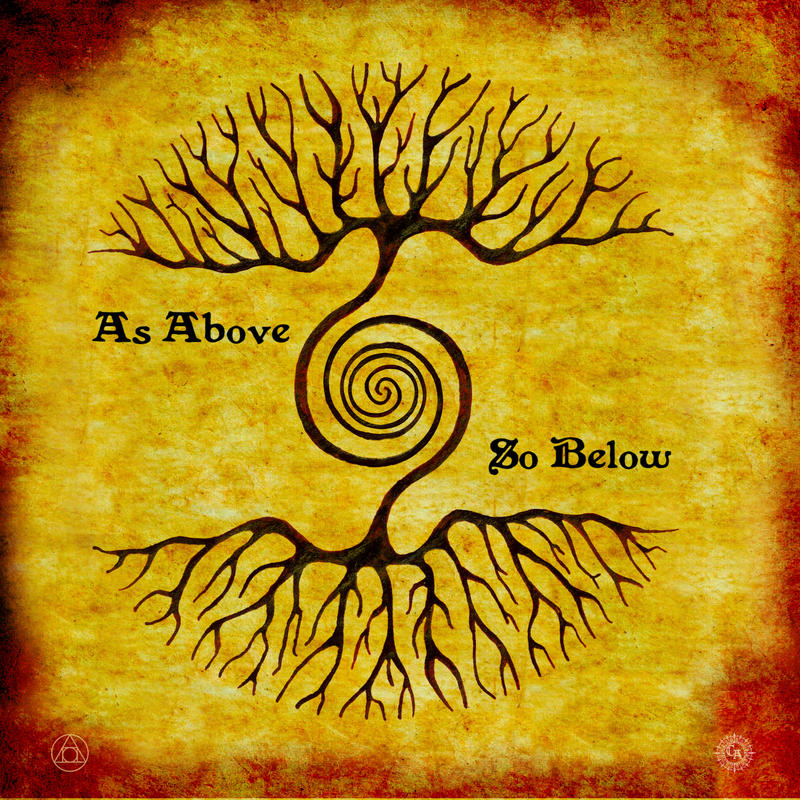
"As above, so below"...what's that now?

Perhaps you have heard this saying, and I wouldn't be surprised if you have because it has become on of the most well-known phrases used in Paganism, Hermeticism, Wicca and other related philosophical and spiritual paths as well as an accepted idiom in occult circles. Even if you haven't heard of it up to now, I'll try to explain it as best as I can! :)

But what does it actually mean? 

Let me bore you for a second with the full phrase which reads:
"That which is below is like unto that which is above, and that which is above is like unto that which is below, for the performing of the miracles of the One Thing."

This sounds a bit tiring, doesn't it? Well, that's why it was shortened (supposedly by Eliphas Levi - a French occult author, among other things. But going into his biography would take too long so if you want to find out more about him, have a look here).

Simply put, what this phrase means is "what is found in the heavens is reflected here on earth". Although, there are a few ways in which we can interpret this, but I'll get to that in a bit. 

Before giving any detailed interpretations, I would first like to talk about the origins of this interesting sentence which can be found in the 6th-8th century (although some claim it dates all the way back to antiquity). 

The Emerald Tablet

The full phrase mentioned above comes from the famous Emerald (also called the Tabula Smaragdina and the Smaragdine Tablet). It is a Hermetica (a Greco-Egyptian wisdom text from the 6th-8th century, although the majority of them were written in the 2nd/3rd century on papyri and are of a magical and/or religious character) which forms the basis of Hermeticism along with a few other texts. 

Hermes Trismegistus is named as the author of the text itself (which, by the way, was originally quoted to us in Arabic and translated into Latin in the 12th century). I will say more on the origins of the Emerald Tablet, but let me first say a few words about Hermes Trismegistus.

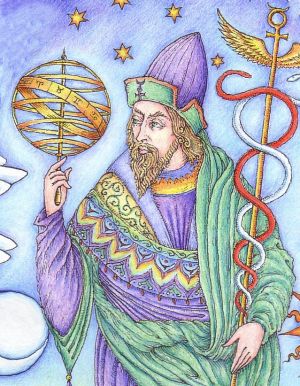
The Thrice Great Hermes

This is what "Hermes Trismegistus" translates to. But what do we know about him? What is he so great?

As it occurred in all cultures and religions, there came a time of syncretism of Egyptian and Greek beliefs. Syncretism (the fusion of beliefs, primarily those of a religious character) has been natural and always will be because people change, cultures change, we accept traditions, sometimes alter them a bit, but some things simply don't change; they get passed down from generation to generation and thus from era to era. In this case, the syncretism started during Egypt's Hellenistic period which started in 323 BC (the death of Alexander the Great who conquered Egypt) and ended in 30 BC (with the death of Cleopatra and the Roman conquest on Egypt).

But let us get back to the topic. I mention syncretism because this is how Hermes Trismegistus came to be. He was a fusion of the Greek god Hermes (a.k.a. the messenger of the gods) and the Egyptian god Thoth (who was also known as a mediator and to whom the Egyptians credited the invention of writing and alphabets). Upon their arrival in Egypt, the Greeks noticed these similarities as well as some other ones (e.g. both gods were psychopomps, both were connected to magic etc.) and came to the conclusion that Thoth was basically the Egyptian equivalent of their god Hermes. This is how the two deities came to be worshiped as one and were given a new name - Hermes Trismegistus. 

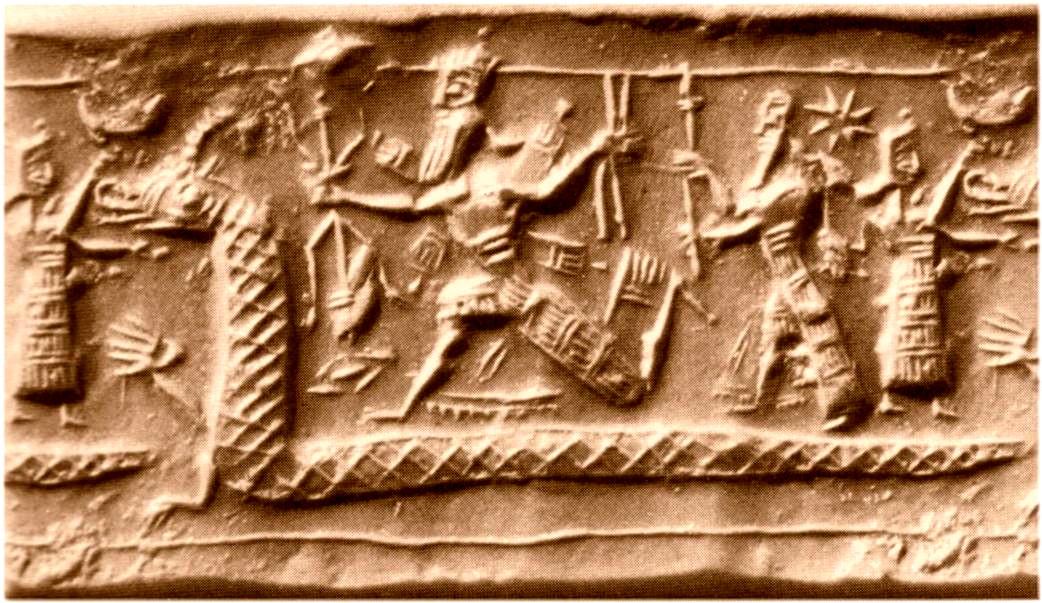
The Khnum temple of Esna
The adjective "Trismegistus" (thrice great) was added due to an unusual interpretation of a later Mycenaean clay tablet from Pylos where both the name Hermes and a similar adjective to the previous one (Thrisheros -  "triple hero") were found and simply put together in time. A very interesting explanation (and the one that seems the most logical to me) is that the adjective was simply transferred from Thoth to this syncretic deity. Namely, Thoth was described as "the great, the great, the great" (i.e. thrice great) in the Temple of Esna (a.k.a. the Greek city Latapolis which dates back to the Ptolomaic or Roman eras). This adjective is also mentioned in the Emerald Tablet itself where Hermes Trismegistus is said to know the three parts of the wisdom of the whole universe: alchemy, astrology theurgy (the practice of rituals).

One could conclude that Hermes Trismegistus was simply a deity who, being attributed the invention of writing and being a mediator, was logically named as the author of many religious texts. But things aren't that simple. Some believed that he was a Pagan prophet (e.g. some important Christian scholars such as Augustine, Marsilio Ficino, Giordano Bruno etc.) who may have been Moses' contemporary or even an Egyptian priest king (which is possibly another reason why he was called "thrice great" as he would have been a priest, a kind and a philosopher). The theory of him being Moses' contemporary was abandoned during the Renaissance as it was discovered that the Hermetica dates from the 2nd/3rd centuries (at the earliest). 

Of course, deifying humans was not unusual so the fact that many people thought (and still do think) of Hermes Trismegistus as a historical figure must not be undermined. Other well-known Egyptian historical figures that really were deified were, for example, the scribe Amenhotep, the priest Imhotep and the wise man Teôs. 

Who Hermes Trismegistus was and when he lived still remains a mystery to us. But this aside, I would prefer to let you dwell on this problem and continue with the post. ;)

Origins of the Emerald Tablet

The text of the tablet is known to us through various translations and quotes, the oldest of which (at least in record) is the Kitāb sirr al-ḫalīqa (Book of the Secret of Creation and the Art of Nature) which is supposed to have been written in the 8th century. The author of this text, Balinus, claims that the tablet is a collection of ancient Hermetic wisdom and that he found it in a vault below a statue of Hermes in Tyana (modern day Kemerhisar, Turkey). There are even claims that it wasn't discovered by Balinus but by Abraham's wife Sarah (though this is a completely different story in which Hermes is one of Adam's sons). Another version of the story states that the tablet was found by Alexander the Great in Hermes' tomb at Hebron.

There are so many legends about the origins of the Emerald Tablet and nobody is really 100% sure about which of them is true (if any are). But they have all said similar things about the appearance of the Emerald Tablet. It is supposed to have been made out of an emerald (or some other green crystal; hence its name) and rectangular in shape. The writing on it was supposed to have been Phoenician or something similar to it. 

If you feel like reading more about the origins of the tablet, I would recommend you have a look at this page. After all, the main focus of this post isn't on the history but on interpreting the phrase "As above, so below". 

Hermeticism

Yes, yes. I know I'm still circling around the main topic, but trust me when I say that it's necessary to explain this one last thing before interpreting the phrase! :)

So how does Hermeticism go hand in hand with this phrase? Simply put, Hermeticism takes those texts written by Hermes Trismegistus and puts them in the center of its philosophy. It is both a religious and a philosophical path which has once again become widespread in recent times as it was in the Renaissance and during the Reformation.

The associations brought to mind when someone says the word "hermetic" are that of something airtight, completely closed off, secretive and so on. In the 1630s, the adjective hermetic actually meant "dealing with occult science or alchemy". Its origins are in the Latin word hermeticus which was derived from the name of the Greek god Hermes (previously mentioned). But how on earth are Hermes and the adjective "hermetic" connected semantically? Hermes Trismegistus once more enters the scene. The invention of a special secret seal was attributed to him by the alchemists (by the way, Hermes Trismegistus was a patron of alchemy). This seal was important to them for the process of distillation because it was used to create an airtight glass tube. Now that we've cleared the etymology, let us go on.

At the center of Hermeticism is the Corpus Hermeticum - a collection of 18 chapters written by...(drumroll) Hermes Trismegistus! Other works make up the Hermetic philosophy such as The Perfect Sermon, The Kybalion (1912) and so on.

The philosophy of Hermeticism is centered around something they call the Absolute (God?). But this concept is far wider than either the monotheistic or polytheistic concept of "God" or "gods" because it includes us, other beings and basically the whole universe. From what I understood, everything is connected, everything is One.

The concept of "As above, so below" fits into this philosophy easily, as I will now explain.

The Meaning of "As above, so below"

The full maxim (translated into English by Dennis W. Hauck from the Emerald Tablet) reads: "That which is Below corresponds to that which is Above, and that which is Above corresponds to that which is Below, to accomplish the miracle of the One Thing."

Since everything is connected according to Hermetic philosophy, and since the Above reflects the Below, then every level of reality reflects itself on...well...every other reality (be it physical, emotional or mental; and keep in mind that there can be several of each according to this philosophy).

The most common interpretation of this phrase is in the sense of macrocosm and microcosm. The macrocosm can be God, the universe, man, atoms etc. all depending on what the microcosm is. For instance, man is a microcosm if the universe is a macrocosm. The important thing is that they all reflect each other, that they are all intertwined and can all be understood through each other. In this sense, man can understand God if he understands himself (!!!). Although this isn't nearly as simple as it sounds.

Now that we've covered all the basics and that you understand the essential meaning of this phrase, you might be asking yourselves what this has to do with Paganism or Wicca? After all, this is a Pagan blog. This leads us to the next subtitle of this post! :)

The Maxim in Rituals and Magic

Rituals and magic make up a significant part of Pagan and Wiccan practices. Rituals can be both devotional and magical (that is, the focus can be on a religious aspect or a deity, or a magical work, although many Pagans and Wiccans don't practice magic at all). This maxim is valid for both types of ritual and I will explain why.

"As above, so below" is most often connected to magic. As I have defined it before, magic is the art and science of causing change to occur in conformity with will. When someone performs a magical act, they first have to have an intention and will power. They have to strongly believe that the change will occur. If they don't, then nothing happens. It's as simple as that. The implications of "As above, so below" enable the practitioner to make sense of the universe and make magic logical. If everything is connected, if everything is One, then there is nothing stopping channeled energy (which is sent by the practitioner as a part of a magical act) from reaching its target. There are no barriers. 

Let me use this analogy to explain. Imagine that the energy a practitioner sends is a car. The universe through which the energy (car) has to travel to reach its target is an endless road. If everything was separate, then the road would have many tollbooths and, more importantly, it would still have parts missing (as if it wasn't completely built). You would have to attempt to jump a huge gap in the road to reach the other side, and your chances of success would be slim to none. 

But if you believe that everything is connected, then there are no obstacles, no gaps in the road and nothing to stop the energy from reaching its goal. A very interesting scientific take on this is the theory of quantum entanglement.

As for rituals, their main purpose is to connect the practitioner to the higher force(s) (be it a God, Goddess, several gods, the Universe or whatever the name is). This is why Pagans invoke the God and the Goddess. The invocation is the culmination of the ritual itself. If you consider the logicality of the "As above, so below" principle, then you can understand why it makes invocation easier. If every reality really is mirrored, then God exists in this reality also. If microcosm does reflect macrocosm, then man reflects God. Basically, we are all connected with God or perhaps even are partially gods ourselves. As Pagans like to see it, the Higher Power (call it as you wish) is already a part of us. During rituals, we reflect its actions and it reflects ours. This statement is often said aloud during Pagan rituals in order to emphasize its importance (often during consecrations, for example, of the food and drink which is in itself seen as a contact with the God and Goddess, of their influence on our lives and a metaphor for their unity in the form of the Great Rite).

This maxim also explains the possibility of astral travel and the existence of an astral body and so on. The astral is a different reality from ours, but according to this principle, all thought forms are manifested in all realities (as well as this one). So our thought forms are reflected in the astral reality. But you can read more on astral travel in another section of my blog.

I would like to conclude with a quote from Janet Farrar and Gavin Bone's book Progressive Witchcraft:


"A true spiritual cosmology is a graphic interpretation of the magical levels of reality. Such a map must include a physical, psychological, energetic, and spiritual approach, creating a holistic view of the cosmos, and abide by the old magical law “As above, so below.” In practice, this means that you should be able to stand in a witch’s circle and see the worlds around you on all levels."
Yours,
Witch's Cat

"Kako gore, tako i dolje"...što ti to znači?

Možda ste čuli ovo načelo negdje, i to me zaista ne bi čudilo jer je ovo postao jedan od najpoznatijih izraza unutar paganizma, hermetike, wicce i drugih sličnih filozofskih i duhovnih pravaca, a ujedno je postao i priznati idijom u okultnim krugovima. No, i da ga niste čuli do sada, dati ću sve od sebe da vam ga što bolje objasnim. :)

Ali što on zapravo znači?

Dozvolite mi da vas nakratko izgnjavim punim izrazom koji na engleskom glasi:
"That which is below is like unto that which is above, and that which is above is like unto that which is below, for the performing of the miracles of the One Thing."

Hrvatski prijevod ide otprilike ovako:
"Ono što je dolje je isto kao i ono što je gore, i ono što je gore je isto kao ono što je dolje, za ostvarivanje čuda Jednoga."

Samo čitanje ovoga umori čovjeka, zar ne? Pa upravo je zbog toga ovo i skraćeno, a na tome trebamo zahvaliti Eliphasu Leviju (francuskom okultnom piscu, između ostalog, no kada bih ušla u njegovu biografiju sada, ovaj post ne bi imao kraja. Više o njemu možete pročitati ovdje). 

Ukratko, ovaj izraz znači "ono što se nalazi/događa u nebesima se odražava ovdje na Zemlji". Iako postoji nekoliko mogućih tumačenja, ovo ćemo za sada uzeti kao najjednostavnije, a u dubinu ću ući kasnije.

Prije nego što uđem u ikakve detaljne interpretacije, prvo bih htjela reći nekoliko riječi o podrijetlu ovog zanimljivog izraza koje se može naći još u 6.-8.st. (iako neki smatraju da potječe još od antike).

Smaragdna ploča


Puni izraz spomenut poviše se nalazio na Smaragdnoj ploči (eng. Emerald tablet/Smaragdine tablet, lat. Tabula Smaragdina). Ona je originalno bila hermetika (grčko-egipatski tekst mudrosti iz 6.-8.st., iako je većina hermetika bilo napisano u 2./3.st. na papirusima, no svi su magijskih ili religijskog karaktera) koja, skupa s još nekolicinom tekstova, tvori osnovu hermetizma. 

Hermes Trismegistus se navodi kao autor teksta (koji je, usput rečeno, citiran na arapskom, a preveden na latinski u 12.st.). Još ću se dotaknuti podrijetla Smaragdne ploče, no prvo mi dozvolite da vas upoznam s Hermesom Trismegistusom.

Trostruko veliki Hermes

Ovo je najbliži prijevod imena "Hermes Trismegistus" (na engleskom bi prijevod glasio: Thrice Great Hermes). Ali što znamo o njemu? Zašto je on bio tako velik?

U Egiptu je, kao što je bilo i u svim kulturama i religijama, došlo do razdoblja sinkretizma (u ovom slučaju egipatskih i grčkih vjerovanja). Sinkretizam (stapanje vjerovanja, prvenstveno onih religioznih) je oduvijek bio, i biti će prirodan jer se ljudi i kulture mijenjaju, stalno prihvaćamo nove običaje, ponekad ih izmjenjujemo i tako dalje. No, neke stvari se ne mijenjaju; on se prenose s koljena a koljeno a time i iz jedne epohe u drugu. 

Ali vratimo se na temu. Spomenula sam sinkretizam jer je on uvjetovao nastajanje Hermesa Trismegistusa. On je nastao spajanje grčkog boga Hermesa (glasnika bogova) s egipatskim bogom Thothom (kojeg su Egipćani štovali kao posrednika između ljudi i bogova i kojem su pripisivali izum pisma i abecede). Kada su došli u Egipat, Grci su uočili mnoge sličnosti između ovih dvaju božanstava (npr. oboje su svojevrsni glasnici, oboje su psihopompi, oboje su bili povezani s magijom itd.). Uskoro su došli do zaključka da je Thoth naprosto egipatska ekvivalenta njihovog boga Hermesa. Time su se ova dva božanstva počela štovati kao jedno i dobili zajedničko ime - Hermes Trismegistus.

Hram Khnuma u Esni
Pridjev "Trismegistus" (trostruko veliki/moćni) je dodan zbog neobične interpretacije kasnije mikenske glinene ploče iz Pylosa gdje su pronađeni i ime "Hermes" te slina pridjev onome prije spomenutom (Trisheros = trostruki heroj) koji su naprosto spojeni s vremenom. Drugo vrlo zanimljivo objašnjenje (ali i meni najlogičnije) je da se ovaj pridjev naprosto prenio s Thotha na ovo sinkretičko božanstvo. Naime, Thoth je opisan kao "veliki, veliki, veliki" (tj. "trostruko veliki) u hramu u Esni (tj. grčkom gradu Latapolis koji potječe još iz ptolomejske, ili rimske ere). Ovaj se pridjev također spominje i na samoj Smaragdnoj ploči gdje se za Hermesa Trismegistusa govori da poznaje sve tri mudrosti cijelog univerzuma: alkemiju, astrologiju i teurgiju (ritualnu praksu). 

Moglo bi se zaključiti da je Hermes Trismegistus naprosto bio božanstvo kojemu je logički pripisano mnogo religijskih tekstova pošto je bio povezan s pismom, abecedom, a ujedno bio i posrednik između bogova i ljudi. Da je barem sve tako jednostavno. Neki su vjerovali da je on bio paganski prorok (npr. neki poznati kršćanski naučnici poput Augustina, Marsilia Ficina, Giordana Bruna itd.) koji je možda bio Mojsijev suvremenik, ili čak egipatski kralj/svećenik (što je još jedan mogući razlog zašto je nazvan "trostruko velikim" jer bi u tom slučaju bio i kralj, i svećenik i filozof). Teorija da je on bio Mojsijev suvremenik je napuštena u vrijeme renesanse kada je otkriveno da hermetike nisu starije od 2./3. stoljeća (najranije). 

Naravno, glorificiranje ljudi nakon njihove smrti nije bilo neuobičajeno, pa se sama činjenica da su neki mislili (a i dalje misle) da je Hermes Trismegistus bio povijesna ličnost ne bi trebala omalovažavati. Postoji više egipatskih povijesnih ličnosti koje su glorificirane/čašćene poput pisara Amenhotepa, svećenika Imhotepa, ili mudraca Teôsa.

Tko je Hermes Trismegistus bio i kada je živio nam je i danas misterij. No to ionako nije sada toliko važno. Radije bih vama prepustila razmišljanje o ovoj temi i nastavila dalje s postom. :)

Podrijetlo Smaragdne ploče

Tekst ove ploče nam je poznat kroz brojne prijevode i citate, najstariji među kojima je (barem koliko je zabilježeno) Kitāb sirr al-ḫalīqa tj. Knjiga tajne stvaranja i umjetnosti prirode za koju se pretpostavlja da je napisana u 8. stoljeću. Autor ovog teksta, Balinus, tvrdi da je Smaragdna ploča skup drevnih hermetičkih misterija te da ju je pronašao ispod kipa Hermesa pod svodom negdje u Tyani (današnji grad Kemerhisar u Turskoj). Postoje čak i legende koji kažu da ju nije pronašao Balinus nego Abrahamova žena Sara (no ovo je potpuno druga priča unutar koje je Hermes jedan od Adamovih sinova). Sasvim treća legenda pak kaže da ju je pronašao Aleksandar Veliki u Hermesovoj grobnici u Hebronu. 

Postoji bezbroj ovakvih legendi o porijeklu Smaragdne ploče, a nitko još nije 100% siguran koja je od njih istinita (ako je ijedna). No sve su one slično opisale izgled ploče. Bila je napravljena od smaragda (ili nekog drugog vrijednog zelenog kristala) i bila je pravokutnog oblika. Bila je ispisana na feničkim pismom, ili nečim što je nalikovalo na njega. 

Ako imate volje još čitati o podrijetlu ploče, preporučila bih vam da pogledate ovu stranicu. Fokus ovog posta ipak  nije na povijesti već na interpretaciji izraza "Kako gore, tako i dolje".

Hermetizam

Da, razumijem da i dalje kružim oko glave teme, ali mi vjerujte kad kažem da trebam još pojasniti ovaj pojam prije nego prijeđem na interpretacije. :)

Dakle, kako je hermetizam povezan s ovim izrazom? Najjednostavnije rečeno, hermetizam uzima tekstove koje je napisao Hermes Trismegistus i stavlja ih u središte svoje filozofije. Hermetizam je i religijski i filozofski put koji se ponovno proširio u posljednje vrijeme nakon višestoljetnog sna (bio je jako rasprostranjen i u doma renesanse i crkvene reformacije). 

Asocijacije na riječ "hermetički" su nešto što je zračno nepropusno, u potpunosti zatvoreno, ili pak tajno i tako dalje. Tridesetih godina 17. stoljeća je pridjev "hermetički" zapravo značio "ono što se tiče okultnog i alkemije". Korijeni riječi sežu do latinske imenice hermeticus koja je nastala po prije spomenutom grčkom bogu Hermesu. Ali kako su Hermes i ovaj pridjev semantički povezani? Ovdje se opet pojavljuje Hermes Trismegistus. Alkemičari su njemu pripisali izum posebnog, tajnog pečata koji je njima bio važan zbog procesa destilacije u kojem su koristili hermetički zatvorenu staklenu cijev (koja nije propuštala zrak upravo zahvaljujući tom "pečatu" tj. brtvi). Vrijedi napomenuti da je Hermes Trismegistus ujedno bio i zaštitnik alkemičara). Sada kada smo pokrili etimologiju, možemo ići dalje.

U središtu hermetičkog učenja je Corpus Hermeticum - kolekcija 18 poglavlja koje je napisao...Hermes Trismegistus! Pogodili ste! No, postoje i druga djela van ovog opusa koja tvore filozofiju hermetizmu, među kojima su i Savršena rasprava (eng. The Perfect Sermon), Kybalion iz 1912. godine i tako dalje.

Filozofija hermetizma se vrti oko nečeg što se naziva Apsolutno (Bog?). No, ovaj je koncept daleko širi od monoteističkog koncepta Boga, ili politeističkog poimanja bogova jer ono uključuje i nas, i druga bića i zapravo cijeli univerzum. Koliko sam ja shvatila, sve je povezano i sve je Jedno.

Koncept "Kako gore, tako i dolje" se odlično uklapa u ovakvu filozofiju. Da pojasnim. 

Značenje izraza "Kako gore, tako i dolje"

Puni maksim (kojeg je na engleski preveo Dennis W. Hauck) sa Smaragdne ploče glasi: "That which is Below corresponds to that which is Above, and that which is Above corresponds to that which is Below, to accomplish the miracle of the One Thing."
Potrudila sam se prevesti ga na hrvatski pa evo moje verzije (slobodno me ispravite ako smatrate da bi nešto moglo biti bolje napisano): "Ono što je dolje je isto kao i ono što je gore, i ono što je gore je isto kao ono što je dolje, za ostvarivanje čuda Jednoga."

Pošto je sve povezano prema hermetičkoj filozofiji i pošto ono gore odražava ono što je dolje onda  se svaki nivo stvarnosti odražava na svaku drugu razinu stvarnosti (bila ona fizička, emocionalna, ili mentalna; a uzmite u obzir da može biti više svih ovih realnosti prema ovoj filozofiji). 

Najčešća interpretacija ove fraze se tiče makrokozmosa i mikrokozmosa. Makrokozmos može biti Bog, univerzum, čovjek, atom itd. ovisno o tome što je mikrokozmos. Na primjer, čovjek je mikrokozmos ako je univerzum makrokozmos. Najvažnije od svega jest da se svi ti kozmosi međusobno reflektiraju jedni na druge, da su isprepleteni te da se zbog toga jedan kozmos može razumjeti kroz drugi. Logički, čovjek onda može razumjeti Boga ako sam sebe razumije (!!!). Naravno, ovo nije ni blizu toliko jednostavno kako zvuči.
Z
Sada kada smo napokon prošli sve osnove i kada razumijete osnovno značenje ove fraze, možda se pitate što ona ima veze s paganizmom i wiccom. Ovo je ipak paganski blog. Ovo nas vodi do sljedećeg podnaslova. :)

Maksim u ritualima i magiji

Rituali i magija sačinjavaju veliki dio paganske i wiccanske prakse. Rituali mogu biti devocijski i magijski (tj. fokus može biti na religiozni aspekt odnosno neko božanstvo, ili pak na neki magijski rad makar mnogo pagana uopće ne prakticira magiju). Ovaj maksim vrijedi za obje vrste rituala i sada ću objasniti zašto.

"Kako gore, tako i dolje" se obično veže uz magiju. Kako sam ju prije definirala, magija je umijeće i nauk o uzrokovanju promjene sukladno s voljom. Kada osoba izvodi magijski čin, prvo mora imati namjeru i veliku volju. Ona mora vjerovati da će se promjena dogoditi. Ako ne vjeruje, onda se ništa neće dogoditi. Tako je jednostavno. Implikacije koje ova fraza ima omogućavaju praktičaru da nađe smisao u univerzumu i logički shvati magiju. Ako je sve povezano, ako je sve Jedno, onda ne postoji ništa da spriječi kanaliziranu energiju (koja je poslana od strane praktičara tijekom magijskom čina) da dođe do svog cilja. Ne postoje barijere. 

Upotrijebila bih ovu analogiju da ovo pojasnim. Zamislite energiju koju praktičar šalje kao auto. Univerzum kroz koji magija (auto) putuje kako bi došla do svog cilja je jedna beskonačna cesta. Kada bi sve bilo odvojeno, onda bi cesta imala mnogo naplatnih kućica i, što je najvažnije, nedostajali bi joj dijelovi kao da nije u potpunosti sagrađena. Energija bi trebala pokušati preskakati nebrojene rascjepe u cesti kako bi došla do druge strane i nastavila svoj put. Šanse da ona to uspije bi bile malene, ili nikakve. 

No, ako vjerujete da je sve povezano onda ne postoje barijere, ni rascjepi u cesti a time ništa da spriječi energiju da stigne do cilja. Vrlo zanimljiv znanstvena vizija ovoga jest teorija kvantnog spleta (eng. quantum entanglement). 

Glede rituala, njihova primarna svrha jest povezivanje praktičara s višom silom (ili silama, bio to Bog, Božica, mnogo bogova, univerzum, ili kako god se zvalo). Zbog ovoga pagani prizivaju Boga i Božicu. Invokacija je vrhunac samog rituala. Ako uzmete u obzir logiku principa "Kako gore, tako i dolje", onda možete shvatiti na koji način on olakšava invociranje. Ako se svaka stvarnost zaista odražava, onda Bog postoji i u ovoj stvarnosti. Ako mikrokozmos zaista reflektira makrokozmos, onda čovjek odražava Boga. Ukratko, svi smo mi povezani s Bogom, a možda smo čak djelomično bogovi sami po sebi. Pagani vole razmišljati na način da je Viša Sila (kako god ju nazvali) već dio nas. Tijekom rituala, mi odražavamo njezine radnje i ona naše. Samu frazu se često izgovara na glas tijekom paganskih rituala kako bi se naglasila njezina važnost (često tijekom posvećivanja, na primjer hrane i pića, što se samo po sebi smatra direktnim kontaktom s Bogom i Božicom, iskaz njihovog utjecaja na naše živote, ali i metafora za njihovo sjedinjenje u obliku Moćnog obreda). 

Ovaj maksim također objašnjava mogućnost astralnog putovanja, postojanje astralnog tijela itd. Astral je drukčija stvarnost od naše, ali sukladno ovom principu, sve misli se manifestiraju u svim stvarnostima (uključujući i ovu našu). Dakle, naše se misli manifestiraju i u astralnoj stvarnosti. No, možete pročitati nešto više o astralu u drugoj sekciji bloga. 

Htjela bih zaključiti s citatom iz knjige Progressive Witchcraft od Janet Farrar i Gavina Bonea. 


"A true spiritual cosmology is a graphic interpretation of the magical levels of reality. Such a map must include a physical, psychological, energetic, and spiritual approach, creating a holistic view of the cosmos, and abide by the old magical law “As above, so below.” In practice, this means that you should be able to stand in a witch’s circle and see the worlds around you on all levels."

U prijevodu: Istinska duhovna kozmologija je grafička interpretacija magičnih razina stvarnosti. Takav pregled bi trebao uključivati fizički, psihološki, energetski i duhovni pristup time tvoreći holistički pogled na kozmos, a trebao bi se pridržavati i starog magijskog zakona "Kako gore, tako i dolje". U praksi, ovo znači da bi osoba trebala moćni stajati u vještičjem krugu i vidjeti svjetove sa svih razina oko sebe.

Vaša Witch's Cat

1.1.14

Kako je nastala Nova godina?

Zamislite! Već smo ušli u Novu godinu. Sada će uslijediti period kada će svi krivo pisati datum...ali i na to ćemo se naviknuti. No, prije svega vam moram zaželjeti sretnu Novu godinu, puno uspjeha, sreće, zdravlja i svega lijepog u 2014. godini.

Potaknuta jednom čestitkom sam shvatila da mi je zaista neobično slaviti Novu godinu 1. siječnja jer je većini pagana Nova godina već prošla. Ja sam ju proslavila još na Samhain, 31. listopada/1. studenog. Ipak, ne može se izbjeći strka oko "tradicionalne" Nove godine koja se u većini svijeta slavi 1. siječnja.

Dakle, kako je moguće da ja slavim Novu godinu na jedan datum, druga vjera/kultura na drugi datum, a neke kulture na drugim kontinentima na sasvim treći datum? A da ne spominjem još i brojne pale civilizacije koje su imale svoje vlastite kalendare. 

Stoga, osnovna dva pitanja kojima ću se baviti u ovom postu su: 
Kako je nastala Nova godina?
Zašto ju većina svijeta slavi baš 1. siječnja? 

Kako bih odgovorila na njih, moram pogledati unatrag otprilike 2000 godina.

Babilonska Nova godina

Povijest je zabilježila početak babilonske kulture oko 2000.g.pr.Kr. Oni se uzimaju kao prva kultura koja je uopće slavila Novu godinu. Za njih je, kao i većini kultura kroz povijest, Nova godina bila povezana s novim počecima, a time i proljetnom ravnodnevnicom kada priroda ponovno oživljava, cvijeće cvate, a životinje se bude. Ova ravnodnevnica tj. ekvinocij obično pada između 21. i 23. ožujka, iako se to kasnije "zaokružilo" na 25. ožujka u drugim vjerama. No više o tome kasnije. Babilonci ipak nisu slavili Novu godinu na dan proljetne ravnodnevnice, već za vrijeme prvog mladog Mjeseca nakon nje. Ovo je imalo još jaču simboliku jer mladi Mjesec (tj. "mračni" Mjesec) sam po sebi ima simboliku novih početaka i na neki način godine zamišljene kao tabula rasa. Proljeće ionako ne počinje odjednom već se njegovi počeci prate kroz sljedećih mjesec dana.

Navodni prikaz božice Tiamat u obliku
morske zmije (neoasirski reljef,
cca. 900.-750.g.pr.Kr.)
Babilonci su bili i te kako svjesni da s Novom godinom dolazi novi početak. Oni su na ovaj dan zapravo slavili to što su preživjeli još jednu godinu. Naime, Babilonci su štovali božicu Tiamat koja je bila ujedno i stvoriteljica svega, ali i božica kaosa i uništenja. Po epu Enuma elish, Tiamat je htjela uništiti sav život, no u tome ju je spriječilo Marduk (detaljniji mit možete pročitati ovdje). Babilonci su na Novoj godini slavili Tiamatino uništenje iz kojeg je nastao sav život (od njezine gornje polovice nebo, od donje polovice zemlja, od njezinih suza rijeke Eufrat i Tigris i tako dalje). Ovo slavlje je trajalo punih jedanaest dana!

Nova godina u Inka i Maja

Krajem lipnja se u Europi obilježava ljetni suncostaj koji je u našim umovima zabilježen kao najdulji dan u godini (a ujedno i najkraća noć). Ovaj dan varira između 21. i 23. lipnja. No, u južnoj hemisferi (a time i u Peruu gdje je nastala civilizacija Inka) je ovaj koncept u potpunosti obrnuti. Naime, ovaj je dan bio najkraći dan u godini za Inke. Kako su oni pridavali veliku važnost Suncu, tako su ovaj dan izabrali za početak svoje Nove godine jer se tada Sunce ponovno rađalo i počinjalo jačati. 

Maje su pak slavile Novu godinu sredinom srpnja jer je samo tijekom jednog dana u ovom mjesecu Sunce prolazilo direktno iznad glave. Ovo je specifično za tropski pojas u kojeg ulazi i područje Srednje Amerike gdje su se Maje nastanile.

Rimska Nova godina

Rimska godina je u početku imala samo deset mjeseci; počinjala je 1. ožujka, a završavala krajem prosinca. One mjesece koje mi danas nazivamo siječanj i veljača oni naprosto nisu računali u svoj kalendar. Naime, Rimljani su se ravnali po poljoprivredi, a kako je tijekom ova dva mjeseca zemlja bila zamrznuta i neplodna (dakle neaktivna), nisu smatrali potrebnim računati ovo doba godine. 

Rimski kralj Numa Pompilus (753.-673.g.pr.Kr.), drugi rimski kralj (ne car!) i Romulusov nasljednik je dakle u 8.st.pr.Kr. uveo dodatna dva mjeseca u rimski kalendar po uzoru na Egipćane. 

Rimski senat je tek 153.g.pr.Kr. odabrao 1. siječnja kao početak godine. Ova odluka nije bila po uzoru na prirodu i poljoprivredu (kao što smo rekli, ovo je bilo hladno, neplodno razdoblje godine i sigurno je bilo rimskom narodu teško se naviknuti na ovu promjenu) već zbog religijskih razloga. Naime, 1. siječnja je bio dan posvećen rimskom božanstvu Janusu. On je bio bog vrata (posebno gradskih), ulaza, a time i novih početaka. Bio je prikazivan s dvije glave koje gledaju u suprotnim smjerovima. One simboliziraju taj trenutak prijelaza iz jedne u drugu godinu kada se osvrćemo na prošlost, ali i gledamo ka budućnosti. Ipak, ova odluka se nije uspjela u potpunosti provesti pa se Nova godina često slavila i 1. ožujka kao i u "starim vremenima".

Na Novoj godini su Rimljani skidali stare lovorove grane s novima jer su vjerovali da će nove grane donijeti sreću u toj godini (držanje lovorovih grana na svetim mjestima je bilo uobičajeno tada). S vremenom je car zatražio da mu se izrade pokloni od ovih grana, što je bio simbol odanosti. Ovaj običaj darivanja je uskoro prešao i na ostatak naroda, a grane su s vremenom zamijenile ploče ili lampe od pečene gline. Bilo je uobičajeno u njih ugravirati čestitku i lijepu želju za Novu godinu. Ovi su se pokloni  čuvali tijekom cijele godine jer se vjerovalo da donose sreću i uspješnu godinu. Oni su na neki način prve novogodišnje čestitke! 

Kipa Julija Cezara
Važna prekretnica u svijetu uopće je bilo stvaranje Julijanskog kalendara 45.g.pr.Kr. Rimski car Gaj Julije Cezar (100.-44.g.pr.Kr.) je odlučio stvoriti novi kalendar utemeljen na Sunčevom kretanju (za razliku od prethodnog koji se temeljio na poljoprivredi i Mjesečevim mijenama, a bio i prilično neprecizan). Mana ovog kalendara jest ta što je za duljinu godine uzimao aproksimativnu duljinu tropske godine (365.25 dana). Čak su i Grci znali da je godina zapravo par minuta kraća od ovoga. Posljedica ovoga jest to što bi svaku četiri stoljeća kalendarska godina zapravo trebala dobiti još dodatna tri dana. Zbog ovoga Julijanski kalendar "ide unatrag" 13 dana naspram Gregorijanskog (kojeg danas koristimo). Svakako, za ovaj post je najvažnija Cezarova odluka da će se Nova godina slaviti 1. siječnja, čega se od tada trebalo i pridržavati. Ovaj je datum uskoro postao prihvaćen u cijelom Rimskom Carstvu.

Nova godina tijekom Srednjeg vijeka

Padom Zapadnog Rimskog Carstva 476. godine je Europa ušla u razdoblje koje mi danas nazivamo Srednji vijek. Ovo je bio period jačanja Crkve i rasprostranjivanja kršćanstva. S vremenom su se sva slavlja vezana uz Novu godinu počela smatrati "poganskima" pa je na drugom Saboru u Toursu 567. godine službeno odlučeno da 1. siječnja više neće biti početak godine. 

Leonardo da Vinci - Navještenje (cca. 1472.-75.g.)
Sada se nametnulo novo pitanje; ako 1. siječnja nije početak godine, koji dan jest?

Ono što je uslijedilo je bilo jako konfuzno. Nije se moglo odlučiti hoće li se za novi datum uzeti prijašnji datum (1. ožujka), ili je bolje odrediti novi datum. Crkva je odlučila da je najbolje uzeti 25. ožujka za početak Nove godine jer je to dan Navještenja (točno 9 mjeseci prije dana Kristovog rođenja - 25. prosinca). Britancima ovo nije bilo logično pa su za svoju Novu godinu odabrali upravo 25. prosinca kao simbol ponovnog "rođenja" godine, novog perioda i novih početaka uopće. Ovaj je dan također jako blizu zimskog suncostaja (21.-23. prosinca) koji označava najkraći dan u godini, ali ujedno i jačanje Sunca i produljivanje dana u nadolazećem periodu.

Došlo je i do određenih odstupanja od ovih datuma pa je tako u Britaniji odlučeno da će 1. siječnja ponovno biti početak Nove godine. Ovu je odluku donio Vilim I. Osvajač koji je pokorio cijelu Englesku. Ovaj datum nije bio uzet iz povijesnih razloga već jer se na taj dan on okrunio za engleskog kralja. No, nakon njegove smrti, u Engleskoj je odlučeno da će početak nove godine biti 25. ožujka.

Gregorijanski kalendar

Lavinia Fontana - portret pape
Grgura XIII
Ovaj je kalendar također poznat kao kršćanski kalendar, a ujedno je danas i najprihvaćeniji u zapadnom svijetu. Dobio je ime po papi Grguru XIII koji ga je proglasio službenim kalendarom 1582. godine. On je zapravo bio reforma Julijanskog kalendara i donekle je ispravio njegovo odstupanje od tropskog vremena (iako malo odstupanje i dalje postoji).

Motiv za reformiranje kalendara je bilo nezadovoljstvo Crkve oko Usrksa. Naime, Usrks je uvijek bio povezan s proljetnom ravnodnevnicom. Ona je po Julijanskom kalendaru bila dosta ranije u ožujku nego što je to bio Uskrs i trebalo je te datume usuglasiti kako bi se podudarali što je moguće više. Stoga je iz Julijanskog kalendara izostavljeno 10 dana kako bi se proljetna ravnodnevnica ponovno vratila na 21. ožujka. Ipak, za ovu temu je najvažnija odluka pape Grgura XIII da će Nova godina početi 1. siječnja.

Ovo je bilo prihvaćeno u svim katoličkim zemljama, no protestantske zemlje su pokazivale otpor. Engleska je ovaj datum za početak Nove godine prihvatila tek 1752. godine (do tada se slavila u ožujku), a posljednja zemlja koja je prihvatila Gregorijanski kalendar je bila Grčka 1923. godine.

Nova godina u drugim vjerama

Zanimljiva je židovska tradicija u kojoj početak Nove godine ne obilježava samo jedan dan već period od 10 dana koji pada između 6. rujan i 5. listopada. Period započinje s dva dana slavlja (zvano Rosh Hashanah), a slijedi post i period pokajanje. Sve ovo vodi ka zadnjem i najsvetijem danu koji se naziva Yom Kippur (Dan pokajanja). 

Datum početka Nove godine varira u islamskom svijetu. Također, islamski se kalendar znatno razlikuje od Gregorijanskog jer se on lunaran (tj. bazira se na mjesečevim mijenama). Svakako, islamska Nova godina uvijek pada na prvi dan Muharrama (prvog mjeseca islamskog kalendara).

Budistička Nova godina također varira, a ovisi o kulturi u kojoj se slavi te o mjesečevim mijenama. Kako datumi zaista jako odskaču, možete više saznati o pojedinačnim slavljima svake kulture ovdje.

Paganska Nova godina

Preciznije bi bilo reći "neopaganska" nova godina, no kako god bilo, ona se naziva Samhain (/'sowen/). Po Gregorijanskom kalendaru, ona pada na noć s 31. listopada na 1. studenog i započinje sa zalaskom sunca 31. listopada. U ovom periodu se jesen već prilično jako osjeća. Poljoprivrednici će znati da se do tada obično već izvrši žetva i da zemlja pomalo zapada u svoj neplodni period. No upravo završena žetva omogućava obilno slavlje! 

Etimološki, riječ Samhain je ujedno i naziv za mjesec studenog u galskim jezicima, a korijeni su joj u staroirskoj riječi samain (također je se piše samuin ili samfuin) i doslovno znači "kralj ljeta". Moramo se prisjetiti da su stari Kelti prije dijeliti godinu na zimu i ljeto (a ne na četiri godišnja doba kako ju danas dijelimo) pri čemu je Beltane (1.5.) označavao početak ljeta i kraj zime, a Samhain kralj ljeta i početak zime. 


Sada znate zašto je meni bilo neobično slaviti Novu godinu 1. siječnja, ali i zašto je u zapadnom svijetu postalo uobičajeno slaviti Novu godinu upravo na taj datum! :)

Želim vam svima još jednom sretnu Novu godinu. Neka vam se želje ostvare, zdravlje poboljša, sreća ispuni i naumi ostvare!
Vaša Witch's Cat

How New Year Came to Exist


Imagine! New Year has already begun. Now comes the time when everyone writes the date wrong...but we'll get used to all of this. Before I get started with the post, I have to wish you all a happy New Year any everything that goes along with that as well as all the best in 2014.

Inspired by a New Year's wish from a friend, I realized how unusual it was for me to celebrate the New Year on January 1 since the Pagan New Year had already passed. I celebrated the start of my New Year on Samhain (October 31). Nevertheless, you simply can't avoid the fuss around the "traditional" New Year which is celebrated on January 1 in most countries.

But how is it possible that I celebrate the start of the New Year on one date, another culture/religion on another date and another culture on a completely different continent on yet another date? And not to mention all the past civilizations which again had their own calendars. 

This leads us to the two main questions of this post:
How did the New Year come to exist?
Why do the majority of people celebrate it on January 1?

In order to answer these questions, I have to look back about 2000 years.

Babylonian New Year

History remembered the birth of the Babylonian civilization in about 2000 BC. They are usually mentioned as the first culture to ever have celebrated New Year. For them, as with most cultures throughout history, the New Year was connected with new beginnings, and thus is the spring equinox when nature simply comes to life; when the flowers bloom and animals wake up from their winter slumber. This equinox falls somewhere between March 21 and 23, although this was later rounded off to March 25 in other religions. But more on that later. The Babylonians didn't celebrate the New Year on the spring equinox itself but rather on the first new Moon after it. This had an even stronger symbolism because the new Moon (i.e. the "dark Moon") itself is associated with new beginnings and, in a way, the year being seen as a sort of tabula rasa. Besides, spring doesn't start on that day only; it arrives slowly throughout a longer period of time.

A supposed depiction of the goddess
Tiamat in the shape of a sea
serpent (Neo-assyrian relief,
cca. 900-750 BC) 
The Babylonians were very aware that the New Year brings new beginnings, though. In fact, they actually celebrated the fact that they survived another year. Namely, the Babylonians revered the goddess Tiamat which was simultaneously the creator of everything but also the goddess of chaos and destruction. According to the epic poem Enuma elish, Tiamat wanted to destroy all life, but the god Marduk stopped here (you can read a more detailed retelling of the myth  here). On New Year, the Babylonians basically celebrated Tiamat's destruction out of which new life came to be (the sky from her upper half, the land from her lower half, the rivers Euphrates and Tigris from her tears and so on). Their New Year's celebration lasted for 11 whole days!

New Year for the Inca and Maya

The end of June in Europe is marked by the summer solstice which is, in our minds, directly linked to the concept of the longest day of the year (and also the shortest night). This day varies from June 21 and 23. The solstice is completely the opposite in the entire southern hemisphere (and also in Peru where the Inca came from). The day of the summer solstice was actually the shortest day in the year for the Inca (as it still is in the southern hemisphere). Since they worshiped the Sun, they decided that this day should be the beginning of their New Year because from that day onward, the Sun would start to regain its strength and basically be born again.

The Maya felt it was better to celebrate the New Year in the middle of July because around this time, the Sun would pass directly over them. This is specific for the tropical zone, a part of which is Central America (where the Maya settled).

The Roman New Year

The Roman year originally had 10 months; it started on March 1 and finished at the end of December. The months that we now know as January and February simply weren't a part of their calendar. This was because the Romans governed themselves according to agriculture and since the land was frozen and barren during these two months (so basically completely inactive), they didn't see the need in counting these days. 

The Roman king Numa Pompilus (753-673 BC), the second Roman king (not emperor!) and Romulus' successor was inspired by the Egyptians and decided to add two additional months to their calendar in the 8th century.

It wasn't until 153 BC that the Roman Senate chose January 1 as the beginning of the New Year. This decision wasn't based on nature or agriculture but on religion (like I said, this was a cold, infertile time of the year and it must have been difficult for the Roman people to get used to this change). This was a religious day because it was dedicated to the Roman god Janus. He was the god of doors (especially the city gates), entrances and thus new beginnings. He was depicted with two heads looking in opposite directions. They symbolize that moment in time when one year passes into another and when we look back at our past but also towards our future. But, this decision wasn't completely implemented since some people still celebrated the New Year on March 1 as in "the old times". 

It was common for the Romans to take down the old laurel branches and put up new ones in their sacred spaces because they believed that they would bring luck in the following year. In time, the emperor started demanding presents made of laurel branches which was a symbol of loyalty. This tradition of gift-giving slowly became popular among the populace and the branches were soon replaced by terracotta lamps of slates with engraved wishes for a happy New Year. These presents were kept that whole year because they were believed to bring happiness and a lucky year. They were, in a sense, the predecessors of the greeting card.

A sculpture of Julius Caesar
An important turning point in human history was the creation of the Julian calendar in 45 BC. The Roman emperor Gaius Julius Caesar (100-44 BC) decided to make a new calendar based on the Sun's movements (as opposed to the previous one which was based on agriculture and lunar changes and was also very imprecise). The flaw of this calendar was that it took the length of the year to be the approximate length of the solar year (365.25 days). Even the Greeks knew that the year was a few minutes shorter than this. As a result, three additional days should have been added to the calendar every 400 years. This is why the Julian calendar is "13 days late" compared to the Gregorian calendar (which we use today). The most important decision for this post was Caesar's making January 1 the official date of the New Year (and this was non-negotiable). This date was soon accepted in the whole Roman Empire.   

New Year During the Middle Ages

With the fall of the Western Roman Empire in 476 CE, Europe entered a period which we today call the Middle Ages. This was a time when the Church gain power and Christianity grew. In time, any celebrations connected to the New Year started to be seen as "Pagan". This is why it was decided on the Second Council of Tours in 567 CE that New Year would no longer be celebrated on January 1.

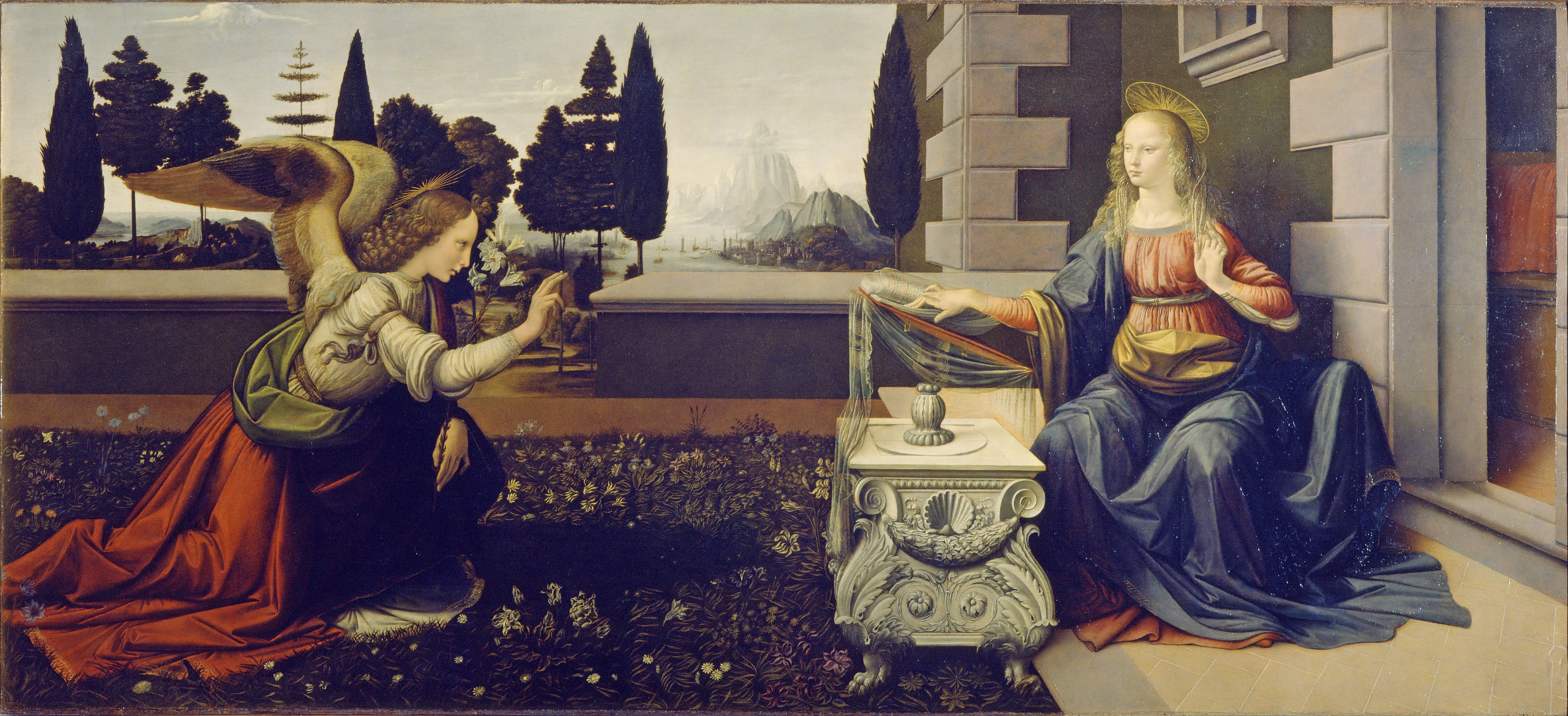
Leonardo da Vinci - the Annunciation (cca. 1472-75 CE)
Now a new question was proposed: if January 1 isn't the beginning of the New Year, then which day is?

That which followed was very confusing. Nobody could decide whether to use the previous date of the New Year (March 1), or to define a new date. The Church decided it was best to take March 25 as the beginning of the New Year because this was the day of the Annunciation (exactly 9 months before Christ's birth on December 25). This didn't make sense to the British so they took December 25 as their New Year as a symbol of the rebirth of the year, a new period and new beginnings in general. This date is also very close to the winter solstice (which usually falls between December 21 and 23) which marks the shortest day of the year, but also represents the strengthening of the Sun and the prolongation of the day in the oncoming period.

Certain deviations occurred later on in Britain. For example, the New Year was once again determined to begin on January 1. This happened when William the Conqueror gained control over England. This date wasn't take for historical reasons, it was simply the date of his coronation. But after his death, the New Year was reverted back to March 25 in England.

The Gregorian Calendar

Lavinia Fontana - a portrait of
Pope Gregory XIII
It is also knows as the Christian calendar and has become the most widely accepted calendar in the western world. It was named after Pope Gregory XIII who pronounced it the official calendar in 1582. This was actually a reform of the Julian calendar and somewhat corrected its deflection from the actual length of the solar year (although a small deviations were still there). 

The main incentive for reforming the calendar was the Church's dissatisfaction with the date of Easter. Namely, Easter had always been connected to the spring equinox. According to the Julian calendar, it occurred much earlier in March than Easter. These two dates had to be conciliated so the correspond as much as possible. So, 10 days were taken from the Julian Calendar so that the spring equinox could fall on March 21. But, the Pope's main decision for this topic is naming January 1 the beginning of New Year again. 

This was accepted in all Catholic countries, but Protestant countries still were resistant. England didn't accept this date until 1752 (it was celebrated in March up to then) and the last country to fully accept the Gregorian calendar was Greece in 1923.

New Year in Other Faiths

The Jewish tradition of New Year is interesting because it isn't celebrated on one day but rather lasts for 10 days which fall between September 6 and October 5. This period begins with 2 days of celebration (called Rosh Hashanah) which are followed by a period of fasting and repentance. All of this leads to the last and most sacred day called Yom Kippur (the Day of Repentance).

The beginning of the New Year varies in Islamic countries. The Islamic calendar greatly differs from the Gregorian in that it is lunar (i.e. based on the phases of the Moon). Certainly, the Muslim New Year falls on the first day of Muharram (the first month of the Islamic calendar).

The Buddhist New Year also varies a great deal depending on the culture that celebrates it and also on the phases of the Moon. As the dates really do vary a lot, you can find out more about individual celebrations of each culture here

The Pagan New Year

It would be more precise to call it the "Neopagan" New Year, but whatever you call it, it is called Samhain (pronounced /'sowin/). According to the Gregorian calendar, it falls on the night between October 31 to November 1 and begins at sunset or October 31. This is the time wen autumn can really be felt and seen. Farmers will know that by this time, the harvest is usually collected and that the earth slowly falls into its infertile period. Then again, it is the collected harvest that enables everyone to really feast and celebrate!

Etymologically, the word Samhain is also the name for the month of November in Gaelic languages. Its roots are in the Old Irish word samain (also spelled samuin or samfuin) which literally means "the end of summer". We have to remember that the Celts divided the year into only two seasons: summer and winter in stead of the four seasons which we acknowledge today. For them, Beltane (May 1) marked the beginning of summer and the end of winter, while Samhain marked the beginning of winter and the end of summer.

Now you know why it was unusual for me to celebrate New Year on January 1 but also why it has become normal in the western world to celebrate it on precisely this day. :)

I would like to wish you all a happy New Year once more. May all your wishes come true, your health be good,  your ambitions fulfilled and may happiness fill your lives!
Yours,
Witch's Cat