Prikazani su postovi s oznakom Solitaries. Prikaži sve postove

25.9.14

A Few Words from a Solitary Pagan

When I started walking the Pagan path almost a decade ago (wow! I can't believe it's been that long!), I thought I was the only person interested in Paganism in my city or perhaps even in my whole country. At first, this just frustrated me because I just wanted to learn from someone, or at least learn with someone. Obviously, I couldn't find a teacher and, after reading a few inspirational books, concluded that I didn't need a teacher. All I needed to learn would be sent to me through the universe, or instincts (and a few books every now and then didn't hurt). So, for a while, I was satisfied with learning about Paganism all by myself.

Then the Internet did its part and I met lovely people on forums. To this day, I claim that carrying out discussions on these forums helped me form my personal stances and beliefs about Paganism. After a while, I felt that just talking/typing wasn't enough. All I wanted to do was practice my faith. Since I couldn't put this off any longer, I started practicing on my own. 

I didn't know anyone else who could share this interest until one day when the universe blessed me with one acquaintance. This acquaintance turned into a friendship and it brought about several new relationships which also flourished in time. In turn, these friendships also lead to many more friendships and with them, many beautiful experiences. Just by the way, only one of these people lived in my town.

Six years. That's how long it took me to find people that I could work with, even if they did live on the other side of the country. It's funny in a way, how the Universe knows when you're ready for these kinds of things. When I look back now, I realize that out of these six years, at least three were spent in a sort of spiritual limbo in which I wasn't quite sure what I wanted. I started reaching conclusions and fully practicing my faith just about the same time as the Universe sent all these wonderful people to me. Basically, what I'm trying to say is that we all receive what we need in due time.

Ever since then, things have just been getting better and better. About a year or two ago, I found out that I'm not the only Pagan in my town after all - there are quite a few of us. This small circle of people has slowly been growing. We haven't been proselytizing or anything like that. People have just been contacting us one way or another and I have to admit that each one of these people has turned out to be wonderful. We have actually been working together quite often and have performed several Esbats, a few invocations and even celebrated our first Sabbat together this Mabon! :D

Now that I think about it, I can't even call myself a solitary Pagan anymore...at least not in the strictest sense of the word. Nevertheless, I was a solitary for a number of years and know what it feels like to work alone. I occasionally work alone nowadays too, but only for special, personal occasions. 

Even though working alone has its charm and its good sides, it can get lonely sometimes, especially if you are very sociable. For instance, Sabbats are supposed to be about celebrating, about feasts, dancing, singing and so on. It's hard to do all this by yourself. Esbats are slightly different, though. I personally find it easier to perform an Esbat ritual by myself than a Sabbat ritual. Working alone can present you with a few more obstacles. One of the largest ones I came across was raising energy. I have recently come to the conclusion that the Cone of Power is the most important part of every ritual (be it an Esbat, Sabbat or any other kind of ritual). The Cone of Power, or any other method of energy raising that you use, forms the core of the ritual and defines its energy, outcome and strength. The group I work with has become great at raising energy and I can't explain how much I enjoy performing this part of the ritual with them. Of course, it's much much harder to raise energy by oneself because of obvious reasons.

Still, working alone can have its good sides. First of all, there is considerably less organization involved. You can just start a ritual anywhere, anytime when you work alone. Also, you can improvise the whole ritual if you like. But when you work in a group, you have to invite everyone, set a time and place, find a fitting location, write a ritual, get everyone synchronized and so on. This gets you exhausted even before you get started with the actual ritual. When working alone, you can also adapt everything to you own needs and preferences. Some people prefer to work skyclad, but don't feel comfortable doing this in a group. Others have a problem letting their bodies and voices go in a group, but feel no inhibitions whatsoever when working alone. Then there is also the issue of traditions/paths; when in a group, one has to take into consideration that not everyone has to follow the same Pagan path so every group ritual has to be adapted and non-specific so that everyone feels comfortable and equally included. When you work alone, you can create a ritual that is tradition/path-specific and fully adapted to your beliefs. In addition to all of this, working alone enables you to do much more personal work and a lot of introspection. Some people meditate on very private issues, ask the gods for help with regard to intimate problems, thank them for personal things and do magic to aid them in their private lives. Not everyone is willing to share these things with a group of people. So yes, being a solitary has its up sides as well. 

If you are a Solitary and reading this post, I have several things to say to you. First of all, congratulations on your bravery and persistence. It isn't easy to work alone; I know the feeling. Second of all, I hope that you enjoy following the Solitary path and that it fulfills you, Thirdly, in case it doesn't fulfill you and you wish that you had a group to work with, don't worry; the right people will show up when the time comes. Everyone feels like they're walking their path alone at the beginning. But soon enough, people start joining you in your walk; they step onto your path from side streets and bypaths, lead you along shortcuts and finally, become your guides and friends, just as you become theirs.

In case you want to read more on the topic of the Solitary path, I have written about it before in my posts entitled "Eclecticism and Wicca" and "Solitaries vs. Covens". If you happen to be a Solitary in search of quality literature, well I have some suggestions regarding that too. You would be surprised how many books have been written especially for solitary Wiccans/Pagans. Here are some of my favorite books that helped me a great deal during my first years on this path. :) I hope you enjoy them as much as I did. ^^


I truly recommend reading them if you plan on walking along the solitary path for a while longer. They will really be of great use. :) I wish you the best of luck!

Until next time. Yours,
Witch's Cat

1.3.14

Eclecticism and Wicca

The term "eclectic" is often frowned upon because it somehow implies indecision, uncertainty, or random mixing of styles. For those that are not familiar with this word, the adjective "eclectic" refers to something that includes many different things (i.e. a mix of them all) with the intention of utilizing them to get the best out of them. An eclectic (a person who is eclectic) is a person who chooses to incorporate the best (which is sometimes subjective) out of many different ideas into their own belief system. The implications stated above are indeed very inaccurate because eclectics don't randomly pick out ideas, nor are they indecisive about what they want (on the contrary, they are very decisive, because it is necessary to know what you want in order to make it) and they are also very certain of their choices.

Of course, eclecticism doesn't only refer to religion; it can refer to artistic styles, designs, philosophies and many other areas of life. I see no reason why a dish couldn't be defined as eclectic if it incorporates, for example, spices from one country, culinary techniques from another and an exotic main ingredient from a third country. 

When talking about eclecticism in religion, it should be differentiated from syncretism (which I previously talked about in my post on paganism and dual faith). Syncretism is usually defined as combining (usually two) different religions. While both terms include some sort of "mixing", syncretism usually happens between two religions and they are often combined completely. Eclecticism implies that there can be more than two religions involved and they don't have to be combined as two wholes, but certain parts from them can be taken according to personal choices. 

Speaking form a Pagan point of view, I will be talking about eclecticism in Paganism and Wicca, but this does not mean that it cannot occur in other religions/spiritual paths. I have encountered Atheistic Wiccans and Catholic Pagans some of which would call themselves eclectic because of this, while some try to follow both paths and are essentially syncretic.

Nevertheless, I call myself an eclectic Wiccan. It is from this perspective that I speak when I say that it really bothers me when people look down on eclectics. There is a lot of talk about "eclectics" and "traditionalists" in Wicca which imposes intolerance (and not to mention elitism). The "traditionalists" are usually those who follow Wicca completely, and not even Wicca in general, but a specific Wiccan path. These individuals are initiated into the same path. Eclectic Wiccans are often Solitaries (i.e. Wiccans who work alone or occasionally in small groups) and this Solitary path most often leads to one being eclectic. Solitaries are usually not initiated into any coven or Wiccan path and are able to explore many traditions, work with many groups and are constantly open to new ideas. This is why the terms "Solitary" and "eclectic" often go hand in hand. Although, someone can be an eclectic Wiccan but still be a part of a coven. In fact, there has been a rise in eclectic covens in the last couple of decades! Just a short note, I will often use the terms "solitary" and "eclectic" synonymously, so please do not take any offense to this. It is simply stronger than me. :)

In reference to the previous paragraph, I hope you will not misunderstand my words. I have nothing against traditionalists or initiated Wiccans. I completely support them! I just dislike the fact that some individuals among these groups look down on their fellow eclectics. Generalization is out of the question here; not all traditionalists and initiated Wiccans look down on eclectics, but I feel that I have to write this post for the minority that does.

But to get back to the topic, eclectic Paganism is a very broad subject because this can mean that someone takes some ideas from Wicca, some from Asatru, and some even from Shamanic practices. The combinations are endless. This is why I would like to focus on eclecticism in Wicca.

Eclecticism and Wicca

Wicca (and many Pagan religions at that) are very liberal when it comes to beliefs; they allow their followers great freedom and the power to "customize" their own spiritual path. This has led to many beliefs that Wicca as one spiritual path doesn't exist; that it is not well-defined, and as a result, it has not been taken seriously. While doing a bit of research on the subject, I came across some information in Deborah Lipp's book The Study of Witchcraft: A Guidebook to Advanced Wicca. I would like to quote her because I don't see how I could summarize this any better. She basically says that the following points are that which all Wiccans (including eclectics) have in common:
  • Polarity: Wiccans may be monists, meaning they believe all gods are ultimately One. They may be duo-theists, meaning they believe that, in Dion Fortune's words, “All Gods are One God, and all Goddesses are One Goddess.” They may be hard polytheists, meaning they believe that each individual deity is precisely that, an individual and not an aspect or component of a larger One or Two. Whatever they believe, however, they work with polarity—ritually and spiritually. However many deities a Wiccan may worship, there is always only one goddess and one god on the altar during ritual.
  • Immanence: The sacredness of the human being is essential to Wicca. This can be described in many different ways: “If that which thou seekest, thou findest not within thee, thou wilt never find it without thee”; or “Thou Art God”; or “An' it harm none, do what you will.” Not everyone will embrace every description, but a Wiccan will always have some creed that includes the idea that the gods/goddesses within us are our truest guides.
  • Nature: Wiccans celebrate holidays that are attuned to the seasons and perform rituals attuned to the phases of the Moon. They worship nature deities, almost always including Mother Earth in some form, and they recognize the sacredness of the physical, including the human body and sexuality.
  • Magic: Not all Wiccans practice magic, but Wicca as a religion accepts that magic is real, something that people can do, and something that people are allowed or encouraged to do.
  • Circles and quarters: The ritual structure of Wicca can vary enormously, but a cast circle with four quarters, representing or corresponding to the four elements, is the fundamental format of Wiccan ritual. My friend Ben Schuman describes the fifth element, spirit, as the “sometimes Y” of Wicca. Some Wiccans add a fifth element and some do not, but air, fire, water, and earth are always present.
This information comes from the chapter of her book entitled "Modern Wicca Described" and I have to admit that I found it tremendously helpful and very easy to understand. So, I hope you won't mind if I quote Ms Lipp a few more times in this post.

I would like to add that Wicca, although it allows a lot of freedom to its practitioners (even the traditional ones), does have its boundaries, or better said determinants, as does any spiritual path. There must be some sort of "checklist" which can help people determine who is a Wiccan and who isn't. I believe that the above list is that checklist. Even if a path is eclectic and does incorporate many ideas (even from different religions) into its system, there has to be some framework into which it will fit and thus be called Wiccan. It is therefore necessary for any eclectic Wiccan, who calls themselves that, to sit down, have a heart to  heart with themselves and find out whether or not they really do fit into this framework. Even if they don't, there's nothing bad in that! Since Wicca is essentially a part of Paganism, which is a much broader term, it may be more applicable to the individual at hand.

Traditionalism Contrasts Eclecticism

Tradition is usually defined as a long-established custom or belief that has been passed on from one generation to another. The oldest standing belief system in Wicca that is indeed passed on from generation to generation is the Gardnerian tradition. So, when one talks about traditional Wicca, Gerald Gardner simply has to be mentioned. Gardnerian Wicca is thought to be the first Wiccan tradition and almost all the Wiccan paths that exist today stem from it. The result of this is that most Wiccan paths have the same characteristics which contrast to eclectic Wicca.

For some reason, I love tables; I find them practical, easy to understand any tidy. So here's a table that compares the main characteristics of traditionalism to eclecticism (thanks again to Deborah Lipp whose scheme served as a basis for this table, although I added a few more of my own notions).


Traditional Wicca
Eclectic Wicca
1. Lineage No lineage necessary
2. Initiations Self-initiated or not initiated
3. Degree system Movable degrees
4. Oath of secrecy/loyalty/brotherhood No oath
5. Group/coven work Solitary practice
6. Book of Shadows Book of Shadows (different perception)
7. The Rede and Rule of Three are acknowledged Importance of the Wiccan Rede and Rule of Three

Let's go into detail, shall we?

1. Lineage

Gerald Gardner
Traditional Wiccans, such as Gardnerians, call themselves as such only if they were initiated by another Wiccan and if that person was also initiated by a Wiccan and so on. If one follows this pattern, or this lineage, they will come to Gerald Gardner or one of his initiates. Basically, according to traditional Wiccans, one may become a Wiccan only if they are initiated by a Wiccan. If a person isn't initiated, they aren't seen as a Wiccan in the eyes of most initiates because, as Deborah Lipp stresses, "it takes a witch to make a witch" (by the way, Gardnerians use the term "witch" and "Wiccan" interchangeably, although I do not agree with this and I explained my view in this post).

Eclectic Wiccans, disagree with this. They claim that just following the main principles of Wicca (such as the points stated above; polarity, immanence etc.) is enough for a person to call themselves a Wiccan. Also, with the popularization of self-initiation (or better said self-dedication), eclectic Wiccans were able to officiate their beliefs in a way without having to follow strict traditional rules. This leads us to the next topic.

2. Initiation / Self-initiation

Janet Farrar being initiated by
Alex Sanders
As I have explained, traditional Wiccans believe that initiation is necessary for a person to be called a Wiccan. The person performing the initiation has to be qualified (i.e. has to be a Third Degree initiate, more on this later) and has to be initiated from another traditional Wiccan. 

Eclectic Wiccans believe that anyone can "initiate" themselves because each person can be their own priest/priestess. The Wiccan belief of immanence mentioned before explains this nicely; if the God/Goddess are a part of every person, then every person has the potential to be a priest/priestess - it is just a matter of waking up that aspect. Ultimately, each person can bless and initiate him/herself in the name of the God/Goddess. Of course, this shouldn't be done light-heartedly, although many Wiccans. This is how self-initiation was popularized (if you want to read more on the subject, you can have a look at my post on self-initiation).

3. Degree systems

The three-degree system has been adopted in most Wiccan traditions. It is an essential part of the Gardnerian tradition (which explains the first sentence) and, as its name states, the system is based on three degrees of initiation, each of which is given to the initiate after a certain period of time (traditionally a year and a day, or sometimes more). The initiate has to have certain knowledge and experience to be initiated into a new degree and, upon initiation, is given new tasks and more knowledge (and often more obligations in rituals).

In contrast, eclectic Wiccans don't really have a degree system. Self-initiation is basically enough for most eclectics. Also, degrees wouldn't mean much in this context because eclectics mainly work in variable groups which don't always have the same members or the same number of members present at rituals. This is why the priest and priestess are decided upon before each ritual so one often finds that each ritual is lead by different people (which has proven to be quite interesting and useful in my experience). This is why I used the term "movable" degrees to refer to this way of functioning because nobody really has a degree, although they change roles as the situation indicates (these roles simply resemble the roles of a certain degree initiate).

4. Oath of Secrecy

Traditional Wiccans, such as Gardnerians, take an oath of secrecy at their initiation ceremony vowing not to reveal certain things to noninitiates. This oath is inseparable from the oath of brotherhood and loyalty and is supposed to date back to Medieval times when Pagans and witches were prosecuted for their beliefs. There was no way to be sure that someone wouldn't inform the Inquisition of your practices and beliefs, but people tried to slim the chances down by initiating only family members (which is another connection to lineage) and by making each initiate take an oath of secrecy. 

This practice is no longer needed as religious tolerance has grown considerably. Most eclectics believe that taking such an oath is simply a remnant of an old tradition which no longer makes sense in the modern world where one can find all the information they need on the Internet or in books. Also, and sadly in my opinion, people's words no longer guarantee their respectability. Before, a man (or woman) was only as good as their word. This is not the case nowadays. But this is a different topic. 

5. Coven or Solitary Work

As Deborah Lipp says, "initiated Gardnerians work in covens. In fact, they use the word 'coven' to refer to a group of initiated Wiccans, not simply to any group gathered in Wiccan worship". This does not exclude the option of working alone every now and then, although anyone who looks at a traditional Wiccan ritual will clearly see that it is intended to be performed in a group. Group/coven work is though to be more powerful because more people and thus more energies are involved.

In comparison, solitary Wiccans don't always work alone either. They sometimes meet in groups (which are sometimes referred to as covens, although this term has a slightly different meaning in this context than it does in a traditional sense). Still, solitary Wiccans are called "solitary" because they do work alone most of the time. I myself, as a solitary, believe that rituals can be adapted for this kind of work and that it can enable the practitioner to have a private conversation with a deity in a very comfortable and private environment. It goes without saying that both coven and solitary work have their ups and downs. It is up to the individual, or simply the circumstances they are in, which option they will choose.

6. The Book of Shadows

The term "Book of Shadows" is familiar to any Wiccan and almost every Wiccan has one! Though there is a difference between the traditional and eclectic view of this object. For those of you that are not familiar with this term, it refers to a book/notebook in which rituals and basically any information regarding Wicca and witchcraft is kept by a person or several people. You can find out more under the term "Book of Shadows" in the glossary, or you can read this post. In any case, the BoS (short for Book of Shadows) is usually passed down from generation to generation in traditional Wicca. Basically, each new generation copies the old one out and then adds their own information to it. In the case of covens, sometimes a whole coven shares one BoS which is kept by the High Priestess or High Priest. This BoS contains anything that has to do with the coven; group rituals, group magic, outcomes, the history of the coven and so on. Although, each member can  have their own personal BoS as long as they do not break their oath of secrecy by writing material in it which was agreed to be kept secret (this material can usually only be found in the coven's BoS). 

When it comes to solitaries, each person keeps their own Book of Shadows which they can share with whomever they please since they are not bound by any oath of secrecy. Their books usually contain any material which they find relevant to their path. If the solitary is also eclectic, which is often the case, the material will be of a wider span, whereas a solitary witch that follows a specific tradition will usually write specifically about that tradition and topics related to it. This is all very logical, I hope.

7. The Wiccan Rede and the Rule of Three

The Wiccan Rede is a Wiccan text that summarizes the main points of Wiccan rituals and, more importantly, ethics. To discuss it here would take too much time, but just to briefly recap, the shortened version of the Rede states: "An Ye Harm None, Do What Ye Will". 

The Rule of Three isn't a rule per se, but it is another moral foundation of Wiccan beliefs which can also be found in the Wiccan Rede: "Mind the Three-fold Laws you should three times bad and three times good". What it basically says is that everything you do will return to you three times. It's worth noting that most Wiccans understand the number three as metaphorical and simply see this Threefold Law (or Rule of Three) as being the Wiccan interpretation of karma. 

As Deborah Lipp nicely points out, "although most traditional Wiccans also use the Rede and accept it as part of their Craft to a greater or lesser degree, eclectics view it as definitive. While 'it takes a witch to make a witch' might be the definition of a traditionalist, you could say, 'it takes the Rede to make an eclectic Wiccan.' Most eclectics are also fervent proponents of the Rule of Three: Whatever you do will come back to you three-fold. Like the Rede, this rule is familiar to traditional Wiccans, but to eclectics, it is often definitive". It is quite obvious that both define eclectic Wiccans more than they do traditionalists. 


We have basically covered all the similarities and differences of traditional and eclectic/solitary Wicca. I would just like to say that no matter how many discrepancies there may be between these paths, there is no reason for slander. There is always something good to learn from everything. Even though many see eclectic Wicca as something bad for the general reputation of the faith, there are many good sides to eclecticism! Firstly, if it weren't for eclecticism, Wicca would have basically never become known to the general public and thus never accepted in society. Since it is inspired by many faiths, it allows the practitioner an enormous amount of freedom which many long for; some because they simply like being free, others because they are tired of the limitations of organized religion. I personally don't see anything wrong with "borrowing" things from other faiths; if anything, these connections form bonds between them and also between their practitioners. I also believe that it is in the nature of everything to simply mix and intertwine, so why wouldn't it be the same with faiths? Of course, the good and bad sides of both the eclectic and traditional paths could be discussed at length, but I think I should save that for another post.

For now, I hope I managed to bring eclecticism closer to you, dear reader, and prove that it isn't as bad as some make it seem. :) The main thing is that you choose the path that agrees with your nature and that you are happy with yourself and your choices.
Until next time, yours,
Witch's Cat

12.6.13

Solitaries vs. Covens

Feeling as though I owe you an explanation of these two concepts, I'll begin the post with this and then continue talking about the actual topic at hand :)
When I say "Solitaries", I'm talking about Solitary Witches, that is Witches who work alone (outside of a group). They can choose to do so freely, or they may be forced to work alone because of various circumstances. A coven is a group of Witches who practice their religion and do rituals together. The number of members can vary, though the optimal number is usually thirteen (for symbolical reasons).

Now that I've gone through the basics, I would like to continue with my thoughts on the subject :)

You may often come across the discussion of what is "correct": working in a coven or as a Solitary. Some will claim that working in a coven is the only right way to practice Wicca, while others won't have anything against working alone. I belong to the latter group of people since I do 99% of all Wicca-related things alone. Though you may be asking yourselves what it is that so many people think working in a coven is so valid.

It all began with Gerald Gardner and the "founding" of Wicca in the 1950s (you can read more on the history of Wicca in this post). He laid down the foundations for what we today refer to as Wicca and, from the very beginning, practiced in a coven. Just to be clear, the concept of the coven existed even before this. It may be familiar to you from the many Witch tales from the Middle Ages that you might have heard, but I won't go into the whole ethnology of the word here. To continue, working in a coven soon became widely accepted and a degree system was introduced (there are usually three degrees + the role of the High Priest and High Priestess). This system soon slowed down the spreading of Wicca because it took some time for people to improve and gain the necessary knowledge which was needed in order to reach the next degree. Then again, this made people work hard and actually put an effort into it all. This resulted in a sort of separation of those who are actually willing to learn, work and improve and those that were in it just for the fun.

Of course, magick and various other forms of witchcraft existed before Gardner. You can find magickal objects and various depictions regarding magick even in the Prehistoric era (for example, the many cave drawings which were a form of sympathetic magick - a type of magick which is worked by the person depicting what they want to happen, thus making the chances larger for this to happen in real life). Shamans and medicine men existed even in those times and they were viewed as religious leaders or healers of their time because they had grown wise with age, life experience and abilities.

We can find traces of magick in many mythological depictions and stories. For example, may gods have been described as patrons of magick and Witches, and some were even said to have practiced magick themselves. Some of these are the Greek goddess Arthemis (the Roman Diana) or even the Greek god Apollo. 

John Collier - the Oracle of Delphi
(the Pythia), oil on canvas, 1981
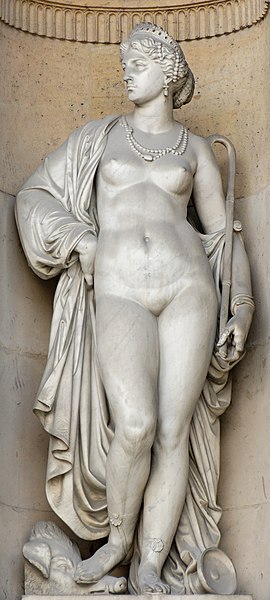
Charles Gumery - Circe, statue
on the Louvre museum, 1860
The well-known Pythia (the Oracle of Delphi) can also be thought of as a sort of Witch because she was said to be able to predict the future and contact the gods. This is only one example, although you can find many more stories regarding individuals who were thought to be Witches, like Circe or perhaps Medea. We could even go so far as to say that every prophet in history was a sort of Witch.

In the Middle Ages, we come across Cunning Men and Women who specialize in herbology and similar healing arts. Cunning men were obviously med, whose job was to heal various wounds and diseases, prophesize, give advice and so on. The Wise Women were basically their equals when it came to knowledge and experience, but they are more important to us at the moment because it was precisely them who inspired the stereotypical depiction of Witches (a wrinkly old hag with bad skin, many moles on their face and crooked teeth). But why was it always elderly people? The knowledge that they had wasn't gained overnight; one needed many many years and decades of hard work and learning from their predecessor/mentor to achieve that status.

Eugene Delacroix - Medea, oil on canvas, 
1862
We are unable to find any proof that these people worked in groups because, in one way or another, they were competition to each other. During these times when it was very hard to come across some money, people practically fought for it just so they could stay alive and feed their family. Any person that was occupied with the same thing as you was your competition, a potential threat and a nuisance (though things seem to have changed so little since then, if at all). If this is so, then can't we conclude that first Witches were, in fact, Solitaries?

These men and women have all the characteristics that are applied to modern Witches (a Witch = Old English wicce "female magician, sorceress", Old English wicca "sorcerer, wizard, man who practices witchcraft or magic" from verb wiccian "to practice witchcraft", referring also to a person who is adept at what they do e.g. herbology or similar healing crafts). Of course, I emphasize healing as a precious skill since the sanitary conditions of the time were appalling, there weren't that many remedies and the only ones that were available had a herbal basis (i.e. made of herbs), and in order for one to be able to handle herbs, they had to have the necessary knowledge that went with it (i.e. herbal knowledge). I hope that I cleared that up :)

Many practitioners of the Craft (short for witchcraft) and Wicca believe that working in a coven is the only correct way to work, though I don't agree with this, as don't several authors whose beliefs I share. If that were the only "right" way to go about things, then many cases would have been recorded in history (with no mention of Solitaries), though the case seems to be that there are much more Solitaries recorded than covens (at least up to Gardner's time). Therefore, you don't have to worry yourselves if you can't find a coven to work with. Sometimes, working alone is the harder route, but I believe that with hard work and consistency, you will succeed in your intentions and see the results of your efforts. Just remember the many people in the past who had to hide their occupations from their surroundings just so they can continue to do what they love. You can find yourselves lucky that you live in a time when tolerance isn't so low (although it is still quite love in some countries, but you don't really come across burnings or hangings because of faith differences).

Since Wicca is adapted for coven work, it is sometimes necessary to tweak the rituals a bit for Solitary work (in fact, this is highly recommended). It would be ideal if you could write your own rituals, although some of them are so quality and have become ingrained that it is a shame not to use them. You will probably come across some rituals designed for covens that you will wish to enact. When this happens, simply sit down, think about what you can shorten, how you can play several roles, etc. With a bit of time, patience and determination, miracles can happen :)

A cunning man
A wise woman
It is up to you to decide whether you want to work by yourself or in a coven. This is often a matter of taste, practicality and security. If you find that you don't like working alone, try to find a coven. Nowadays, there are many ways to find like-minded people around you, for example by using the Internet (some useful web pages are under the "Useful links" category on the right side of the blog). On the other hand, if you realized that you're secure and sure enough when you work by yourself and believe that you don't need a coven to improve, then chances are that you really don't. Just remember, covens aren't there to control you or remind you that you have to do good; you'll have to remind yourselves this every now and then. Just because you're not in a coven (but still think of yourself as a Wiccan) doesn't give you the right to ignore the "golden rule" of Wicca: an ye harm none, do what ye will!

But to get back to the original topic; Wicca may be "made" for covens, but that doesn't mean that this is the only right way to practice it. In Wicca (and Paganism in general), individuality, love towards everyone/thing and yourself, tolerance and the right to freedom of choice are encouraged. It is your choice how you will practice your beliefs. It is because of this that there is no "book of laws" in Wicca which dictated how you should behave. Of course, a few guidelines do exist in order to help you, but it is not said anywhere that you must follow them. So, if someone comes up to you one day and says that you have no idea what you're doing because you're not in a coven or that you're less worthy because of this, don't listen to them. I would even respect you more because of your bravery to set off on your own on this spiritual journey. 

Solitary work isn't a mistake. All you need are trustworthy resources of information and the will to progress and, above all, good intentions (intention is key). If you have this, you have no reason to worry at all...you're already on your way to improvement in this area :)

I would like to emphasize that I am not initiated (although I would like to be one day), but also that this post isn't some sort of jealous outburst on those that have had the opportunity/privilege to experience this. There is no room for negativity here. Also, even people that haven't been initiated can work in groups (except these groups aren't called coven, but rather circles, or simply groups). If you already have someone with whom you work and feel comfortable with, I really am happy for you :) If you have, by any chance, been initiated into the tradition you wanted to become a member of and happy with this choice, then all the better!

The goal of this post was to remove the misconception that Witches who work in covens are "better" than Solitaries. I also don't want to generalize by saying that every coven member will think this way, although there may be a person or two who do.

There aren't that many Pagans (or Wiccans), at least where I come from, but also in the world compared to other major religions. I think that these tiny differences mustn't upset us and lead us to argue with one another, but rather help us develop a higher tolerance towards others. Paganism is a very broad term, and every tradition of it leaves room for individual interpretations..this is simply part of the magic of pagan religions :D I hope that you will accept other people not depending on their religious beliefs, or in the case of Paganism, not depending on the tradition they follow.

Love the beings with which you share this planet as well as this life, and this love will be requited. Remember: an ye harm none, do what ye will. ;)

Until next time. Yours,
Witch's Cat